Monday, September 12, 2016

Sandboxes and Quagmires

I generally don't like doing advice blogs since there's a million opinions, but I can't quite get this topic outta my head. So here we go.


Since 2010, when I cracked open Paizo's Adventure Path Kingmaker, I have been enamored with the sandbox game (and hexcrawls in general). The idea of running a more player-driven game where the PCs choose where to go and what to do is really appealing. There is something nice about seeing your players getting invested in the game and in many ways, doing the GM work for you. And as a player, having that total freedom is pretty awesome. It's something you can't get from video games, even open world ones like The Witcher 3 or Skyrim.

Sandbox gaming is very common in the OSR community and for good reason. That freedom is awesome, but also it's great for the open table style of gaming, which is great for us adults that simply may not have the schedule to do a consistent campaign. Among the community, sandbox gaming is seen as the way best way to game and believe me, there are many grognards that would certainly defend that.

Unfortunately, sandboxes have their pitfalls, especially to those new to them. And in the last six years, I've experienced them all.

Pitfalls of Sandbox Gaming

In a sandbox, especially the more West Marches style, there is very little in the way of structure or concrete goals for players coming in. Aside from generally "rob the tomb, fight monsters, get rich". Nothing wrong with that, but for players not used to this style of gaming, the freedom of choice can get overwhelming and cause option paralysis. The game suddenly becomes one of "what do we do today guys?" and can grind to a halt. I have run sandboxes with new players that have bogged down because players really didn't know what to do.

There are more ways that a sandbox can slow down. A common factor I see with both new and experienced sandboxers is that with player choice, you have players that want to do their own thing. Generally, my experience is that you'll have two players that want to do different things, with other players neutral on what adventure they want to do. This happens because while there is the freedom of choosing your adventures in a sandbox, the team still has to agree on what they want to do. A gaming group follows general social dynamics, so you'll have one dominant player that will try and steer the group in a direction while another dominant player will want to do a different direction. And the other players generally don't care as long as they have fun, so no one really takes sides and it becomes an argument over what we should do that night. When running a sandbox, it is important for the players to have some sort of way to decide where they go next so that everyone gets a turn. Voting, choosing, picking straws... whatever works. But even with this, you will still have a person that is left choosing last, and depending on the adventure, they could have to wait weeks or even months. As a GM, you'll really have to step in and adjudicate things when this happens, or else game night could be ruined.

A common fix to both of these problems of inaction and arguing is to "have a guy with a gun kick down the door and attack". That is, throw some interjecting problem at them that they have to deal with right now. That does have its issues in a sandbox game.

With sandbox gaming, the style really emphasizes player agency and is seen as the opposite to adventure paths and railroading. However, most players confuse what player agency really means. Player agency is the player's ability to have a meaningful choice in what to do. If a player wants to do something, they have the freedom to attempt to do it. However, many players misunderstand this term and believe it means they have control over the fate and narrative direction of their character. In addition, players get rather attached to their characters the longer they play them. So, when they have to deal with a negative consequence to an action their PC did, or an interjecting problem out of nowhere, things once again grind to a halt as the player(s) get upset about it. This gets more exacerbated with games like Dungeon World, where narrative control is shared by the DM and the players. You'll have people breaking out the accusations of railroading and things bog down.

I think the most common issues I've seen is that with player option, you will have players that will do things that the team doesn't like. Maybe the character antagonizes an NPC that the other PCs are interested in bartering with, or does something that genuinely offends a player in the room. Eventually, a player or more will get disruptive and start becoming an obstacle to the team as a whole. Sometimes, all of the players get in the way of each other. This is because players are coming in and wanting to portray, experience, roleplay, and do things for their characters in a vacuum and eventually, this will conflict with the other players doing the same thing. And again that "player agency" term will rear its ugly head and players will get mad that the other is trying to stymie their game. And boy will things muck up


The Quagmire

Muck up is a good description for what I'm describing. If a railroad campaign is the eventual extreme of the adventure path style of gaming, then I would say that the extreme to a sandbox is the quagmire. A quicksand like pit that bogs everyone and everything down until you cannot escape.

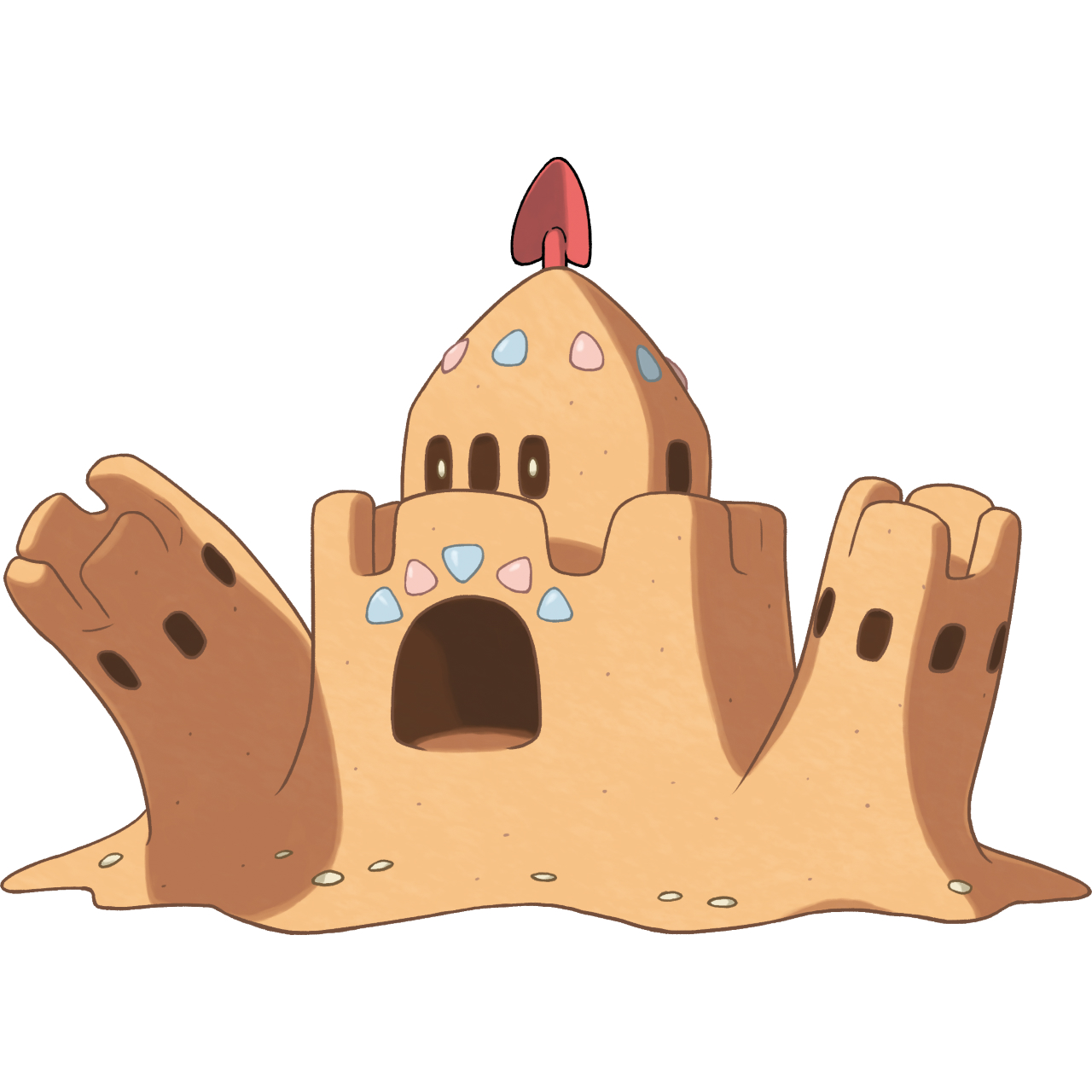
I may have an unhealthy obsession with Pokemon
The issue I see is that the sandbox is player driven, but people take that to the extreme. In the case of the players, they see it as them taking some form of metagame control over the fate and story of their characters. Being given too much freedom can be detrimental to the game, especially when that choice isn't tempered by the feelings and thoughts of your fellow players. It's very easy to do things that sabotage other players and claim it was in the name of roleplaying and staying in character. That freedom will also bite you in the ass when everyone wants to do something different. Basically, everyone is out to make their own awesome sand castle, but there isn't enough sand for everyone's castle. So now people are kicking over sand castles to make theirs bigger and bigger.
For the GM, I notice that sometimes, you get lax in adjudicating and instead remain a neutral force. I find that this happens because of the player driven part of sandboxes. Mentally, I feel that because the players drive the action, the GM sits back and lets them deal with the big issues while you just throw NPCs and monsters at them. It's really for this to happen since being a GM can be a lot of work, so having players doing the heavy lifting for you is really nice. I know I have done this on many an occasion. Also, especially for new GMs in the sandbox, you sometimes don't want to come down with the GM hammer for fear of being a railroading judge. 

After dealing with these, sometimes you just want to give up and run simpler modules. I'll admit, after seeing some hexcrawls implode, I kind of crave the simplicity of running an adventure path or module. But we don't have to give up and throw out the baby with the bathwater. So what can we do for this?

These are my non-negotiables for running a sandbox. This goes for players and GMs.

1. Gaming isn't a story, or a game, or a competition. Gaming and game nights are social activities done between friends and peers to have fun. Ultimately, we as players and GMs need to remember that. This is a social group and the things we do as player characters are not done in a vacuum. So we have to remember to keep our peer's feelings in our minds when we make decisions, because that is more important than emulating a genre trope or simulating reality. We can't just do whatever we want, get mad when someone gets offended, and hold our breath until we get our way. And at the same time, we can't get offended with everything and deal with everyone issue with some kind of righteous indignation. When an issue arises in game, we have to chill out and talk it over. Cooler heads prevail and it's easy for things to get heated and leave bad feelings. If you can't talk things out reasonably and compromise like a fucking adult, then you don't have any business gaming. Period.

2. Talk with the players before the campaign even starts and let them know that this is a player driven game where you can make whatever choice you want. But, and this is important, impress the idea that this is a living, breathing world and that with this freedom of choice comes the burden of responsibility for them. All actions and inactions have consequences, positive or negative. And sometimes, things bigger than them will happen and they will have to react accordingly. Impress this to them over and over again if you have to. 

3. Sandboxes need to have some sort of structure and goal. By doing this, it helps to keep your players focused on something while they go after their own goals on the side. It also gives something for players to fall back on when they don't really know what to do. 

4. Having bonds between PCs is great. Many times in sandbox games, I see the same ragtag group of scoundrels and rogues out for number 1. While OSR games do focus on what the players do rather what they have done, there is something to be said about having preexisting backgrounds with each other. I find that more often than not, it helps the group mesh better and many of the issues of sandcastle kicking I mentioned above don't happen as much. Also, with backgrounds, you have some delicious hooks you can use.

5. GMs, don't get lazy. I think sandboxes need more GM adjudication more than any other style of gaming. It's really easy to sit back and let the players and the dice do your job. But, you have to be active in squashing anything that can bog down the game or more dangerously, break up the gaming group. You are the leader and probably have the most important job in the social group. Be active, assertive, and fair.

Doing these can help to prevent your game from becoming a quagmire and help make your sandboxes memorable and fun. It has certainly worked for me.

Saturday, September 10, 2016

Another Stat Rolling Idea

So full disclosure, I'm not really a fan of rolling dice for character creation. Never was, even playing through 2nd and 3.x as a kid. I prefer point buy. With my recent foray into OSR gaming, I really gave it a try with ACKS and other systems, but ultimately, it's not my cop of tea. That's a post for another day. So I was brainstorming a way to combine point array and dice rolling. Kind of a compromise. This was actually done for a project I'm working on.


For the three stats, you have six numbers you can plug in. 2, 3, 4, 4, 5, and 6. Put those in any of the stats you have. Once all six numbers are in each of the six stats, you can then roll 3d6, drop the lowest and add the number. That's your stat now. So, if I have a 4 in STR, and I roll a 4, 2, and 5, then I'd replace the 2 with a 4 and have a STR 13.

For the rolling, you could do it a number of ways. You can have them roll it first, then assign it later. That tends to make more powerful characters. You could have them choose the stat, roll it, and keep it. You could also do something in between and let them switch two values. It's up to you. Doing practice rolls this seems to work pretty well. I tend to notice average characters with one or two really good stats, mostly average stats, and one bad stat.

Wednesday, September 7, 2016

Mothlight


In misty bogs and hazy swamps lie a cousin to the will o wisp, the mothlight. The mothlight is a glowing diaphanous orb of smokey light with gossamer tendrils that trail behind it as it dances in the moonlight. To many, they look like the colored blobs that appear when you close your eyes. Mothlights sway and flash hues of orange and blue to fascinate and entrance mortals that happen upon them. Despite their alien beauty, mothlights are existential predators. When a mortal gets too close to it, the mothlight drapes its tendrils around the creature and feeds on its thoughts and psychic energy. Mothlights will gorge on a creature's mental energy until it becomes braindead. The mothlight will then bloom and release smaller glowing polyps that will eventually move on and grow into full mothlights of their own.


Despite popular belief, the mothlight is not a creature, but mere a shadow of a creature from a higher dimension. Because our minds are three dimensional, we simply cannot fathom its true form, so we can only see the glowing shadow when it bleeds into our world. While in its dimension it is considered a mere animal, in our world the mothlight creature has a keen intellect that rivals most mortals. The creature will come into our realm through thin films between our world and the higher world, swimming through angles and hovering about through nature. It can't move much in our dimension, or perhaps it simply prefers to wait in ambush away from cities. Its shadow, the mothlight, attracts mortals through means unknown, where it can devour our thoughts. After you've seen the shadow, it's generally too late to run away. Even closing your eyes fail, as your own phosphenes betray you and guide you closer to the mothlight.

By Alexander Semenov
The only known way to escape the fascination effect is through over stimulation of your other senses. When going into an area infested with mothlights, it is best to bring smelling salts, gunpowder, or anything that can make loud noises or strong smells. Flash paper is also a good idea but rare and blinds you, which may not be preferable. After using any of those, run away. Only those with an intimate knowledge of higher order mathematics and physics can hope to kill the creature. Even third dimensional magic can't work. Only by mapping out the location with advances equations, or opening your mind to the higher dimensions through meditation, hallucinogens, and astral projection can give you a chance at attacking the creature. But that's a post for another time.


Mothlight:

Phototaxi: Make a Magic saving throw. On a failure, you must do a full movement towards the mothlight. You can do a single action if you succeed on another Magic saving throw. When you reach the tendrils, each turn you lose 1d6 intelligence. When you reach 0 INT, you become brain dead.

I like jellyfish. This also makes the third monster I've made inspired by the way a Pokemon looks.

The first two being Nincada and Mimikkyu


Thursday, August 18, 2016

Training 2.0

I was inspired by one of the OSR posters +Ian Wyckoff to create an alternate version of training. While this isn't as simple as the earlier listed one, or as his, I think it gets the best of what I'm looking for. Training starts hard, gets a bit easier, but then gets harder as you try and surpass your limits.

It begins!

Training Redesigned

By spending resources (money, favors, etc.), a PC can find a trainer to help go through rigorous exercise. It could be lifting boulders atop a mountain, meditating under an icy waterfall, extreme studying, or visiting a courtesan school to learn the Great Game, or anything hardcore that you can come up with. This takes time (a week or two, maybe even a month depending on the GM), and at the end of the montage, the character rolls a number of dice against the corresponding stat to see if they gain a boost. If they beat their stat number, then it goes up by 1. If not, then they must complete it again. If they find a trainer that shows them what they are doing wrong, they can get a bonus on the roll, usually just a plus 1. 


There are different training regimen. Novice, Intermediate, and Expert. The table below shows the different training dice rolls and the minimum stat value required to do them.


Training Regimen Dice and Minimum

Novice - 2d4 - Min 1
Intermediate - 2d6 = Min 8
Expert - 2d10 - Min 12

When doing the training, you roll that regimen's dice and beat your stat. If you do a training regimen that you don't meet the stat requirement for, you must roll a 1d20 against your stat (high or low, it depends on the GM. I prefer rolling high) at the end of the regiment at a -5 penalty to see if the training even works. If you fail, the training doesn't take and at the GM's discretion, it could mean injury or simply insulting your trainer and being dismissed from the academy. 

Example: Bearic the Cleric is a bear cleric looking to take an Expert Strength Training course, but his strength is only at an 11. He still takes it, but when he finishes the weeks long training, he has to roll a 1d20 at or below an 11 (or, if doing high rolls, meet or beat a 10+) with a -5 penalty applied to the roll. Here's hoping Bearic the Cleric can roll below an 6 (or above a 15).

If you are training a stat that is below 10 for the very first time, the GM can decide to limit how much training you can do back to back. Since you're going from being a couch potato to a superstar, it is a bit harder to get the training in without becoming exhausted, mentally or physically. This really should only apply up to the second training.

You can roleplay out the training as an adventure. If doing this, the GM can apply bonuses to the final Regimen Dice roll depending on how well the players do.

Maximum Stat Training

We all have limits we simply cannot surpass. A player can raise any stat, but they can only gain up to a total of 9 stat points for their stats. So, if a player increases their Strength by 4, then they have 5 more points to train with any other stat before they've reached their limit. A player can surpass this with performance enhancement drugs and magic, but that has consequences and is something I'll get into another time.

I will never get over this picture of Triple H and his O face

Notes

I think I prefer this method honestly. While it is a little bit more complicated, I feel it's still a simple little ruleset that the players can use to get their characters better without waiting to level up. Admittedly, I seem to prefer disconnecting stat and skill advancement from leveling up. Makes me wonder if I would be happier with a classless system. I feel this method fixes the issue of rushing to 18 too quickly, while still making just starting out exhausting. Lord knows when I got started weight lifting, that was really tough. While the maximum stat training is in there, I feel the real limiter is going to be the money to train as well as down time.

I plan on using this for a project I'm working on where training your character is a really big deal. I do hope to playtest this one, as it does excite me. Try it out in your games and see how it goes.

Tuesday, August 16, 2016

Training

Whether it's studying or slamming weights, people can get stronger and better through intense training and practice. Here are some simple training rules.

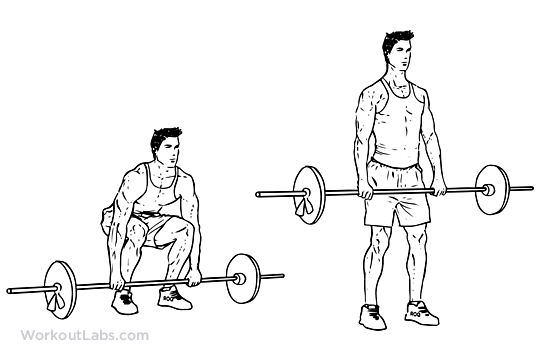
Time to get those sick gains brah!

Training Regiment

Whenever a character takes time out to do a rigorous training scenario, they can roll to see an increase of their stat. This takes time (a week or two, maybe even a month depending on the GM), and at the end of the montage, the character rolls the corresponding stat to see if they gain a boost. Basically, take their stat, subtract it from 21, and that's the roll they have to beat to increase their stat by 1. So if they have a Str of 5, then they have to roll higher than a 16 to increase it to a Str 6. I decided on beat instead of meet and beat because the idea is going beyond the limit of your character's attributes. This can work with any stat. Go work with courtesans to increase your charisma.

Training Cap

There's only so much training can do until your natural limitations kick in. Once a stat is increased by 4, you cannot increase it further, unless you begin taking performance enhancement items. At the GM's option, they can have 18 be the hard cap for any stat, no matter what.

Alternatively, you can allow stats about 18 and make getting those gains harder. When trying to raise a stat above 18, you now have to beat your stat's value to increase it by 1. If you have a Str 18, then you have to roll a 19 or higher. This works with games that don't go above 20. Games like Pathfinder and 5e will probably need different training rules altogether.

I wanted to make this because I have an idea I've been brewing up for a game system I wish to create, once I get the bare bones down.

Wednesday, August 3, 2016

A Weird Idea

Back in May (on Friday the 13th no less), I was finishing up side work and knocking out trash at my job. Doing tedious tasks makes my mind wander and I began contemplating a what if scenario for the development of Dungeons and Dragons.

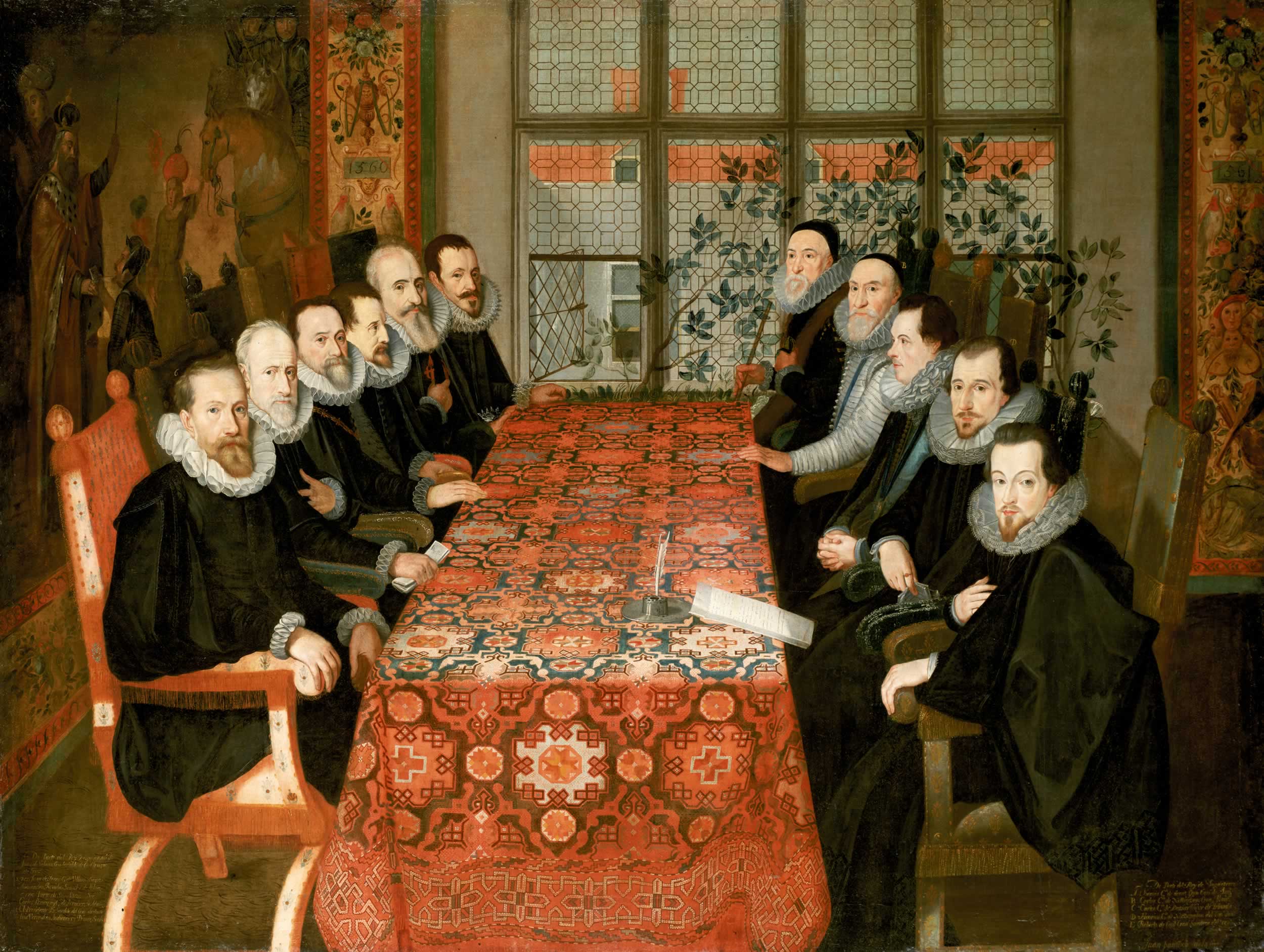
Somerset House Conference (Wikipedia)
D&D comes from wargaming origins and that shows in some of the design. You'll find the rules for combat to be more comprehensive than other aspects of the game, XP for killing and getting gold, combat uses for skills and feats. This isn't a negative mind you, nor is it me saying 'you can't roleplay in D&D'. Some of my best roleplaying stories have come from D&D 4e, the edition which has been often derided for being non-conducive for RPing. But in every edition of Dungeons and Dragons, you can see the wargaming aspects in its ruleset, passing down like a gene.

So I was thinking... what if D&D descended from a different hobby? Like say, a debate team, or a story telling game.

What if we flipped some of the assumptions and even mechanics on its head?

In general, you have combat scenarios and roleplaying scenarios. A bit of an oversimplification, but bear with me. While combat rules are more complete and exhaustive, roleplaying is generally left up to the players with minimal conflict resolution mechanics (generally a simple Charisma roll). So what if we switch the assumptions around? Have combat with a simple conflict resolution mechanic adjusted for the difficulty of a battle, and make the social aspect of the game more comprehensive.

Right off the bat, the focus of the game would be very different. I feel you would have a more political game where things like diplomacy, intrigue, and investigation take the forefront. Exploration probably wouldn't change. Combat would still be important, but it would certain be different. Much like social stuff is, combat would be a lot of flavor and description with the occasional die roll to resolve conflict. Perhaps a Strength or Dexterity roll, or a Fighting skill roll, all modified by difficulty penalties and bonuses. It'd probably me more kin to combat in Dungeon World.

Social conflict and discourse being more comprehensive would be an interesting aspect, but one that would have to be handled differently than combat is in D&D. It should be flexible in allowing the players to do clever things when trying to roleplay out social situations while still being robust enough for those of us that don't have the natural charisma or mental energy to play a social engineering con man. In addition, and this is my opinion anyways, it should be applicable to the PCs. Just like the PCs take damage and injuries when treading into combat, they too can make social faux pas or fail in diplomatic scenarios. And most importantly, when making rules for debating, bluffing, and diplomacy, it is important to make sure it isn't mind control. With social combat, it is very easy to cross the line and take control away from the player. While I feel the term "player agency" gets thrown around too much, if the rules ultimately force the player to act against their will, then it's just not fun.

Burning Wheel and the Song of Ice and Fire both have cool discourse rules that look interesting and I would love to try them out in an actual game one day. Burning Wheel in particular has an interesting concept where social conflict only happens if both sides agree to it. So there is still a player opt-in before social combat even happens. But, once you are in it, you are committed and have to accept the results (at least for the interim). It's a cool concept and on paper at least, it seems to have the flexibility I'm looking for in a diplomatic ruleset.

I'm also interested in seeing how classes would fit in something like this. In general, the base 4 classes have assumptions that you'll be adventuring in the wilderness, fighting orcs and taking their stuff. It shows in things like extra attacks, extra damage, backstab/sneak attack, weapon and armor proficiencies, AC/THAC0, etc. I wonder how we would format classes that focused on diplomacy, intrigue, and investigation? For class names, I'd like to change them, at least to something more evocative of the courtly nature. Taking the Fighter, Mage, Cleric, and Thief/Expert, I'd probably call them the Warrior, the Magician, the Priest, and the Spy (although Expert is still very fitting). I'd also fit them out with diplomatic abilities that would fit with their archetype. The Warrior, being the knight or samurai equivalent, could have a bonus to seeing through lies, or being stubborn against people that try to extract information. The Priest could trade Turn Undead for bonuses to appealing to emotion, or using their position of holy reverence to extract favors and demands much easier. And so on. It's an interesting idea.

I think the most important thing to do for these types of rules is to calibrate the expectations and desires of your players. Players come into role playing games with certain expectations and non-negotiables out of their D&D game. It's critical to be upfront and let them know about the change to this style of campaign to prevent miscommunication and PC-GM dissonance.

So what would this type of game look like? Would it even work, or more importantly, would it even be fun? I would like to try and build a game like this with OSR materials and see how it'd work.

Monday, August 1, 2016

Huraño

If you look around dark allies or in the deepest of forests, you are likely to run into a gangling creature called a huraño. Chances are, they are following you right now, trying desperately to stay out of sight while watching you jealously.

Huraño are crippling shy creatures filled with self loathing, so much so that they universally cover their bodies with worn rags and white masks so no one can see them. Their masks generally have a poorly drawn facsimile of a face of a creature they wish they were. Usually it's big predators, or beautiful animals, or mortal races. Mortals are common because they are so numerous and pretty and confident. That's what the huraño lacks. That's what they desire. A huraño will act out as their chosen creature, staging mock plays and changing its lair to look more like that of their 'prey'. In many ways, it's like watching a child play make believe with its toys and furniture scattered about. 

Huraño are harmless, almost laughably so. One confronted by their 'prey' will prostrate itself and beg for mercy, usually giving into any demand they make in hopes of escaping alive. It's not unusual to see a huraño crying and pleading in front of a small child or other harmless creature.

Most humans use the huraño for their own amusement. A huraño will do whatever you say out of fear of reprisal and if harmed, will assert that it somehow deserved it. It makes a great companion for the sadistic and sociopathic nobles that can somehow catch one. That's a feat in itself, as it is so frightened of being around people that it will flee instantly. It's joints are highly flexible and the huraño is very fast and limber, allowing it to fit through tiny cracks and get away from anyone. If you can catch one, you'll have an amazing slave to harm. Removing a huraño's mask will force it to die from sheer embarrassment and shame, since in its mind, you are removing its face. Its corpse won't last. Even in death, its body will disappear before anyone can see its true features. Such is the extent of a huraño's timidness.

But sometimes, very rarely, you'll have a kind-hearted soul that befriends the creature and fills it with the confidence it needs to remove its mask and live its own life. Many warn that they become a terrible, overconfident monster that eats people, and that's why they must be kept in place. Though the people that say this are the same ones that love torturing them, so who knows what's true. Maybe you'll get an amazing, life-long companion. Maybe the huraño can finally grow into its dream creature.

Stats:

HD: 1
AC: 17
Movement: Always 5 feet more than the fastest person chasing it

Laughably Pathetic: Huraños have no attacks or natural defenses. They are simply hard to catch. Once caught and cowed, any attack against them automatically hits. Anyone that attacks a huraño gains health back equal to the damage. Huraños will do whatever is asked, except to remove their mask.

Crippling Depression: Huraños can only die if their mask is removed. Removing it is a DC 23 Strength check and the creature instantly dissolves into dust.


What's the Point?

I've always found people and nature to be more interesting as monsters and villains than hobgoblins and dragons. I wanted to do something different from the standard "make a terrifying monster". So I made a creature that will bring out the monster in the players. Throw it in and see what happens. You may be surprised! I leave it up to the GM to see what happens when a huraño is met with kindness and makes a lifelong friend with the PCs.