Showing posts with label space. Show all posts

Sunday, October 1, 2017

A Simple Set of Agency Rules

Mission Start!
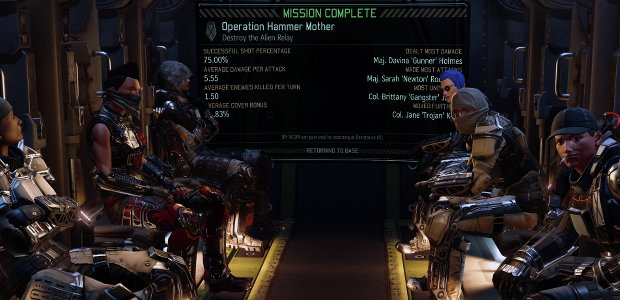
Between the M-Space campaign I'm running on Wednesdays and the hours I've sunk into XCOM 2: War of the Chosen, I've come up with a simple set of rules for my players to run their Scout agency. This is for sending out fire teams of explorers and troubleshooters to do some side missions while your team does the cool adventuring. Great for frontier exploration campaigns, but you can tweak them to be for scientific research, surveying, and even war and trade. Made with M-Space and Mythras in mind, but I want to make one for Traveller/Cepheus Engine.

The link is here. Tell me what you think.

Friday, July 28, 2017

Twenty Parsecs: The Commonwealth

Korhal, the capital of the Terran Dominion in Starcraft
One thing that I've been rummaging through my head is how I want the Commonwealth of Free Planets to feel like. I definitely want to keep a frontier feel about it, but at the same time, I do want points of human and alien civilization so that I can have interesting urban and political adventures. For this I've found a great deal of inspiration with Starcraft, the implied setting for D&D 4e, and the TTRPG Clement Sector.

Both are settings that take place out in a frontier area and have their fair share of worlds to explore and colonies to meet with. But they also have that 'points of light' style of campaign where you can have large capital worlds that the players can run through for fun. So using Starcraft's Terran Confederacy/Dominion as an example, for every Korhal capital planet out there, you'll have plenty of Mar Sara backwaters out there for 'lawless adventuring'. Which to me, is the core of exploration. Lawlessness and lack of social rules and etiquette so the players can (and many times have to) use their wits to overcome difficult obstacles. While the points of civilization are mostly safe havens until trouble happens (or they go looking for it). Then they have to use the same wit and canny but with the limitations of the social center they are in. Which to me, can bring about the most innovation and ingenuity from players. Conflict + limitations = ingenuity.

So the Commonwealth have been there for centuries. With a decent enough population growth, I see most of the Core Worlds with a population in the tens to hundreds of millions. Most would be centered around the first colony of the planet, with many of the later ones acting as satellite cities. You'd probably have the occasional colony far away for reasons unknown (resources, religious, or simply tired of the main colony's shit). Leaves plenty of undiscovered wilderness on the planets for intrepid players to explore, while still having cities for other adventures. I'm thinking five main core worlds would be good enough, with the oldest being the most populated and probably the capital. Soon I'll have to give these planets names and maps, but for now, it's a bit up in the air.

Tuesday, July 25, 2017

Campaign Space Ship: NECI Sigrun

This here is the spaceship that my players have been using for their game of M-Space. While it's mostly just been a plot device to get to the planet from the Ark, this time around, it'll get put through its paces in actual space combat. For those more knowledgeable of M-Space, you'll notice that the speed, engine power, and armor is low. This is to represent a lower tech ship on the cusp of achieving fusion drive, somewhere between Traveller and Orbital 2100. Many of the added stats like tonnage were mathematical formulas I used to convert Traveller stuff to M-Space.

I plan on working with either Blender or Unity to combine the 3D models of the ships and planets to make cool landscapes with them. It's something my players certainly will like. 

NECI Sigrun (created using the Galactic Civilization III Ship Builder)

New Earth Colonial Initiative's Sigrun

Pathfinder-Class

Size: 58 (290 Tons, 52 meters/170' 7" long)
Armor: 2 AP
Speed: 5 (Delta V: 80 km/s)
Handling: 3
Distance per Month Traveled: 200 Mkm
Fuel per Month Traveled: 3 tons
Fuel Capacity: 10 tons

Named% chanceHP
Cockpit 1-42
Engines, Thrusters 5-135
Engines, Maneuver 14-225
Sickbay 23-304
Crew Quarters 31-409
Cargo Hold 41-455
Railgun 46-471
Railgun 48-491
Engineering Lab 50-511
Crew Common Area 52-668
Hanger, Rover67-744
Hanger, Shuttle 75-9210
Sensors 93-1003

The NECI Sigrun is the premier spaceship for the Initiative Scouts. It is outfitted with two railguns for defense, a standard nuclear thermal rocket, and a life support system to last a crew for six months. The Sigrun has a connection to the ark AI, Noah, for information and orders from the higher echelons of the NECI. Able to traverse 1.3 AU in a single month and scan for all kinds of minerals and chemicals to locate important resources for the survival of humanity. The Sigrun can fit a standard crew of 9, including pilots, surveyors, and an engineer, all of which crossed trained to be survivalists, scientists, and security for the planetside away team.

Monday, July 24, 2017

M-Space Campaign


This coming Wednesday, I'm continuing my M-Space colonial campaign by using the above module with some changes to the adventure here and there. The main focus isn't going to be on the alien, though it will play a large part in harrying the players. The focus will be on the ship itself and a crew member cryogenically asleep in there.

While my game has been more of a episodic sandbox of exploring a hostile planet with a lethal atmosphere, there has been a sort of metaplot that the players have found. Some context. The players were on an ark leaving a dying Earth for a new planet through a wormhole. The plan was to set them there, set up shop, then bring resources back to Earth to help everyone survive. However, the ark stayed in the wormhole for 86 years before letting the players out, then closing forever, leaving them stranded away from a now dead Earth. As the players explored the planet, they found a crashed human ship called the FEI Icarus, despite the fact that the PCs were the first to make planetfall. Whats more, is that the spaceship has a more advanced power plant and an unusual engine in it that is more advanced than anything the player's or their colonial initiative has. 

So the question is, who are these humans and where did they come from?

In the next session, the players are going to the second planet of the star system to investigate an unusual radio signal. What it'll end up being is the sister ship of the Icarus, the FEI Iapyx. Inside will be the discovery of a lifetime for them. Evil hydrocarbon aliens, a rogue AI protecting the Iapyx, and the only living crewmember of the Iapyx, trapped in cryostasis.

The discoveries the players make will be this:
  • Earth and humanity still live on! Though in a much different state than they left it.
  • The Iapyx and Icarus were ships testing an Alcubierre warp drive that sort of worked, but left the Icarus marooned on the planet the players were on, while the Iapyx simply got lost.
  • The warp drive and the fusion power plant can be retrofitted by the player's engineering after some time.
  • The players are on the other side of the galaxy.
This will advance the metaplot by a great deal, and it will give the players a chance to upgrade their spaceship to take them beyond the confines of the stellar system. Just gotta do some more stuff for the module Wednesday and I should be a-ok. I plan on having the crewmember in stasis for a time due to health reasons, before revealing more about the state of Earth. But in the distant future, I do plan on having the colonies encounter Earthlings. And it won't be pretty.

Sunday, July 23, 2017

The Great Kitbashed Campaign

From the game Offworld Trading Company

The current game I'm running is an M-Space/Mythras game, where the players are colonists, explorers, and security for the last of humanity aboard a giant ark ship. It's been a fun game with a new system for all of us. We're still getting used to how Mythras does things and keeping track of things like special effects, hit location, luck points, and action points. But I feel it's made a much more meaning game with how it does combat. And I really enjoy the more skill based system as opposed to class and levels.

One of the things I like is the way they do spaceships. Everything is bought in modules and most of the actual cosmetic design is left up to the GM and players. I personally made the ships similar to Traveller with a bit of tweaking and math here and there, but kept it lower tech. Like something from Orbital 2100. No fusion drives, no FTL, no artificial gravity. It means travelling to the different planets in the new star system can take a little longer in game, but it gives the players some time for their characters to do their own things. One is building battle droids and researching a fusion drive they found. Another is focused on making their weapons better. And now that their colony is close to up and running, there can be more human interaction for them (since near everyone is in cryo stasis).

The game is a huge kit bash of sci fi rules systems (and one fantasy!). The base is M-Space and Mythras, with more and more from Mythras coming into play as we learn the rules more. For the creation of solar systems and planets, I ended up using Mindjammer and Traveller, with an extended table for creating gas dwarfs, ice giants, and gas giants. Much of that comes from Freelance Traveller's article about gas giants, because so much has changed since Book 6: Scouts was published. Mindjammer has some extended stats for planets, like temperature, gravity, and radius that I honestly like for flavor and world-building.

With the colony coming close to running, I've turned to the OSR for this. Stars Without Number has a supplement called Suns of Gold, which details a cool systems for running colonial holdings. In addition, there is Adventurer, Conqueror, King, which has a very robust set of rules for domain holdings, population growth, armies, and taxes. I've done a bit of massaging between the two and have a system that does the best of both systems. It's a bit simpler than ACKS, but unlike SoG, it has more of the land holdings and resource harvesting to get more raw materials for the colony. The colony starts with 5000 people, and the goal is to hit 100,000 citizens so that it can become self-sustaining. This is more of a side game, played in-between sessions throughout the week. And really, only for those interested in that style of game.

We are very close to beginning that, and I think one of the best things I like about the colonial game is that the players can see real, tangible results in a world with little law and order set up. And I think that's why they've really enjoyed the game so far. It's been a real pleasure.

Saturday, July 22, 2017

Twenty Parsecs: The Setting in Broad Strokes


Was thinking a bit more on yesterday's article a bit more. I feel I should amend something. I guess while I love just about all sci-fi, it's space opera that really does it for me, alongside spacefaring hard sci fi. Military sci fi doesn't do it for me much anymore, but I partially blame its overabundance. It is a common theme since in many ways, that would be the future equivalent of the D&D adventurer. Can't really blame it honestly, since it really works. And, any time I say the word 'space marine', I get a litany of Warhammer 40k quotes about burning heretics and never suffering xenos. Gets old hat quickly. Cyberpunk is a mixed bag for me, though I love some of its tropes appearing in some Transhuman fiction. 

So, Twenty Parsecs. How do I imagine it? I'd like to subvert a lot of the expected tropes used in sci fi. First thing, no colonies vs homeworld. At least, not at the beginning and not as the main focus. I've seen enough Expanse and Gundam to last a lifetime, so I don't feel the need to do a spacer revolution for this. Rather, I want this to be about two cultures, separated by the vast gulfs of space and time for centuries, reconnecting and the trials and tribulations that come from it.

The first is the Commonwealth of Free Planets, a confederation of five core human worlds that exist 20+parsecs away from Earth. Each one was part of a generation ship many centuries ago, though most of the common folk have long forgotten that past. The planets have been united under a common lineage but have, over the years, changed enemies and allies alike, like squabbling siblings. Still, they get along enough with themselves and their alien neighbors these days. Many of the survival protocols set from the onset of the colonization program almost a millennium ago have become almost doctrine. Survive, reproduce, build, adapt. The planets have, until recently, looked inwards to ensure their own survival, but the last couple of decades have seen them finally branching out beyond their cluster.

Then there is the Republic of the Earth Cluster. Like the Commonwealth, the Republic is made up of several core worlds in the Local Star Cluster, but much more united under a representative democracy. With their own history has been several eras of war, peace, and a futile attempt at keeping an interstellar empire centered on Earth. Now, Earth keeps a light touch on its outer colonies, though still remains the capital and in charge of their Republic. Unlike the Commonwealth, Earth has yet to find sapient life forms. In many ways, this gives them a more humanocentric view on the galaxy when compared to the Free Planets, who regularly trade with, befriend, and make war (or love) with aliens. 

There will definitely be more culture shock differences as I flesh them out, but I think the key adventures would lean more on social intrigue and on planet adventures. I'm not too keen on wilderness exploration as a major focus, only because my current game is already all about exploration. Plenty of room for city and spaceport adventures for the players. Of course, I'd like to have a main conflict in the setting, as a sort of metaplot I can fall back on when the more episodic adventures run their course. Maybe most or all the players are all Earthlings that are the first to enter Free Planet space. This would allow them to rub shoulders with the leadership of the Free Planets while still able to have adventures with the common folk. I'll have to think about it a lot more.

Friday, July 21, 2017

Sci Fi Setting Idea


For as long as I can remember, I've always loved sci fi. Books, movies, video games, and RPGs. While my desire to play or run in a fantasy, superhero, or other RPG game has always waxed and waned over the months, I'm always in the mood to run or play some sci fi. There's just something about exploring new worlds, encountering new aliens, and dealing with new technologies and cultures that has always spurred my imagination.

I'm currently running an M-Space colonial game, where the players are on an ark colonizing a hostile new world to ensure the survival of humanity. It's been a fun and interesting ride, and I've been blessed by some of the best players a GM could ask for. Still, I always like to brainstorm new ideas for future campaigns, especially with the Microscope game I wish to do, and this is one that I've thought about a bit. Here is one.

Twenty Parsecs

Humanity has, through the use of slow generation ship, colonized many of the planets outside of the Local Interstellar Cloud. Through long gulfs of space and time, they have lost contact with Earth, their homeworld simply becoming the place of legends and folklore. That is, until recently, when a space exploration vessel has crashed on the rim world Morning. The locals have discovered a real, bona-fide Earthling in their midst. What happens to Morning and the other colonies when this discovery is made? And is this the only Earthling that made it, or simply the vanguard of a larger force?

The name comes from Asimov, who calculated that at 20 parsecs, you can no long see the Sun in the night sky. The idea behind this is a political and locale adventure where the world as the players know it is being turned upside down. Earth, the fabled cradle of humanity, is real, and this is something that can shake the very foundation of the Union of Free Planets. Some may accept them with a cautious curiosity, while others may see the explorer(s) as a threat to their identity and independence. Whether or not the Earthlings come in peace, I haven't decided. I like the idea of keeping them mysterious and different, as it will have been several centuries since humans left Earth. I prefer a bit more of an optimistic theme for this campaign, but with the lingering fear of an unknown friend or enemy. I haven't decided on whether there are aliens here or not, but if there are, I prefer them to be crazy lifeforms, not humans with different ears and foreheads. I'd probably stick with M-Space/Mythras combined, with some elements of Traveller/Cepheus Engine thrown in there. Though I have been tempted to go back to Traveller for nostalgia sake.

There are other ideas I have for settings that would be fun, but I'll detail them another time.

Thursday, July 13, 2017

Sci Fi Planetscape: NESS 02

Planet created using Grand Designer

Above is the second planet in the solar system of my M-Space game, but this can be useful for any game out there that needs an airless, volcanic hell hole. The planet's geologic activity is beginning to slow down and many of its volcanoes are now simply dormant. The mountain peaks etch around the surface, with darker basalt mares stretching between them. Several micrometeor impacts dot the surface, with a couple of larger impacts from the past here and there. 

Landmark Tags

"Continent Sized Basalt Mares"
"Long Volcanic Chains"
"Massive Impact Crater at Equator"


Possible Adventures Here

In orbit lies a sort of elephant graveyard with ship-sized corpses of alien space whale. Their bones have a lot of helium 3 stored away that could make a killing.
One of the mountains has an ancient volcanic base inside. Alien origin, what wonders could be held here?
Water is found deep in the equatorial crater. Could there be basic life here? Or maybe pirates are hiding out here, waiting for an unsuspecting miner.

The planet is designated NESS 02 in my game as a way to keep it a blank slate for my players to name it. All of the planets have this designation for that reason, with NESS meaning New Earth Sky Survey. While it may sound boring, that's mostly the point. To encourage my scouts to make some cool names for their new system.

Below are some more maps. One more gameable, and the rest more for looks and decoration. I'm still looking for a method to make the texture map a dymaxion hex map like you see in Traveller/Cepheus Engine. I think that might simply not be possible without some severe editing skills in GIMP.

A mercator option that's more useful for a game


A normal and holographic orthographicl map of NESS 02

Wednesday, July 5, 2017

Stocking a Solar System's Sum of Stunts and Stories

My current game is a science fiction exploration game, where the players are scouts surveying their new home and getting it ready for colonization. One of the things I've done is that right from the get go, the players have a spaceship that can take them anywhere in the new solar system. Here, there are seven celestial bodies that the players can blast off to. Many of those are either jovian or ice giants with tons of moons to look at. Add in all kinds of asteroids, comets, and other stuff floating out there, and you have a great deal of sites for adventures and discovery.

Of course the difficult part for this is how do we stock all of these for adventure? Much like a standard hexcrawl, you have all kinds of adventure, ruins, and obstacles that are keyed up and ready for the players to stumble upon. However, things get a bit more difficult because now we are dealing with the planetary scale. Planets, moons, hell, even asteroids are much bigger than your standard hexcrawl map. Stocking an entire planet of adventure like that simply isn't viable, let alone an entire solar system. Luckily, I have my way of taking care of that.

First thing I like to do is end a session asking what the players want to do next. It doesn't always happen, as sometimes I like to through stuff at them to react to next session as a cliffhanger, but it's nice to know where your players are going to next. That way you can simply prep for where they are going. So if my space scouts want to travel to Chicken Island next session, then I know that I can prep stuff specific to that area and I won't be wasting any time when I do it. Pretty basic stuff. Still, it's nice to have some stuff ready to roll when things happen in the middle of a session, so we turn to my rule of threes.

For each celestial body, I have three landmarks and three possible adventures, made from three words (a verb, adjective, and noun). We can usually describe planets with 2-3 landmarks or interesting things easily, especially if they aren't Earth like worlds. For example, Mars has red sand, Olympus Mons, and several canals across it. Jupiter has the Great Red Spot, intense radiation, and a great deal of gravity to contend with. I generally write these as tags like you'd see in FATE or DW. All of these can be the source of adventure, or simply add complications to another adventure on the same planet. Imagine trying to rescue a hydrogen freighter in Jupiter, but you have to save them without getting caught in the gravity well yourself. And the good thing about being in a sci fi genre is that thanks to future tech, players can scan for a lot of the potential sites of adventure from their CIC in orbit. So these landmarks can be made readily apparent and easy to spot. It does tend to simplify each planet a bit, but luckily, that's where the 'three words' come in.

So for me, three words are just me generating a verb, adjective, and noun. So for example, I simply will have 'Destroy Large Generator' as an adventure seed. From there, I flesh it out as I see fit. Get creative with how you interpret the seed. For example, your generator could be the fusion power plant on a space ship, a solar generator on an asteroid base, or even the wide leaves of an alien plant that feeds and powers a hive of plant-bugs. It's sci fi so go crazy with it! What I like to use are these verb, adjective, and noun generators for free. But sometimes that gets you some weird combinations that are hard to work with (Quoit Micrococcal Tracheitis?). One thing I use a lot of for developing adventures on the fly are Ennead Games's Adventure Generator Sci Fi and the GM's Apprentice Sci Fi deck. But, as great as those are, you can still keep it free. And you don't even have to use three words. Images are a great way to get some vague icons and interpret them how you wish. I know I've seen a lot of good stuff about Rory's Story Cubes, but if you don't have the scratch, I like using Tangent Zero's Dice for that. I like to roll three or four and have that as my main adventure. Hell, I'll even use a set of tarot cards I have to give me a good set of twists. The important part is, you have a good improv generator that will give you just enough structure and inspiration to craft a good adventure, but vague enough to allow for your creativity to kick in.

Putting this all into use, in my game, I have an extremely hot planet close to the sun. For its three landmark tags, I have "Large basins and mares", "Huge chains of volcanoes", and "One massive crater at the equator". The first landmark is almost like a safe zone for players to land at, but can also house future adventures (things hidden under the basalt flats? a colony appears there and stuff happens?). The second adds the danger, but can have a high reward. There's lava and high temperature everywhere, but there's also a hidden ancient alien facility in the volcano with secrets and mysteries inside. The third is a definite adventure site. What caused the crater? Was it an impact or an explosion? A landmark that makes the players ask questions about it will hook them line and sinker.

From there, I have three 3-word sentences that I generated. "Survey Massive Graveyard", "Destroy Alien Facility", and "Aid Strange Rival". For the first one, I decided to have an orbital graveyard filled with the corpses of large, spaceborn aliens. The second one has that alien facility in the volcanoes. The third one was a bit vague, so I added more using Tangent Zero's dice and created an adventure where the players and a rival scout group go through an old space hulk looking for stuff before the others do. But, things go wrong and it becomes a fight for survival as something vicious lurks in the hulk. Or, thanks to a little Kessler Syndrome, the players and rivals are separated from their shuttle and now have to try and escape the space hulk as it careens into the planet. I like to keep it flexible for this one, as either can be fun. 

There we go. That planet has a decent amount of adventure for a good while, and if they ever want to go back, I can always add more to it. As for the rest of the solar system, it can still be a bit daunting. I generally prep a cache of landmarks and sentences for each body, and then detail it at a later date. Luckily, limits in space travel in my game make it to where the players will generally eyeball the closer planets rather than the far off ones. But with PCs, you never know what they'll do! I also really add specific tags to important bodies. So planets, some moons, and asteroids that are big enough to be interesting (like your Juno and Vesta). But it's good to have some generic sentences and landmarks in case they land on some random Trojan asteroid in Jupiter's orbit.

There's a bit more I do inspired by ACKS, but I think I'll save that for another time. For those that run any sci-fi space-faring sandboxes, how do you set up your adventures for your players? 

Saturday, July 1, 2017

WIP: Terraformed Mars Planet and Map

A quick post to start off my July, here's something I've been working on in Grand Designer, a planet generator program on Steam I got on the Sale. I imported a NASA height map of Mars, did some editing in GD, then exported it in G-Projector and GIMP for alternative maps. That's a lot of Gs. Enjoy!

A full in-space render of New Mars (courtesy of Grand Designer)

The texture map I made in GD, which can be used to create all kinds of maps

Orthographic map created by G Projector with above texture map.

A hologram version edited in GIMP to make it seem more like something from Star Wars or XCOM's hologlobe

This was an exercise to something I want to do in my Sci Fi TTRPG. I want to make pictures of all of the planets in my setting's solar system for my players. It makes for a really cool play aide and really gets them immersed into the game. I plan on posting more of these in the future. What I'm trying to find is a way to convert my texture map into one of the dymaxion maps you see in Traveller/CE. G-Projector doesn't do that sadly.

In addition, I'm setting forth a challenge to myself. I want to do thirty posts for every day this week, ending on the 31st, when I turn thirty. I think it'll be a good challenge and I look forward to trying it out. Thirty to thirty!

Wednesday, April 5, 2017

Stellar System Orbit Chart

So recently I've been running an M Space/SWN mashup (don't ask how), and since it is going to eventually open up to multiple star systems, I decided that I should have a worksheet that can help me visualize the system being visited.

Here is a small version of the worksheet
After 40 minutes in GIMP, I created something useful. So here is the link to my Stellar System Worksheet. This is a system neutral chart I made to help GMs and players keep track of the celestial bodies in any given system that they visit. They can plot out the planets or asteroids out on the orbit bands and write in whatever information they have for it in the lines below. The orbital bands are somewhat based on Mindjammer's orbital bands, but I've found good usage in Traveller and M-Space. You have Starward (like a torch orbit with Mercury orbit), Habitable Zone (Earth, Mars), and Rimward (Gas Giants and TNO). The last area is for things you may find out in the heliopause/Oort Cloud/Kuiper Belt areas of a system if you choose that they have one.

I'm currently using it in my M Space game, but I can see it used in anything from Stars Without Number, Traveller/Cepheus Engine, Mindjammer, White Star... give it a try and tell me how it works for you! Share it with your friends! Go crazy with it.

Wednesday, February 8, 2017

To Vesper Skies: The Setting

As I work more on the sci fi game I eventually will run, I've been building up the setting and how it will work.

The Basics

So the game will start on a dying Earth. Humanity made it to the stars, but were only able to extensively colonize Luna and the L4 and 5 points of orbit, with only outposts on Mars. Digital consciousness uploading has become a thing and humans are slowly making the jump to transhumanity. Things were looking great for the United Nations of Earth. Until humanity broke the moon. A terrible mining incident on Luna went horribly wrong and it shattered the moon. The falling rocks devastated the Earth and destroyed all of the lunar colonies. Now the Earth is covered in a permanent cloud of moon dust that blocks the sun. The world is cold, the ocean has swallowed most of the large cities, and humanity is dying. A global last ditch effort using all of their remaining resources has been put into a wormhole generator and ark ship that will get humanity to a habitable planet found in the New Earth Sky Survey on the other side of the galaxy. This is a one way trip for the millions of humans uploaded to the ark. Your mission is to make it to the Cape Atlanta Space Center, launch to the Tevat in the asteroid belt, traverse the wormhole, and colonize onto NESS 89-03, ensuring the future of humanity.

The Trip

The players will spend a couple of sessions (no more than four) getting to the new planet. They'll have to deal with those that would sabotage the mission or usurp it for their own agenda. Once they make it to the planet NESS 89-03 from the wormhole, they'll be focused on that planet and possibly the other celestial bodies in their newly claimed system. There is no FTL drive (yet) nor aliens (yet), but there are plenty of ruins of such in the area for the players to explore while they continue to grow their colony. Eventually, there will be discoveries that will lead to the invention of the warp drive and open up the entire sector to the players.

The New Earth Sky Survey & the Tevat

This ship was the result of the great superpowers of Earth uniting their resources and scientists to ensure that humanity will live on once the Earth finally succumbs to its unending Ice Age. This initiative was met with resistance, as there were many people that objected to shipping the last of Earth's resources to an unknown system and abandoning Earth and the billions of people suffering on the planet. A minority of politicians and scientists felt the Earth could still be saved, but support for the Tevat ultimately prevailed.

The Tevat is several hundreds of meters long. It has some of the last remaining resources available on it and hundreds of millions of people uploaded onto the memory archives of the ship. These people were uploaded for a variety of reasons, all depending on the country they came from. Some had skills that would be useful out in the unknown. Others had medical reasons (universal donor). And some were simply picked via a lottery. It has starship fabrication facilities and a colonization protocol to send compilers and pre-fabricated shuttle-houses that will be the starting homes for the first to land on NESS 89-03. The Tevat also has a great deal of weaponry to protect it and the colony from any intelligence that would attack it. The ship is run by Noah, the braked AI that controls all of the systems. Its mission is to protect humanity and ensure that the colonies survive and thrive on the new world.

NESS 89-03 and its Neighbors 

This is the third planet in the 89th system analyzed by the New Earth Sky Survey. This is where scientists have found conclusive evidence of plant life and an atmosphere that may be conductive to human colonization. The planet hasn't been given a proper name, but rather one reminiscent of the Kepler and TrES surveys. I'm letting the players name the planet that they will be colonizing on. The planet is similar to Earth to be familiar to the players, but just different enough to feel alien and foreign to them. Days are a little short, and the year is only 81 days. The atmosphere is breathable chemically, but fungal spores permeate the air like a gray-green fog. These are poisonous and will make life difficult for the colonists. There is a great variety of fauna and flora for the players to encounter, and for the most part, it's Earth analogous.

What's interesting are two main anomalies. The first are several ruined sites that are distinctly Earth like. There are humans on this planet somehow, and what's more, they are a bit more technologically advanced than the players. This will be the main overarching mystery as the players expand and explore.

The second will come a bit later, as the players find out that they are not alone on this world. There are native insectoid creatures that call the planet their home. They are in their Stone Age and capable of tool usage and tribal government structures. Encountering a technologically inferior species will have some interesting adventures and scenarios for the players to contend with.

There are other planets for the players to explore in their spaceship (hell yeah, level 1 spaceship). The two preceding orbits have a hot jovian gas giant closest to the star, followed by a hot, barren rocky world. After NESS 89-03 lies a large asteroid belt with two dwarf planets, two cold jovians, one cold neptunian, and a small ice ball planet at the edge of the system. Despite not having habitable life (or at least, life as we know it), there will be plenty of adventures and anomalies for the players to explore and deal with, especially if they wish to expand their reach to these planets. Alien ruins, hostile exoplanets, irradiated moons... That's the interesting and challenging thing about this campaign, is that the players can go to any planet and attempt to colonize it or mine it for resources.

The Sector

Once FTL is discovered by the players' efforts, they will be able to traverse the sector and explore beyond their simple world. Here is where the discovery of aliens will appear, with the players suddenly thrust into the conflicts, grudges, and history of several alien species. For a while, I want to play up the Fermi Paradox and make it seem like there were aliens, but they all died. So meeting a fellow spacefaring sophont will be a BIG deal to the players and ultimately shape the future of their colony.

Discovering FTL will also reveal something terrible about the universe; the Great Filter exists. Unbeknownst to humanity and all of the alien species in this sector, the galaxy is owned by an advanced, borderline Type III extra terrestrial intelligence. These ETIs use the Milky Way to exploit the resources (stars, black holes, planets, people) that keep their civilization running. No one has ever seen an ETI or even know of their homeworld, but we see signs of them in the galaxy via their megastructures. Dyson spheres, Matrioshka brains, stellar engines, Penrose extractors... these are scattered about the galaxy.

While the ETI have no interest in meeting the players or other aliens, they do want to stay the apex civilization and protect their megastructures from the locals. So seeded across the galaxy are highly advanced self replicating nanomachines. These are programmed to attack any ship capable of FTL travel, locate the homeworld, and assimilate the civilization before they can become too powerful. However, millions of years of being out in the galaxy have caused the nanomachines to malfunction somewhat. While they still attack FTL ships, they do so blindly, without hunting down the homeworld. The aliens call it the Gray Beast, since it is a large gray goo in space. They are still a dangerous encounter to the players, so players will have to be careful.

At some point, as the years go by, I do plan on advancing the technology in their setting. Interstellar ansibles, wormhole travel, megastructures... all things the players can have access to eventually.

Adventures and Mysteries

- On the day of the launch, the facilities are under attack by a mob of people being left behind. This is a distraction for the Earth Reclamation Front, a terrorist organization against the New Earth Initiative and abandoning humanity to its doom. They wish to kill the NEI operatives and spread the resources from the Tevat to the people.
- Surveying NESS 89-03 has shown that there are some starship remnants on the planet. When those are explored, it's revealed that these are from Earth and are considerably advanced. What technologies can they get from this and more importantly, how did Earthlings come here before the Tevat?
- The players awake from their hibernation after exiting the wormhole, only to find that a previously planned insurrection is underway to take over the colony and unite it under a faction. Noah the AI is actively trying to stop them, but because of his Third Law protocols, he cannot harm them. Will the players stop them, or join them?
- After discovering FTL, the players have their first encounter with the Gray Beast. It will take some investigating to realize that it only appears occasionally when one travels at superluminal speeds. Will the players find their weakness?


Tuesday, January 10, 2017

Sci Fi Campaign Map: WIP

A quick little post here. I've been working with GIMP and some tutorials to create planetary maps and textures for the sci fi game I wish to run. These are mostly going to be play aides for the game, to really give the players something cool to look at. The map is still in the rough draft. I need to blend the textures better, do some more texture variations, and redo the ice caps to not be crappy. I may redo the map in a higher resolution, but so far I like the way it looks.


This is the planet NESS-89-03. It's purposefully given a sciency name so that players can rename it to something they prefer when they colonize it. The planet already has several nicknames, including New Earth, Promise, and Zion. There are two main land masses and one large island chain/sub continent. The planet is a little more temperate than Earth, and NESS 89-03 has a shorter year but similar day cycle. It orbits a bright orange K-Class star in its habitable zone as the third celestial body in the system.

What makes NESS 89-03 stand out is that it has Earth analogous fauna and flora. However, the atmosphere is saturated with poisonous fungal spores that are hazardous to human life. This miasma will take some getting used to for the players when they arrive to NESS 89-03.

I'll post up a completed planetary map once I am finished. Also, if anyone has any links to GIMP tutorials that can help with this, please feel free to post them.

Friday, December 30, 2016

Sci Campaign: The System So Far

So I've been ranting and raving about sci fi and pretty much putting my fingers in everything science fiction related. I'm replaying Mass Effect 2, as well as playing a lot of Beyond Earth again. I'm watching The Expanse with the missus. And I got a whole bunch of sci fi RPG books and supplements, like Book 6: Scouts for Traveller and SWN's Engines of Babylon, as well as some Mindjammer stuff (the new BLUE adventure) and Diaspora. Basically, I think I'm going all in for the sci fi game next year.

I am thinking that I'm going to be running Stars Without Number, with the Engines of Babylon, Suns of Gold, and Transhuman Archives supplements. I honestly enjoy the themes and settings in Eclipse Phase, but the lack of spaceship support is a real deal break. I was heavily considering Cepheus Engine (and I still am), but I think my players might be more familiar with the more D&D aspects of SWN.

With Engines of Babylon, it's to bring the ships down a bit in tech. Less Star Trek and more Firefly or The Expanse. I've modified it somewhat for ease, using Cepheus Engine's acceleration and distance chart for travel. For Suns of Gold, I'm using the colonization rules from that with some alterations. Since the players are out on their own without any real allies, they are going to have to get their own resources. The ark ship they have has resources on it, but eventually, they will need their own stuff to survive on their new home of NESS 89-03 (purposely made it sound too scientific so the players would feel encouraged to give it a more dynamic name). This won't get into the detail and minutiae like you'd see in a 4x game like Alpha Centauri. I haven't decided how to do the resource harvesting, but I plan on keeping it very simple. I'm actually looking at ACKS's Domain Management system for this, since most of the leg work is done and I really like that system.

Speaking of ACKS, I will be using their Population Increase mechanic for the players' colony. Much of this is to represent the people in cold sleep or archived being put online and brought back down to the new colony. The big change I'm making is the value of families. In ACKS, 1 family is 5 people. For this colony game, it will be 50, 500 or 5,000 people, depending on how much resources they put into self sustaining terraforming installations. This will essentially be a part of building Local Supplies (from Suns of Gold) and means that population growth will increase until the colony is big enough (100,000 people) to really be its own city-state instead of just an outpost.

For planet generation, I've been using Mindjammer's System Generator. It's surprisingly good, with lots of information for the planet and its make up and resources. This means that each planet will always have something interesting on it, even if it isn't a full-on session of adventure. That will be very useful, as eventually, the players will get their hands on FTL travel. But, that will bring its own issues, which I'll talk about another time. Finally, I like the dual class idea from SWN's Designer Notes. I may be allowing that.

That's about it for the rules side. I do want to talk about the setting and get things squared away with that.

Wednesday, December 21, 2016

Ideas for a Possible Sci Fi Campaign

It never really fails for me, really. When it comes to RPGs, I am very ADHD. One week, I'm all about D&D and fantasy races and building up my fantasy setting. The next week, I'm drawing up a star map for a sci fi campaign. Good thing for my players that I have a great deal of adventures ready for our 5e game, or else I'd be screwed for spending the last week prepping for a game I won't be running for a long time.

So, it started last Thursday on my girl friend's birthday. We went to see Rogue One. I liked it. And I kinda caught the bug for sci fi. Then we saw Interstellar on Sunday. Now we are watching through the Expanse. And boy, the sci fi bug is really hitting me. As much as I love D&D and fantasy, science fiction has always been my first love. Most of my movies, books, and video games are sci fi related. This is why I am now taking the time to detail out a possible campaign, or set of campaigns.


Campaign Idea

So here is what I have for ideas, first being what I'm most excited about.

Human Exodus - In this campaign, the Earth has been wrecked by a Luna mining incident gone wrong. This has fractured the moon and caused pieces of it to hit the Earth, flooding major cities and blanketing the world in a cloud of ash. The nations of the Earth come together in desperation and pour every resource into the impossible: a massive space ark with millions of people, seeds,  resources, and genetic material on board and a wormhole generator with enough energy to work once. So the players will be undertaking this one-way trip to a far away world charted for them. Of course, things go wrong...


For this, I'm torn between starting the game post launch, or starting it leading up to the launch. The latter is nice because it sets up the background and setting more with the ongoing conflict between those that want to fix the Earth and save everyone, and those that are leaving with only a handful of people. And it'll be something that'll haunt them in the future. For this first part, space travel will be stuck on the stellar system they currently jumped to. But that will change, as you'll see below.

One idea I have is that when the players make it to the world, they will eventually find remnants of a colony already there. The strange part is that they discover that the colony was filled with Earthlings. As they'll discover, they were stuck in the wormhole for decades, and in that time, the people of Earth sent a second ship capable of FTL to try and meet with the ark. Things went wrong, they crashed, and there are very few survivors. One of which is the person that invented FTL and can retrofit the ark with it. This will open up the sector and allow the players to have a more Traveller-esque experience with space exploration, further colonization, and getting more resources for their colony.

With all this, mind you, there will be colony and resource rules as well as exploration. The players will be creating a managing a colony, though the management part will be between sessions so that the session can focus more on the game itself. There will be your standard alien wilderness encounters, as well as the social issues of trying to keep a colony together. There will be splintering of factions and such as the colony is built up. Possibility of outright war. There is also dealing with the survivors of the FTL mission that have 'gone native' and are now raiding the colony for supplies. And even the air is attacking the players, as there is a large amount of fungal spores from the flora that is poisonous to the humans.

Some things for the future, if the campaign sticks, are plans for the players' first contact with aliens. I like to go weird with aliens rather than people with suits, so it'll be something crazy. In addition, when their colony is a large, bustling metropolis, there will be contact from an invading force. But it isn't aliens... it's the Earthlings they left behind. But that might be a different campaign for another time.

A lot of this is based on all kinds of games and movies with this in its nature. Alpha Centauri, Civ Beyond Earth, Mass Effect Andromeda, Interstellar... lots of good info of this. There is also a frontier feel to the game, much like Firefly and Starcraft. The players really are out in the space boonies. I tend to lean towards harder sci fi (though not too much) and I have been enjoying The Expanse, so expect at least the social issues of that to creep in. I have considered having multiple, smaller arks from different countries to make it easier to have rival colonies, but I think for now I will keep it one ark that they can fight for control over. Have the rival colonies splinter off from there. There will also be transhuman elements in the game, though not to the extent that you see with games like Eclipse Phase or Nova Praxis. But, there will be mind uplinks and sleeving, as well as some basic nanotechnology and cornucopia machines.

Rule System

So now the elephant in the room is... what system do I run this in? Right now, I'm looking at Stars Without Number, as it is the only rule system I know that has rules for running a colony (Suns of Gold). That is really important to me. I plan on tying that together with the rules of population growth from Adventure, Conqueror, King's Domain Management section. That said, I also enjoy Cepheus Engine (essentially old school Traveller) and the ruleset there. Though the trade section wouldn't get much use until much later. I thought about Mindjammer, but FATE rules don't quite resonate with me as they do with others. As much as I love the setting and technology of Eclipse Phase, the lack of rules for space travel and combat is a deal breaker for me. I've also considered M-Space, but I don't own that.

So that's the campaign I'm looking to make. Tell me what you thing, any ideas you have, and what ruleset would be great to try out.


Friday, July 8, 2016

To Vesper Skies VII: Propulsion

Distance is a bit thing in space. Everything is so far away from each other. So when making a sci fi game, you have to ask yourself how fast all of the spaceships can travel outside of combat. To answer that, you first have to figure out what kind of scale you want for your game.

From skymaps.com

Distances

First things first, we have to discuss different measurements used for space movement. There are three measurements used. Astronomical Units (AU), Light Year (ly), and Parsec (pc). We've heard these before but some probably don't know the definition of the terms.

AU is the smallest measurement used in space and is very useful for solar system travelling. 1AU is the distance from the Sun to the Earth, about 93 million miles (or 150 million km). A ly is the distance light can travel in one year. This turns out to be about 186,000 miles per sec (300,000 km/s) or roughly 5,880,000,000,000 miles (9,460,000,000,000 km or 63,240 AU) in a year. That's a lot of distance and is great for going between stars in the same sector. Of course, sometimes even that's too small of a scale. So we get into parsecs, which are 3.26 ly in distance. So each unit of measurement here will have its usage when figuring out the scale of your game.

Propulsion Technology

In science fiction, you can categorize movement into subluminal and superluminal movement (slower and faster than light, respectively). Subluminal can cover anything from basic rockets to solar sails and any kind of drive that simply can't reach light speeds. There are all kinds of examples of superluminal drives, but they can be generalized into three categories.
  • Faster Than Light Drive: Simply put, FTL drive gets you from point A to point B at faster than the speed of light. You see this kind of warp drive in Star Trek, where Warp # is essentially used like the Mach number system, but for FTL speeds.
  • Hyperspace Drive: Seen in Star Wars, hyperspace is a higher dimension that can get you to where you need faster. By imputing coordinates and doing the calculations, hyperdrives can cut down the distance between two points and open up more of the galaxy.
  • Wormholes: This technically isn't superluminal, as you aren't really moving. Instead, you open a hole in space-time that folds two points together. This bridges the points and allows for instantaneous travel. Wormholes can be stuck to just gates, or more advanced ships can simply do it.
If you want to limit these methods of propulsion so your players aren't zipping to the other side of the galaxy, there are several tried and true methods. Wormholes can be limited to gates and treated like a turnpike system. A common trope for hyperspace and FTL are that gravity wells interfere with the drive and make it difficult to leave. "Tachyon inhibitors" or any other techno-babble thing could prevent warping out. I'm generally okay with players zipping around a little bit, so I'm fairly cool with FTL in star systems until they approach a planet.

Solar System Focus

The scale of your sci fi game will decide on how fast your ships can go. If it's going to be centered on a single solar system, then chances are most ships will be going at subluminal speeds. Movement will be based on AUs or even miles/km for early technology. If you want your game to focus on solar system exploration or a race just getting into space, miles and km or fractional AUs will be useful. Original Gundam is a good example of this, where only the moon is really colonized. If you want the inner system explored but have a focus on exploration of the outer planets and Oort Cloud, then AUs will be more useful. Remember that Pluto is on average 39 AUs from the Sun. 

Your propulsion tech will also be much more early. Chances are that you'll probably want to keep it at subluminal drives. This makes exploration to the outer system and back a much bigger deal. Depending on how much of the system is colonized will depend on how fast your ships can go. Something like Gundam or Total Recall, for example, only focuses on Earth, the Moon, Mars, and orbiting stations. On the other end of the spectrum, Eclipse Phase and Cowboy Bebop has a large focus on the outer ring as well as the inner system.

You can actually have wormholes if you want if they are stuck to gates. These wormholes act as kind of a Panama Canal in space. It'll take you to between two areas only, so that makes them prized and limited, but still opening up an entire solar system to your players.

Star Focus

If the focus is going to be on travelling between the stars, then you probably want to go into the superluminal propulsion. Everything is measured in lys and if you want to get to the stars in your lifetime, you'll probably want ships that can go lightspeed. Like before, this is dependent on the story you are looking to tell. If you want to emphasize the journey and exploration, then maybe lean on the slower end of things. This is especially true if the focus is on a singular, alien planet like the movie Avatar, or the video games Alpha Centauri, Pandora: First Contact, and Beyond Earth (see the previous section about focus on a singular system).

If you'd rather the focus be on the destination of exploration and seeing more in a star cluster, then lean more towards the faster side of travel. Wormhole gates would fit pretty well with this, as would hyperspace for covering the large distances involved. FTL would have to be fairly high if you want to get to the nearest star in a game session within the lifespan of the PCs.

Galaxy and Beyond Focus

If you want your players in a galaxy spanning adventure, zooming around the Milky Way or beyond, then you pretty much want the fastest propulsion available. Unlimited wormholes to get from one galactic arm to the other if the focus is more on the destination. Super FTL  or Hyperspace drives if you want the focus on the journey (I'm talking severaly ly/pcs per hour). Parsecs are going to be your main unit of measurement going between star clusters and galactic clusters. This would be interesting if your players end up in another galaxy or even an completely different galactic cluster.

Remember, space is big, but it's only as big as you want it to be. Whether the focus is on a single colony or a massive galactic empire, choose the propulsion that will fit your story.

Friday, July 1, 2016

To Vesper Skies VI: Starships at Level 1

Spaceships are cool and pretty much a mainstay in most sci fi genres that don't focus exclusively on planet-side adventures. There's just something awesome about zooming through space, smuggling stuff, fighting bad guys, and sleeping with green skinned alien octopi that just reeks of awesome. So it does kind of suck when you can't really get a space ship at level one without pooling everyone's cash together, which can be quite a burden. I wonder, is having a spaceship at level one so unbalancing?

Frigate from Homeworld 2
Thinking on it, spaceships can be a lot of things to the players. Obviously, it's a way to get from point A to point B. It's your base of operations that can fly around, which is cool. Occasionally, it's a set piece of an adventure, like if a monster sneaks on your ship, or pirates board you. And then there's the weapons and such for space combat. Which, at level one, a ship with enough weapons to protect them from some pirates seems reasonable. But really, there isn't anything that would greatly disrupt a campaign or give players a huge advantage over their enemies at level one. Certainly, there is something cool about earning your first spaceship after level one, but I also like the idea of just starting on one.

We can take some cues from modern cars on how to make it work. For cars, you generally won't pay off a new car in full. You pay it off in installments. This could actually be the source of adventure, especially if the players bought from a less-than-reputable ship dealer. Make enough money smuggling to pay off your ship and not have Jabba the Hut make you sleep with the space fishes seems like a great start to a campaign.

And then there are used ships. Rickety ships that are older models of contemporary ships are a perfect starter vehicle for players. For this, drop the price by 33% of a ship, but every so often, the GM rolls on the Minor Damage Effect in White Star Companion to see what goes wrong. Or, drop the price by 66% for a real clunker and roll on the Moderate Damage Effect every so often. The tables are reprinted below.

Minor Damage Effect

  1. -1 to Armor Class
  2. -1  to Movement
  3. -1 to targeting
  4. -1d6 to one on-board weapon's damage
  5. Shields don't regenerate for 1 round
  6. FTL Drive stalls for 1 round

Moderate Damage Effect

  1. -2 to AC
  2. -2 to Movement
  3. -2 to Targeting
  4. One on-board weapon is disabled
  5. Shields do not regenerate for 1d6+1 rounds
  6. FTL drive stalls for 2d6 rounds
I think combining both of these can open up some really options for players that want a starship at level one. And with the "character flaws" the ship will have, it makes things more interesting in the game and can lead to some more cool adventures.

Thursday, June 30, 2016

To Vesper Skies V: Ship Fuel

When going out and exploring the vesper skies that is outer space, it's important to make sure you have enough fuel to get to point B. No one wants to get stranded out in space, with limited supplies and a high chance of getting boarded by pirates. So below are a set of easy rules for fuel you can use with White Star, inspired by the Black Hack usage dice.

A ship that has a full tank of fuel will have d12 as their Fuel Value. Whenever you move a certain amount of distance, roll your FV die. If you roll a 1, then it drops down a die step (d10, d8, etc), all the way to d4. If you roll a 1 on your d4, then you are out of fuel. The ship keeps going at the speed you were going in a straight line until you hit something or get caught in the orbit of a greater body (or found).

After your first roll, every consecutive unit of distance you move adds a +1 to the FV result required to drop a usage die. For example, the starship Endeavor has a FV die of 1d12. It moves 1 AU and makes the roll, succeeding. When it moves another AU, the FV die will drop a step if they roll a 1 or a 2. If it moves 3 AU, then it drops on a 3 or less. And so on.

If a ship is in combat, then you add a penalty to the FV drop result equal to half the number of rounds spent in combat (round up). For example, Endeavor is in combat for 3 rounds. Halving and rounding up 3 gives you +2. After combat ends, they roll the FV usage die. On a result of 3 or less (1+2), the FV die drops a step.

Using a Warp Drive adds +3 to the result.

All penalties from movement, Warp, and combat stack. The Endeavor moves 4 AU and gets into combat for 4 rounds, then does an Warp jump. When they make the FV roll after combat, they add +3 from consecutive movement, +2 from combat, and +3 from Warp. That means that on a roll of 9 or less, their FV die will drop a step.

The distance moved can be up to the GM depending on their setting. I used AU up there, but you can also use light years or parsecs for more advanced ships. White Star doesn't have a Warp Drive option, but I already know how I want to do that for a future post.

Friday, June 10, 2016

To Vesper Skies II: Search Engines and Knowledge Rolls

"For 87 years, Parse has been the most widely used database and search engine in the modern day. Parse is run with an advanced search algorithm, cutting edge archive AIs, and dedicated user crowd-sourcing that make sure only the most trusted and up-to-date search results are brought to you. Searching when the Great Fey War ended? We've got you covered. Need information on the specs and best deals of the latest Ergo quantum computer? Parse can handle that. Whether it's the aging cycles of a red dragon, or the best vacation spot in the galaxy, Parse will be there to make sure you have all of the knowledge and the best results you need.

Parse: Bringing the Best Results Yesterday!"

- Advertisement for the Parse search engine, in use for 87 years

In the distant future, online databases have largely replaced libraries and dead tree archives. Due to advances in data storage and management, as well as computing, a person can have the entirety of the Library of Alexandria and more at their fingertips. Finding information is usually fairly easy, unless someone is actively trying to hide something. Even in a world of social networks and blogging, there are still skeletons people want to keep in their closets.

Searching For Info

When using a search engine, the GM decided how difficult it is to find the information. Easy searches, like a person's name, an event in the news, or something in history, are trivial and require no roll. The player simply has the information. Generally, the first couple of results are the most accurate. It takes a round to get some key, generalized points, while it takes a turn to read and get a wider understanding of a subject. At the GM's call, it could take longer for a more difficult subject (like reading the Wiki article on magnetoencephalography). If using an AI to search, then the times are cut back, with key points coming up instantaneously and greater details coming up anywhere from a round to a minute.

For things that are more specific and detailed, more hidden, or may contain misinformation (whether deliberate or accidental), it takes a bit longer to parse through these searches. The player rolls a Wisdom check against a target number. Success means you are able to find good information. The amount is up to the GM, but they should be much more generous with useful information that the players can use. Failure can still net you info, but it will take longer and there is a higher chance that you get wrong info mixed in with good stuff.

Example Difficulty Amount of Time
Somewhat Difficult to Search
DC 10
2 Turns
Difficult
DC 14
1d6 hours
Obscure
DC 18
2d6+6 hours
Esoteric
DC 22
1d6+3 days

Finding the data can take awhile, but generally isn't hard. Analyzing it and making sense of it is the hardest part. This is up to the players, using smarts, appropriate skills, and trial and error to see what sticks and what is a red herring. Failure indicated that the time it takes can take upwards of twice as long as on the table, and can garner more useless or bad information. An AI can be used to parse this information if available, cutting the time by half (round down). Use the AI's Wisdom or relevant stat.


Top Secret

There are something things that aren't on internet databases. Top secret government projects, criminal information, and anything else people want to keep a secret. For that, it requires hacking into private databases, personal computers, and good old fashioned sleuthing. But that is a topic for another time.