Showing posts with label wilderness. Show all posts

Monday, July 3, 2017

GMing Challenge: Non-Sapient Wilderness Encounters

The last couple of months has seen me running a really fun sci fi game where the players are part of an expeditionary force going planetside to explore and colonize a lush but dangerous garden world. This is to ensure the survival of a dying human race, suffering from a shattered moon that has made the Earth unlivable for humanity. It's inspired by media such as Interstellar, Mass Effect: Andromeda, and Alpha Centauri/Civ: Beyond Earth

So this has been my sci-fi, planet-focuses hex crawl that I have been running. The maps are bigger because the players have an all-terrain, and there are lasers and such, but essentially, it's a good little excursion into surviving a deadly and alien wilderness. Because this is a brand new world that is mostly untouched by civilization (more on that another time), one of the biggest challenges I imposed on myself was to have wilderness encounters that didn't involve ancient ruins, forts, or dungeons. Essentially, nothing built by a sapient species, except for certain things that fit the metaplot of the game (for example, crashed resources pods launched ahead of their expedition). I wanted to make all of the encounters based on the xenowildlife on the planet and showcase a world virtually untouched by advanced civilization.

This proved to be incredibly difficult.

Wilderness encounters were much more limited to either finding evidence of an animal, encountering it, then fight or flight. While there has been some variation here and there, many of the encounters have felt the same sadly. And without intelligent, sapient aliens, there isn't too much in the way of role-playing opportunities. To my players' credit, they have spent a lot of time taming the animals in the wild rather than killing them. But I can really only get so much mileage out of throwing an animal-of-the-week at them and exploration of forests and caves before things get boring.

One solution I did was to take advantage of the fact that it's an alien planet, so I can get away with crazy, gonzo things for the players to explore. I found that I could write up a dungeon as a ruined keep, but then reflavor it as something natural. For example, the players found a massive mound-like structure with several tunnels throughout it, similar to a termite mound. It was essentially one big dungeon, but it was easy to explain as part of the alien wildlife. Same with having trees that grow rooms, or massive vines that excrete a sap that slows the players, or natural burrows of some trap-door predators. I've gotten pretty adept at making these encounters for the game, though I do have a hankering for adding some kind of alien ruins in the future. 

I'm curious how everyone else would do a game of just wildlife and wilderness adventures, with no dungeons, no ruins, and no sapient creatures and structures.

Sunday, July 2, 2017

Adventures on Chicken Island (First Draft)

Currently, I'm running a sci fi game using M-Space, a version of Mythras set as a sci fi game akin to Traveller. You can see a lot of Traveller/CE DNA in the game, so I'm able to, with some conversion and elbow grease, add aspects of Traveller/CE into it. But that's not what this is about. This is about the map I made for my players of an island affectionately called Chicken Island by my players.

Because it looks like a chicken, I guess.
This is the rough draft coloring of Chicken Island, one anyone can use for their sci fi or fantasy game. The hexes are 10 km but can easily be converted to 6 mi for those playing OSR games like ACKS. I drew the original by hand and scanned it with my crappy HP 2-in-1. After running it through Inkscape and then GIMP to make the lines smooth and bold, as well as the back ground transparent, I overlay the hex map on it and began coloring. It was a quick job sadly since I didn't have a lot of time to really get it done. But so far, I am happy with the way it looks. My players are currently adventuring on it, now that they have their first planetary colony making its foundation. I think I may have to do a bit of an explanation of the setting and maybe an adventure recap for them. I'd love to do some solo gaming with this, but for whatever reason, I can't seem to keep my focus on it for more than 20 minutes at a time.

I have a lot of bread to make for the restaurant party on the 4th, so that's it for tonight. I may have to post pictures of the hot dog buns at another time. Below is the larger scale map for anyone that wants to look at it.


Friday, November 18, 2016

Atlas Map of South Western Thivola (WIP) plus Campaign Stuff

With my 5e/ACKS mashup coming in less than a week, I've been taking a lot of the side work I've been doing the last couple of weeks and getting it all together for Session 1. Setting notes, NPCs, towns, people, monsters... I have quite the treasure trove of stuff ready for this game. While I've played 5e, I have only ever run it once, so I haven't gotten into creating my own races and such yet. Still want to get my sea legs with the current ruleset before I start creating. But I imagine it won't take too long.

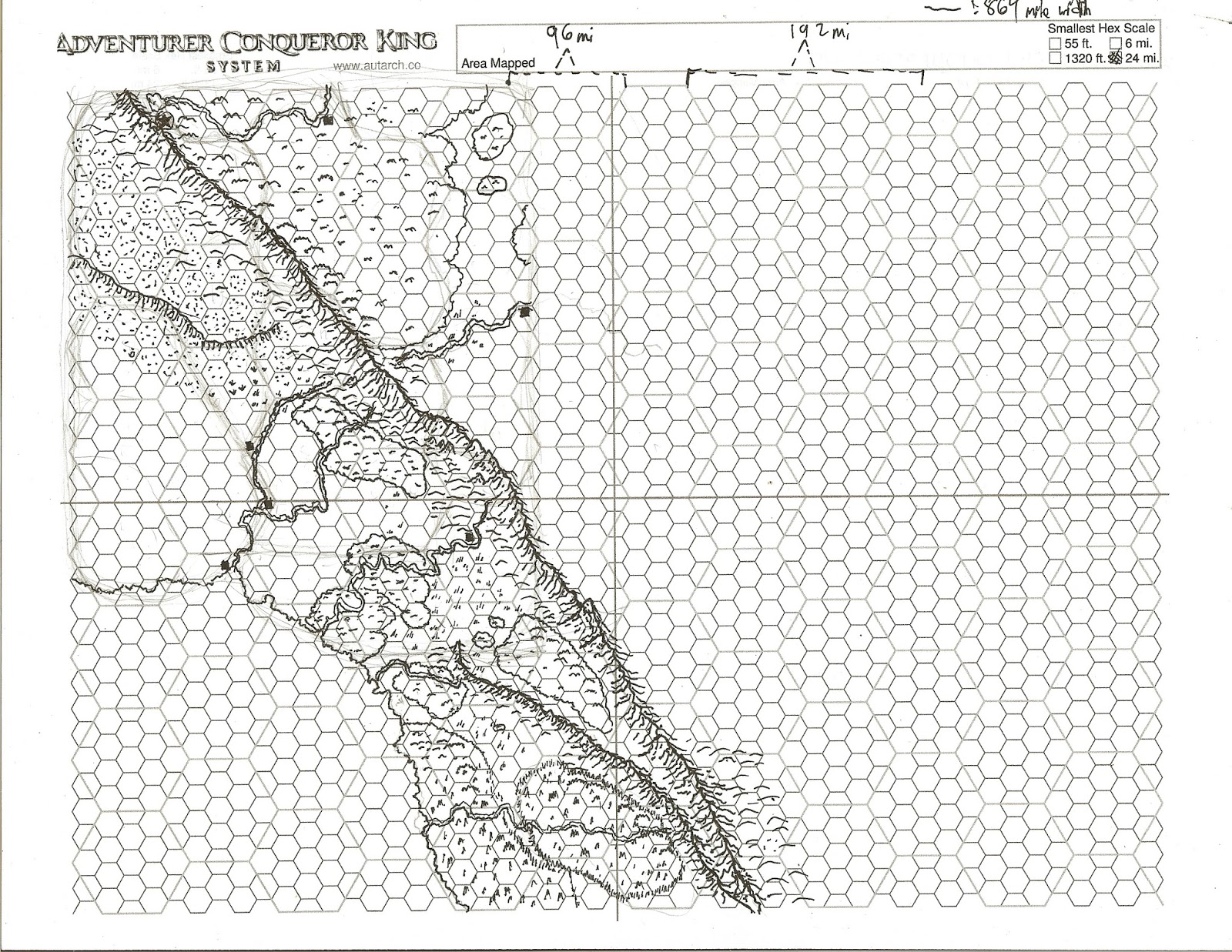
Below is the Atlas sized map for South Western Thivola, the continent inspired by South America.


This map in particular is inspired by the Chilean-Argentinean area where Santiago is. The north western part becomes a desert due to the coastline mountain range blocking the trade winds and due to it getting ever so closer to those Horse Latitudes. Further north, there is a plateau similar to the Altiplano. I plan on having a variety of deserts up there. The barren wastelands, the dried up lake turned salt flat, and some sandy dunes. The mountain range is Etapu's Spine, named after the people's founder god of the earth and forests, Etapu. I plan on widening it some more as it goes more south. On the other side of it in the north lie the beginnings of sub tropical wet forest. Further north and east, I'll probably put in some more rain forests and swamps.

As you get more south, the terrain, climate, and vegetation changes to be more green and hilly. The mountains get closer to the coast. The climate becomes more temperate with Mediterranean summers. More rivers and some swamps here and there. This is where the players will be starting their adventures. On the other side of Etapu's Spine, I plan on widening the mountain range to be about 200 mi wide. Very much a montane/alpine area. Then, it will lead to a more arid, steppe-like area of nomadic tribes and such before hitting the coast on the other end.

From here, I have a great variety of terrains and climates that will make exploration and travel interesting to the players. While they will be starting in something a bit more familiar, they can end up in some deserts, rainforests, alpine, or even tundra. All in a geographically close area.

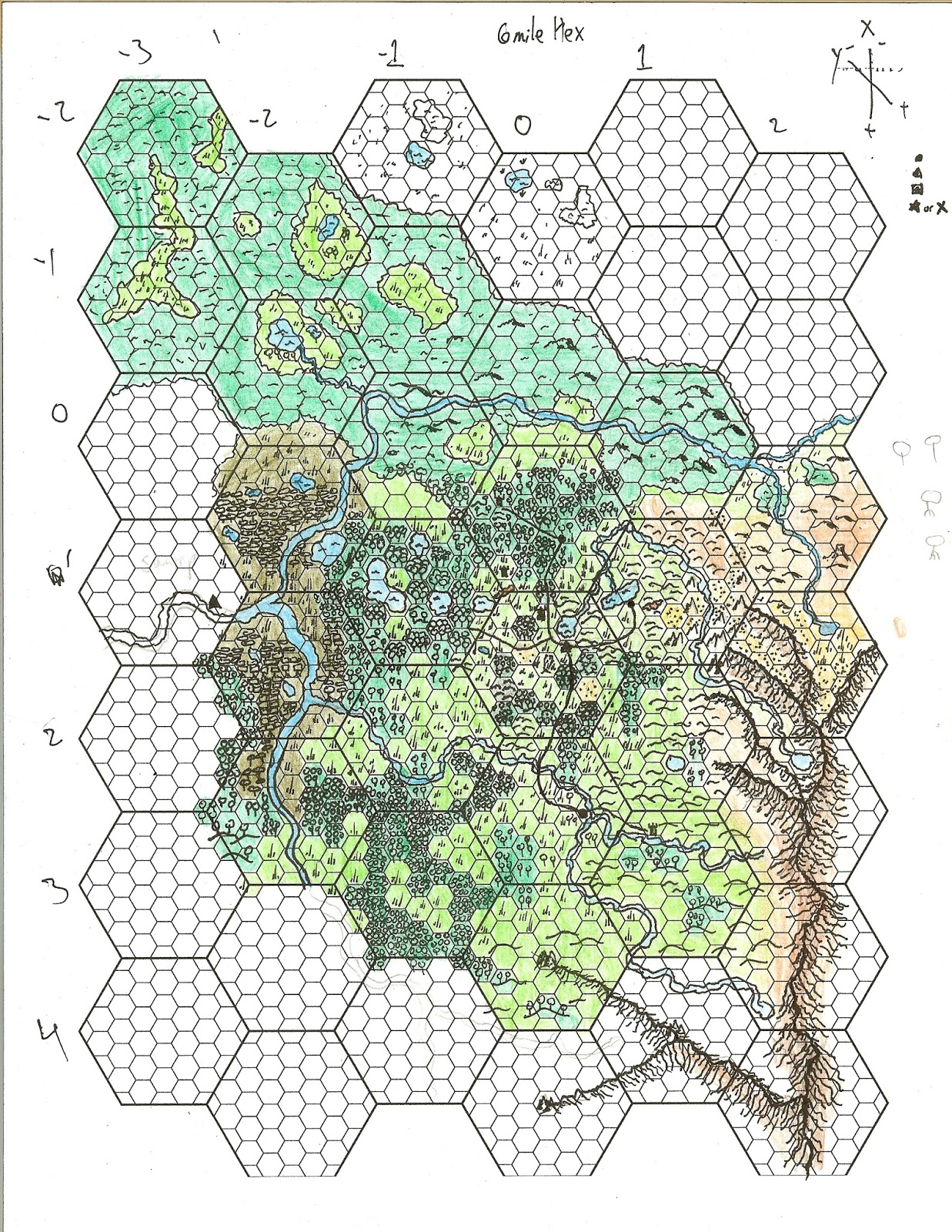
I do have more zoomed in maps for campaign use. I have a Regional Map with small 6-mile hexes that create large 24-mile hexes. I also have a Provincial Map with small 1-mile hexes that create a large 6-mile hex. And finally, I have the Local Map, which just focuses on a single 6 mile hex broken up into 43 1-mile hexes and half/third hexes. Below is a mostly finished Provincial Map. The players will be starting in the large triangle.

I'm bad at coloring within the lines
You can see that from the center to the upper left, my style of drawing changed drastically. I went from doing more symbolic mapping to more iconic mapping. I may redo this at a later point to keep the style consistent and to use a hex map that isn't so dark.

While this campaign is using 5e for the basic rules, I've been using ACKS for a lot of the nation building. You'll notice in the Atlas map that there are some pencil marks that encircle certain areas of the map. These are provinces of the empire ruling over the northern area. The cities are the capital holdings of the nobles in charge of these provinces, built up by ACKS's empire building rules. It was pretty interesting putting the rules to work. Setting up populations and big cities and the empire's metropolis capital in the mountains. The players will be adventuring on the frontier area, away from a lot of these big cities. However, with enough travel time and horses, they can get to one of the capitals in four days. Great if they want to buy and sell expensive stuff, or want more urban adventuring and a break from the wilderness.

I'll get more into detail with the mapping and campaign as the week goes by. Till then, let me know what you think about the maps. 

Wednesday, October 5, 2016

Exploring and the Untamed Wilderness

Wilderness exploration is very popular in OSR games. I absolutely love it. It allows for different, unrestricted adventures that you sometimes can't do in more urban adventures thanks to that pesky law enforcement and social customs. There is also a great feeling when you discover something hidden away that no one else has found. Exploration is great fun, but we can definitely improve on it. 

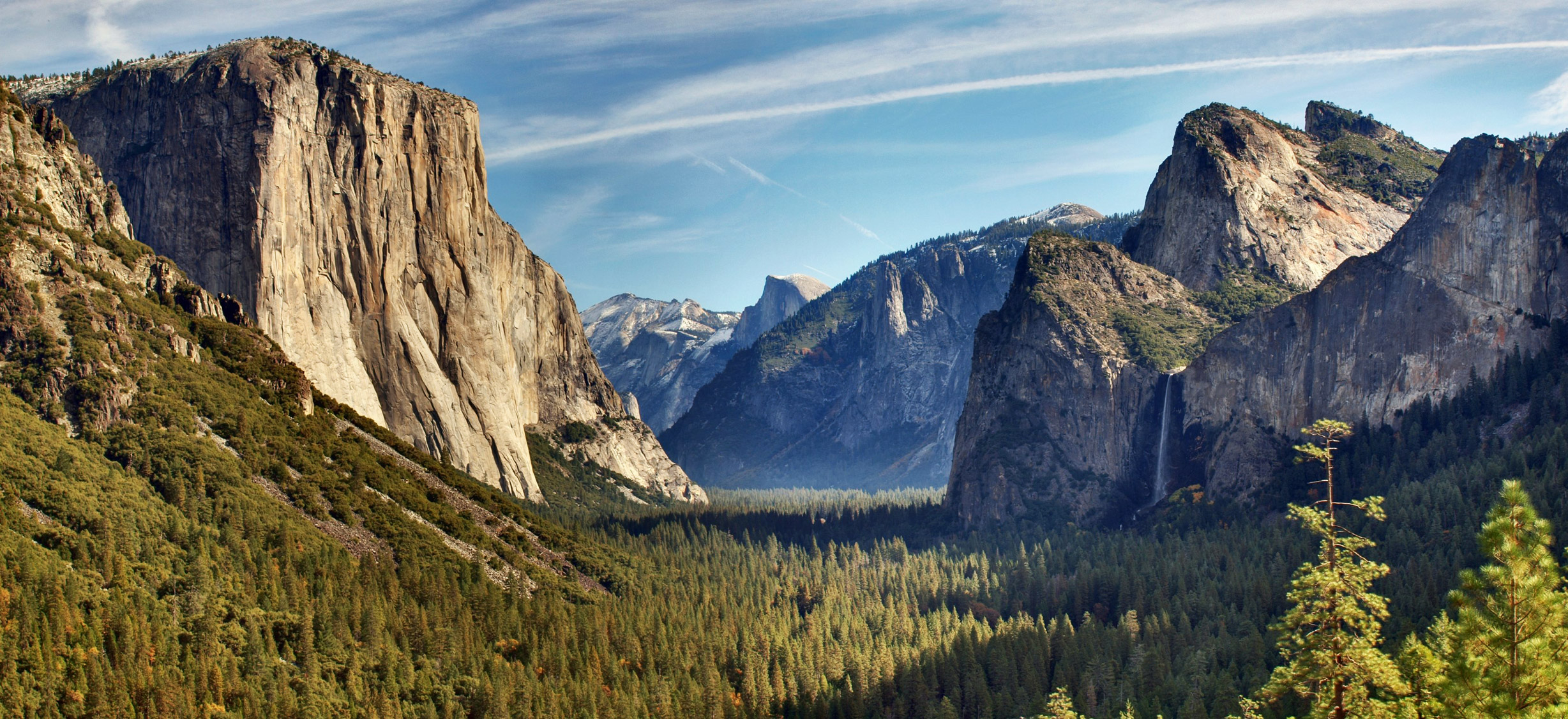
Yosemite Valley

A Populated Wilderness

I briefly touched upon this in my alignment blog post, but I think it bears repeating here. I'm not really a fan of always evil creatures. I think it limits options that players can take when encountering these creatures. I like the idea of players parleying with goblins and trolls, but many times, that option gets tossed aside in favor of razing and looting because they are evil. It's why I ditched the classical alignment and I ditched XP for only combat.

Serengeti
In addition, I think sometimes as GMs, we may focus more on dangers too much. Everything wants to kill, exploit, or betray the PCs and destroy what they've accomplished, so there's really no reason to stay attached to one area or trust NPCs. A lot of times it's because conflict brings adventure, and it adds to the gritty atmosphere of a dangerous world. But we often forget that even in dark times, there are still good people that wish to help out those in need. And when things are rough, you can see people come together and heroism shine through. I think that's why it's important to have allies and friendly NPCs to contrast the bleakness of the setting.

Zhangjiajie National Forest Park
How does this tie into exploration? Well, in the real world, the untamed wilderness wasn't as untamed as we like to think. In North America, for example, there was hamlets scattered across the wilds and signs of a human touch everywhere. When Lewis and Clark made their rounds to explore the newly acquired land, they encountered many of these bands of travelers and villagers that would help them in their quest. Across the pond, we can look at Germany during the Roman era on, which had several tribes and homesteads amidst the wide expanse of forest. So no matter where you go, there will eventually be a group of people you can encounter.

Cenote in Valladolid
So, what does this mean? Well, one negative to exploration games in the wilderness is the lack of NPCs that you can encounter. Generally, you find some cool landmarks, survive the elements, and kill some monsters. And if you find a sentient creature, it's generally an orc or goblin lair that gets razed and looted. So, having an encounter of a homestead or a small camp would open up the chance for the social scenarios that you would expect in a more urban campaign. Maybe you befriend a tribe of drow with gifts, or take a test of manhood with a clan of orc raiders. They can help guide you around the land, telling of rumors and landmarks in the area.

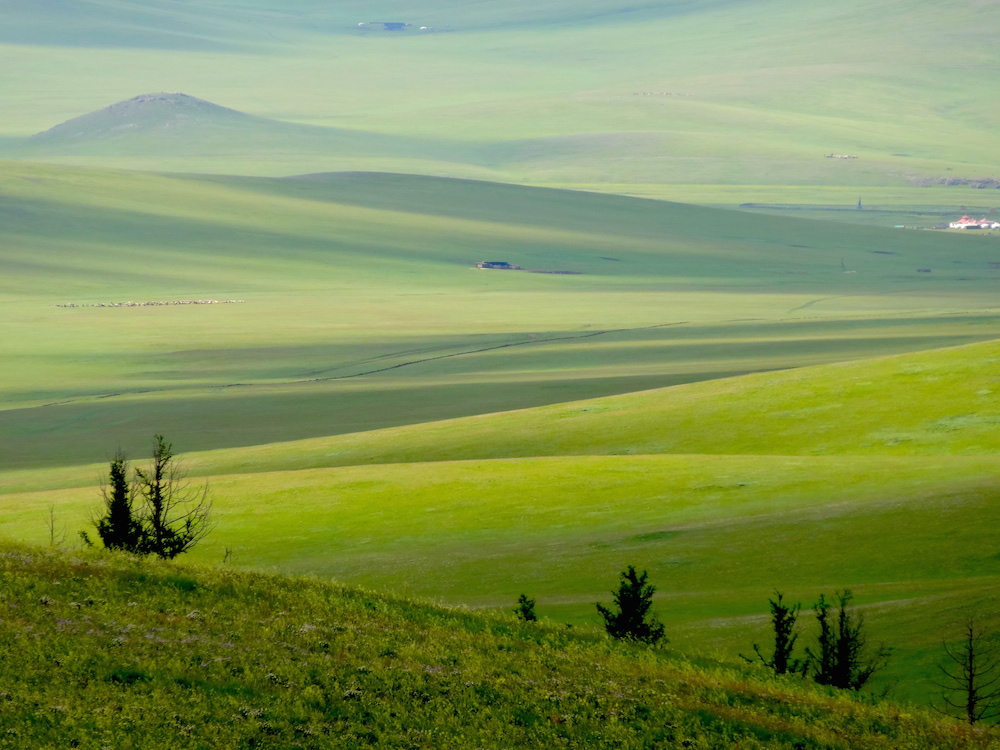
Mongolian Steppe
And speaking of landmarks, special areas of interest can be great encounters for players exploring the wilderness. Discovering a large cenote with hidden treasure in it, or an ancient monument with hidden power, or anything else can be a great break from the combat slog as long as it is interesting. A beautiful cliffside could house a magic item, or some treasure, or it could be a cool spot for a player wanting to make a castle. I like to look up landscapes of places on Earth to get some creative ideas of what the players can get to. Getting some focus on the awe inspiring parts of nature can be a great contrast to the constant threat of surviving Mother Nature.

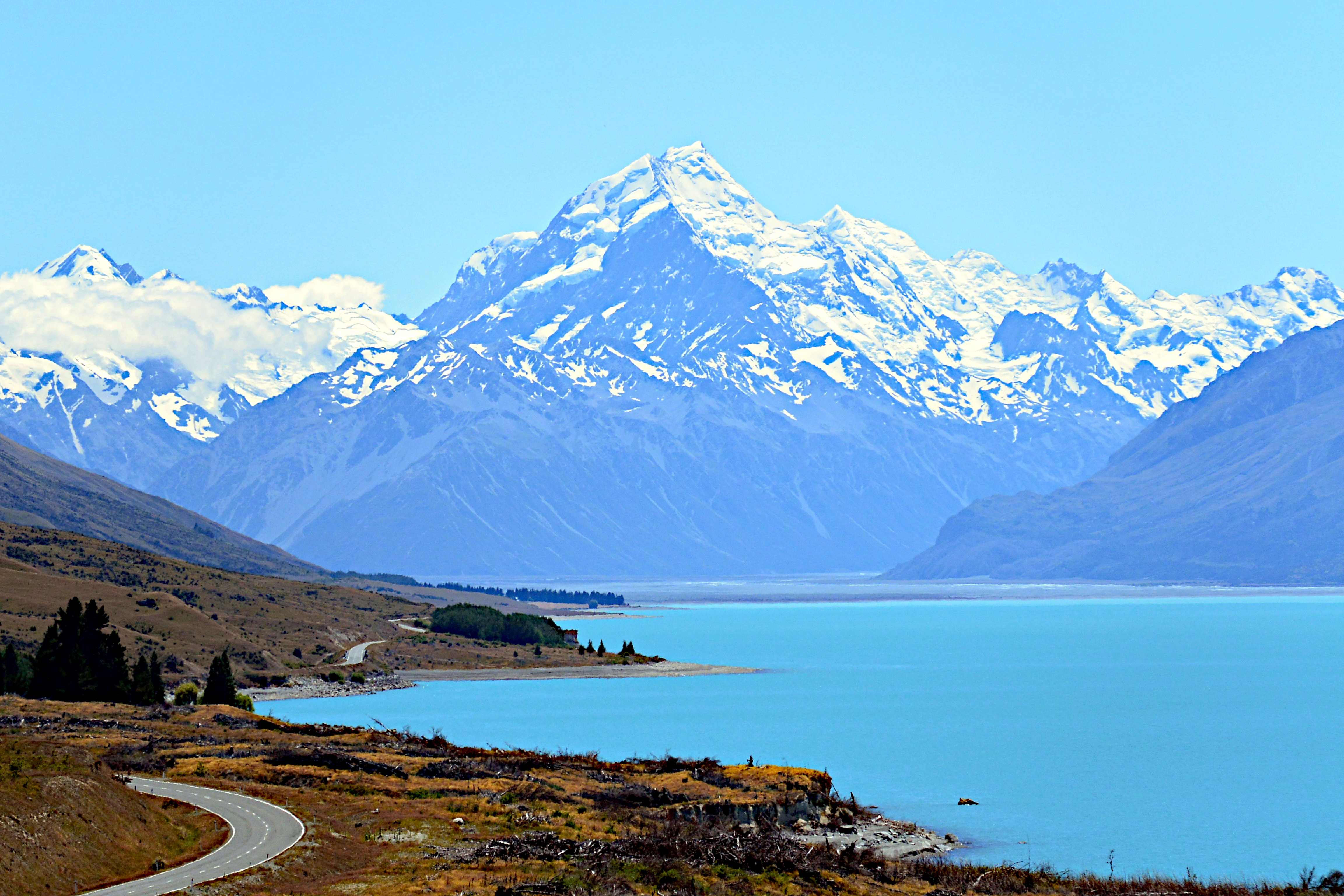
Mount Cook, NZ
Beyond meeting mortals and landmarks, there is also magic and spirits that the players can encounter. Spirits of nature can be a bane or boon to the player, depending how they act. Elder animals that have lived for decades and become spirit creatures can provide great scenarios for adventurers. Faeries, elementals, talking animals that have long been extinct, dinosaurs... it's a magic world, so go crazy with it! It's why I have my Wild Primeval mechanic in my hex games for. Inject some crazy into the world and see how the players like it.

The Matterhorn
Basically, there's more to exploring than just a hex map with a wandering monster table. Don't get me wrong, killing monsters is always fun, and as a player, I love overcoming tough challenges out in the world of D&D. But I think as GMs, we can get creative and think about more than what can we can throw to kill our players. Sometimes a cool adventure is as simple as discovering what's in the next hex. Also, enjoy some more pictures of landscapes and landmarks.
The Painted Desert
Great Blue Hole, Belize
Old Man of the Mountain, 2003

Wednesday, September 28, 2016

An Exercise in Improvisation, Procedural Generation, and Small Scale Adventuring

For a very long time, I've run games in the same setting. That is, a world that takes influence from aspects of the Early Modern Period, the Age of Sail, and Columbian Exchange in an island chain that is a pastiche of the Caribbean. There you see aspects of swashbuckling tales like The Three Musketeers and Pirates of the Caribbean, weird magic a la Clark and Howard, ancient aliens, gritty sword and sorcery, tales of endemic warfare, and Caribbean folklore, both Taino/Carib and Post Columbian. So you're likely to battle alongside hupia against vicious colonist militia men on the remains of an ancient alien space craft.

However, I've been really interested in trying a campaign where I control very little of the world itself. One that is as randomly created as humanly possible, from the hexmap to the landmarks and adventures that can be found. Doing this was to be an exercise in drawing inspiration from the random and interpreting results to be interesting for adventures, no matter how crazy it may combine. I want to improve my improvisation abilities and remain flexible against weird results, especially since it's a good preparation for dealing with the most random aspect of gaming; your players.

I also had a second goal for this. I've been playing a hell of a lot of Witcher 3 and in that game, you have all this adventure crammed into an area that could be smaller than a six-mile hex. So, I wanted to replicate that feeling of tons of adventure packed in almost 15,000 acres of land. I want each sub hex to have something there that was interesting. Whether it's tracks and spoor of a local creature, a lair of a demon, a city, ruins, landmark... anything that is interesting.

Doing this was interesting, as after a couple hours, I had enough adventures and a campaign that could easily last me weeks, if not months. The books I used were

  • d30 Sandbox Companion: An amazing toolkit that I probably used the most when doing this. I also used the d30 Terrain Hex Generator a great deal.
  • The Perilous Wilds: The second most used book. Even though it's Dungeon World, the Ask the Fates section was great for populating each of my sub hexes.
  • Hex Map Pack: I used this for my hex map. I preferred the 6:1 ratio, but you can use less granular ones if you wish.
  • Dodeca Series: Primarily the Weather generator, because I feel it's the most in-depth climate and weather rules out there. My game is meant to be a wilderness survival game, so weather is important. But everything else in this cheap book is really useful.
  • The Disoriented Ranger's Random Narrative Generator: Along side the adventure generator in the d30SC, +Jens D. blog really helped to add some interesting twists and complications to different things going on.
  • Dice Dungeon Generator: I used my dice dungeon generator whenever a dungeon or ruin rolled itself on my hex map.
  • Vornheim: Despite being a wilderness adventure, I also have a city and ruins to be explored. And this book has always been a staple in my games.
  • Adventure, Conqueror, King: I used this to stock my dungeons and for the economy. The world building aspect is really great too, but I didn't use that this time. Mostly it's because that's better for a top-down approach of campaign building and I was going from a bottom-up approach. If Lairs and Encounters ever come out, I'd love to use that.

My Approach

My only rules were to keep it as random as possible. Things like town names and NPC names and number were created by me.

  1. I started with a single six-mile hex and had several one-mile hexes as the sub hexes. Counting the half and third hexes as separate hexes, this gave me over forty adventuring locations in a single six-mile hex. 
  2. Using the d30 Hex Terrain Generator, I randomly rolled what the middle hex terrain would be, then rolled what each surrounding sub hex's terrain would be until I filled up the six-mile hex.
  3. I used the d30 Natural Features and Phenomena table to fill up the sub hexes with crazy stuff.
  4. I'd then roll a d3 to see how many special and interesting discoveries there were in a given hex. Then, using Perilous Wild's Discovery table, I rolled for each sub hex to see what would be there. I got a lot of threes so this took a bit. Next time I might skip the d3 roll.
  5. For each result of a dungeon, I used my Dice Dungeon Generator to create them. For things like ruins or intact keeps, I used Vornheim's building generator.
  6. I stocked the dungeons and ruins using ACKS, though I tweaked the table to have monsters that would fit a tropical setting. I also used this for treasure stocking.
  7. I rolled for the weather for 14 days. I started the campaign on a New Moon and set up tides at 8A/2P/8P/2A for times. Whenever I roll weather, I always seem to get a tornado result. It's become a joke among my friends.
  8. I then took a look at everything on the hex map and interpreted the results, making connections that seemed like they would work and filling in some results with monsters or NPCs that caught my eye. Also used the d30 NPC Maker to make a lot of NPCs for the area.
  9. For each possible adventure, I used the Random Narrative Generator. For simple quests, I only rolled on it once or twice. For more in depth adventures, I rolled three to four times, and for longer campaigns, I rolled five times.
  10. Made a random encounter table
  11. Had a beer
The original terrain map after rolling
Above is the preliminary hex map. Big hex is 6 miles and the sub hexes are 1 mile. The letters are the terrain for the area. W is water, H is hill, F is forest, S is swamp, and P is plain. WZ stands for Wild Zone, which is a campaign specific hex that I talk about here and here

At this point, I had made all the connections and was essentially ready to run the campaign. I wrote down all of the adventure ideas that I had randomly rolled up and interpreted and I have to say, I was really excited for what was created. The biggest thing I like is that each 1 mile hex has at least three interesting hooks in there for adventures. Everything from treasure maps to tracks of a creature to dungeons to NPCs. And the best part is that despite the results looking quite disparate, the adventure narrative between things really work out. On paper, this looks fun and I can't wait to run this for a group. Once I get my scanner working, I'll have to post my notes up on everything.

I learned that there is a greater value to random rolls than I honestly first imagined, even with my love of random tables. I feel a bit more in the right headspace for the world because I've had to interpret everything instead of creating, though there was plenty of creating from the inspiration of the rolls. I think that my improvisation skills will benefit from this little exercise. Now I just need  a chance to run it.

My next post, I want to post up the final map and the notes I made for each area that I rolled up. With the move and packing, my time will be a bit limited on what I can post.

Monday, May 23, 2016

Survivor Series I: Weather Forecasting

Fun fact, before I decided to be a chef and go to culinary school, I went to college to be a meteorologist. I have always been enamored by the weather and decided I wanted to do that for a living. Sadly, I wasn't the best at it, mostly the math sections. You'd be surprised how much math we had to take. I think only the mathematicians beat us. But enough about that.

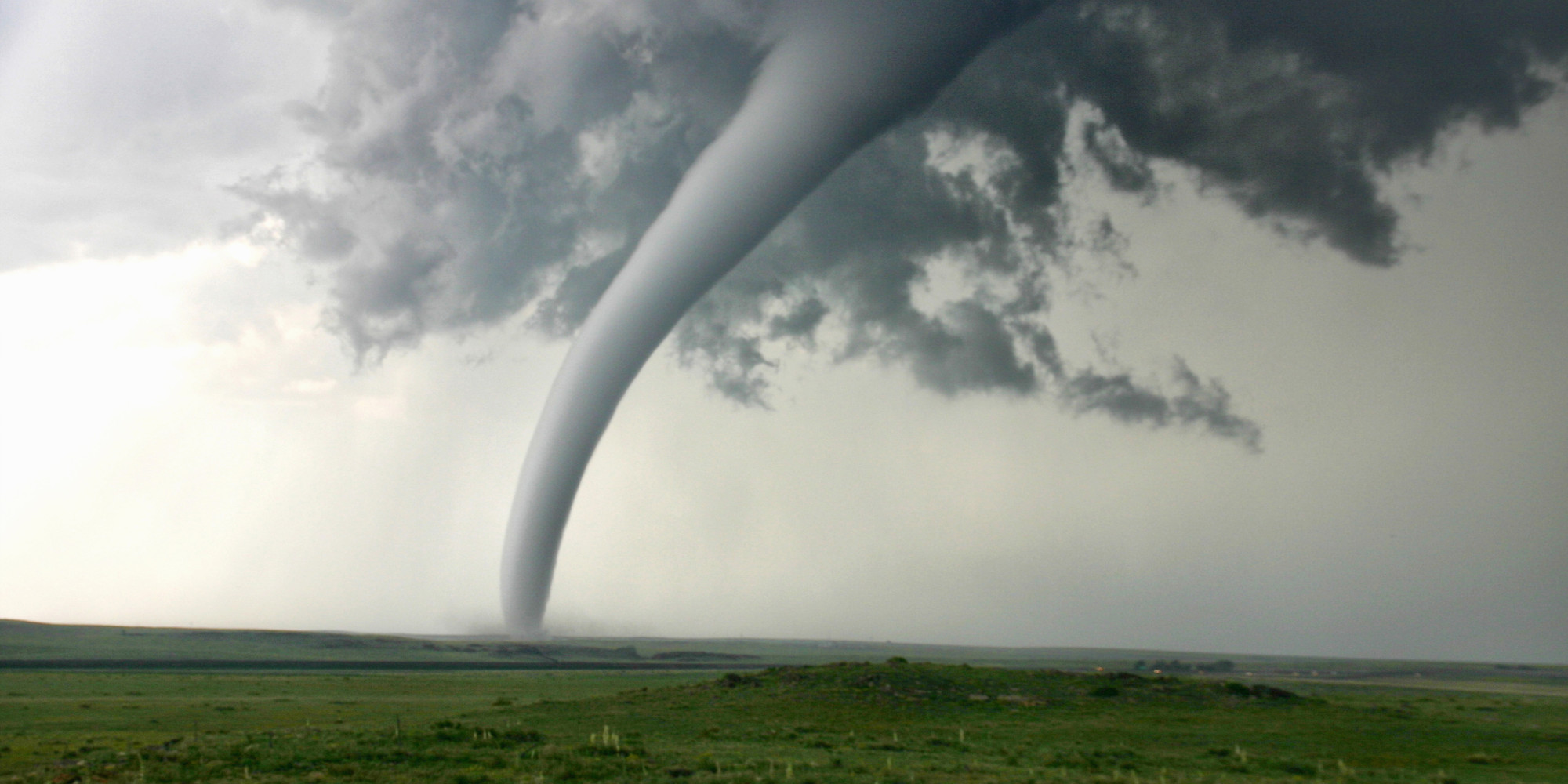
I've always loved tornadoes and got to chase them! (Source: Wikipedia)
When I started DMing 3.5 and later Pathfinder, I would incorporate a lot of OSR survival stuff into my games. I always focused a lot more on the Man vs. Nature battles as players would deal with wildlife, natural disasters, disease, and weather. Weather is awesome and a game changer, and most players don't expect to deal with the blistering heat or cold, let alone storms and tornadoes. One of the most memorable moments in a game was when a PC tied himself to a pole and survived a tornado going over them, all while screaming and shouting obscenities. This earned him a place of honor among the tribes of kobolds that saw what he accomplished and he became a hero to them.

Of course, when adding more survival stuff into your game, it helps to know a little bit about the rules as well as how it works in real life, especially in a world very different from our modern world. For today. it's weather forecasting. In Pathfinder, one can forecast the weather using the Survival skill. And I use this in my ACKS game too, with a 16+ roll to do it, but those with Survival gain a +4 to it. However, many of my players have wondered how, without modern equipment, did our ancestors divine the weather?

We have to remember that people didn't use the scientific methods that we use today. A lot of weather forecasting was pattern recognition, based on astronomy, observing animal behavior, and simply looking at patterns in the sky. This would be compiled into almanacs as weather lore. You can see a pretty good list of them on the Wikipedia article about it. You can use these or have them as inspiration to make up your own weather lore for your game. Remember, it's all based on observations, not rigorous testing. If a bunch of crows gather the night before a rainstorm, you can bet that people will assume that a murder of crows brings the rain. And with running a magical fantasy setting, maybe that is actually the case! There are more magic methods of forecasting the weather, Dowsing and haruspicy are some real world examples. The classical definitions of pyromancy and aeromancy are also good to use for divining the weather (among other things).

Forecasting the weather is an important tool if you make weather a decent obstacle. Players dealing with torrential rainstorms and the flash floods that come with them will value a survivalist's prediction in the future. Or, the players trap an enemy army in a terrible thunderstorm to weaken and gain an advantage on them. Anything is possible! The more you use weather, the more of an impact it will have. I generally use the Pathfinder rules for weather, since they are pretty robust, but use or make up whatever you like! For a generator, I like to use the Dodeca Generator here. I find it is a good weather generator that takes into account the previous day's weather as well as the climate.


Monday, March 7, 2016

The Wild Primeval Mechanics

Earlier I talked about a part of my setting called the Wild Primeval. It's one part Feywild, one part Wonderland, and one part Princess Mononoke. It's not an alternate dimension of magic, spirits, and fairies, but a true part of the world that covered the world in ancient times but has now been assarted by man to make room for civilization. Below are the rules I use, though translated to using D&D rules. I use these but for Savage Worlds. Hope you enjoy!


The Wild Primeval

Hexes that spawn on the map, having a 1% chance per day. This is Increased by several factors, some caused by the PCs.

Spells cast in the previous day: +2% per spell
Existing Wild Zone: 2% per Wild Zone Hex
Existing Wild Realm: 5% per Wild Realm Hex
Existing Ascended Wild Zone: 10% per Ascended Wild Zone

The percentage from spells cast are added the following day, then reset. These are all cumulative and go to a maximum of 75%.

When they spawn, check your 10 x 10 hex map and roll 2d10 to choose the random spawn coordinates. If you have a different sized hex map, you can choose different dice that would fit, or pick a 10 x 10 area on it. If it spawns on top of a settlement that is a town or larger, re-roll. The Wild Primeval tends to avoid civilization when first spawning.

Once spawned, every day you roll 1d6 to see if the origin Wild Zone continues to anchor itself into our reality or fades away. Rolling 4+ succeeds, raises (every 3 over the success DC for non-Savage Worlds players) count as additional successes, dice explodes. Three success means the origin Wild Zone is now permanent. Three failures means it dissipates.

Once it has become permanent, the origin Wild Zone starts spawning more Wild Zones in adjacent hexes. Every day, roll 1d6 to see which adjacent hex becomes a Wild Zone. Do this until the origin Wild Zone is surrounded by the secondary Wild Zones.

Once surrounded, the origin Wild Zone becomes an Ascended Wild Demesne and the surrounding six hexes the Wild Realm. Every week, roll 2d4 to see how much it expands. The numbers rolled are how many hexes are spawned. Each expansion must be adjacent to two existing Wild Zone hexes.. These can spawn over settlements that are towns or bigger. Wild Zone hexes that no longer border normal hexes become Wild Realms.

An Ascended Wild Demesne can erupt into something greater called an Unbound Wild Demesne. More on that later.

Multiple origin Wild Zones can spawn and it’s not unusual for a Wild Realm to have two or more Ascended Wild Demesne. When spawned, you can connect the realms with the spawning Wild Zones to form a larger Wild Realm.

Rules in the Wild Zone

In all Wild Zones, the laws of reality are warped. Magic is more random. All casters gain the Wild Magic backlash. Every time a spell is cast, there is a 10% chance they set off a Wild Magic event. Roll a d6 and see the results are below. Each result is simple and the GM or player can embellish as they see fit. The results are purposefully split between beneficial, neutral, and negative.
  1. The spell doesn't work, but still uses up a slot. You take 1d4 damage per spell level.
  2. A different spell on your list is cast, GM's choice.
  3. The spell's cosmetics changes. Fireball becomes purple and grease smells like lavender.
  4. Something cosmetic changes either you or the target(s). Hair color, smell, clothes, gender, whatever you or the GM decides. It lasts for 1d6 hours.
  5. The spell casts for free, without using a slot.
  6. The spell heals you or your target for 1d4 per spell level.
In addition, casting a spell adds to the chance of an Arcane Tempest forming. Arcane Tempests are terrifying storms that ravage the countryside with magical energies and fundamentally warp the area. The GM checks once a day for an Arcane Tempest to spawn in the PC’s hex. The percentages are listed below.

% of Tempest in a Wild Zone: 2%
% of Tempest in a Wild Realm: 5%
% of Tempest in an Ascended Wild Demesne: 10%
% of Tempest in an Unbound Wild Demesne: 20%
Spell Caster in the Hex: +2% per Spell Caster Level per Character
Spell Cast: + 5% per Spell Cast

Arcane Tempests unleash harsh winds and rain onto the countryside. The precipitation is always strange, ranging from unusual to the climate (snow in the desert, sandstorm in the jungle) to the downright weird (raining frogs or blood). These cause the usual penalties to sight and ranged attacks. In addition, eldritch energies surge through the area like lightning. These bolts of arcane lightning do 2d6 magic damage to anyone struck. Casters also lose a random spell when struck. Eldritch lightning has a 1 in 12 chance of striking a random character per 1 hour in the Arcane Tempest. Arcane Tempests disappear after 1d6 hours. When an Arcane Tempest is done, it changes the landscape drastically. Change one or more of the magical vistas in a hex when the storm is done. I usually change an amount equal to the hours the storm lasted.

The terrain in the Wild Zone becomes more treacherous. Forests become overgrown, deserts become hotter. Movement through all terrains are halved. Terrain in a Wild Realm and Wild Demesne become very chaotic. Floating islands, talking trees, rivers flowing into the sky, and fields of fire are all common vistas in these areas. These areas become great landmarks and potential adventures for the players and can be randomly rolled or placed appropriately. Each Wild Realm has one or two of these vistas. An Ascended Wild Demesne has three to four, and an Unbound Wild Demesne has five and up. I plan on making a list of these in a future post, but feel free to go crazy with this.

Monsters are more common in Wild Zones, and many are much more dangerous. Some monsters are spawned from the Wild Zones and will attack intruders to protect their home. The origin Wild Zone is the nexus of the all other Wild Zones. Within it is a strange glowing bulb called the Golden Blossom. It is what anchors the Wild Zones in our world. It has roots that extends out to all the other zones, making it easy to track.

Unbound Wild Demesne

Sometimes enemies or the PCs want to see the Ascended Wild Demesne grow even stronger. To do this, they can sacrifice creatures to the Golden Blossom to truly make it powerful. The blossom takes a lot of sacrifices to erupt. Below is a table that shows how many sapient mortals are needed to sacrifice to unchain the Golden Blossom.

Level of Sacrificed Creature    Number Needed
1-4                                                 625
5-8                                                 125
9-12                                               25
13-16                                             5
17-20                                             1

When it has taken enough victims, it becomes an Unbound Wild Demesne. The surrounding six hexes become Ascended Wild Demesne. The Golden Blossom also uproots itself and becomes a colossal spirit plant monster I call the Primeval Guardian. It acts as a guardian of the Wild Primeval and will continue spreading the influence across multiple hexes and destroying any signs of civilization. Whoever created it doesn't control it and many times, the Primeval Guardian will try and kill its master. There is a way to control it, but I haven't figured that out yeah. I will definitely make some stats for this colossal monstrosity.

Destroying a Wild Zone

When you destroy the Golden Blossom, you destroy the origin Wild Zone and all hexes it spawned. Other Wild Zones cannot exist without the original one and disappear immediately.

Sometimes a large realm of Wild Zones and Wild Realms will have multiple origin Wild Zones. If one origin Wild Zone is destroyed, then the six surrounding hexes are also destroyed. In addition, 2d4 hexes disappear at the start of the next day, GM’s choice. After this, if there are any hexes that aren’t somehow connected to an origin Wild Zone, they too disappear.

The Players and the Wild Primeval

Whenever the players destroy or let a Wild Zone bloom, it affects the spawn rate in the area. Doing certain actions can also stymie the birth of these areas. In general, Civilization is anathema to the Wild Primeval, and taming the lands will make it harder for them to spawn. If there are four or more Wild Zones still in an area, the slider can’t go above 0.

Slider
5 -- All Wild Zones gain a -4 to all of their anchoring rolls
4 -- Roll the % to Spawn dice three times and take the lowest
3 -- All Wild Zones gain a -2 to all of their anchoring rolls
2 -- Roll the % to Spawn dice twice and take the lowest
1 -- All Wild Zones gain a -1 to all of their anchoring rolls
0 -- Spawns normally
1 -- All Wild Zones only need two successful anchoring rolls
2 --Spawns one extra Wild Zone on a success
3 -- All Wild Zones only need one successful anchoring roll
4 -- Spawns two extra Wild Zones on a success
5 -- Spawns three extra Wild Zones on a success and all Wild Zones anchor after one day

Building a Domain: +1
Building an Urban Settlement: +2
Destroying a Wild Zone: +1
Destroying an Ascended Wild Demesne: +2
Destroying an Unbound Wild Demesne: +4
Wiping out a horde of monsters/an alpha monster: +1
A Domain gets destroyed: -1
An Urban Settlement gets destroyed: -2
A Domain/Urban Settlement gets claimed by a Wild Hex: -2
A Wild Zone anchors: -1
A Wild Zone ascends into a Wild Demesne: -2
An Ascended Wild Demesne becomes Unbound: -4

Monday, February 29, 2016

Ethereal Things Lurk in the Wilds

The wilderness is a scary place, filled with deadly animals, poisonous plants, and teeming with spirits of nature. I've always loved the innate dangers of exploration beyond terrible monsters. Diseases, natural disasters, and the elements make for great dramatic encounters that the players have to contend with. One can always fight a chimera or bandits, but how does one swing their sword against a flash flood, or a tornado? But that's a good post for another time.

Spirits need to be used more. I love reading about tribal religions, animism, and paganism. There is something more personal yet alien about spirits of natural objects watching you as explore the wilds, or animal spirits racing along side you, hunting their own ethereal prey. Just because they are nature spirits doesn't mean they are inherently good or nice. They aren't a commune of hippies singing koombayah while becoming one with nature. The wilds are brutal and uncaring and cruel and so are many of the spirits. Anger a wolf or a lion and it will just initiate combat with you. Anger the spirits of the wilds, and you have to fight something both intangible and elemental.

Spirits lie in the Spirit World, or the Ethereal Plane, or whatever name one wishes to call it. Here lie spirits of all shapes and types. There are spirits of trees and rivers whose names you can hear as whispers in a forests. Many times these spirits coalesce into a greater consciousness of the land that protects and serves the domain as a genius loci. Animal spirits roam the realm, hunting and playing in the wilds of the ethereal. There are ghosts and all kinds of spirits here. The Spirit World is separate, yet within the Waking World. It intertwines itself around the Waking World and the Dreamlands like a creeper vine over a great oak. There is no separation between our world and the world of the spirits, and these spirits can walk freely between realms. If you find the right area in a secluded grove in a forest, or an isolated peak in the mountains, or a lost oasis in the desert, you too can travel to the Spirit World. These are ley lines that are a bridge and are where the Spirit Realm bleeds into the Waking World the most. It's dangerous to enter physically, so many simply go there spiritually. This requires putting your body in extreme stress to work. Starvation and thirst are common, but a faster (though still dangerous) approach lies in using hallucinogens to achieve a spiritual connection to the Ethereal Plane. Because of the closeness of the Spirit World, the Waking World, and the Dreamlands, dreams can be a convenient way for spirits and people to communicate.

Ghosts and phantoms are trapped here, their emotions and nostalgia for the living world binding them in an eternity of torment, waiting to be freed. Alongside these ghosts are ancestor spirits. These are ghosts of your parents and theirs and so on, who have chosen to stay behind and protect their kin, granting their wisdom of the ages, good fortune, or strength in conflict. Many say that after centuries of good service and reverence, they ascend to heights of power like that of a demigod.

Too spooky!
Canny and clever animals that live beyond the venerable age of their species ascend spiritually and become one with nature and the spirit world. They become smarter, like a human, but still retain ties to their survival instincts. The animals no longer live in nature, but simply are nature. They can live out an eternity in nature until something disturbs their homes. Like spirits of nature, they can call upon animals and plants to attack intruders and their enemies. Many animal spirits become genius loci of their home after centuries of protection. Like ancestor spirits, they can decide to safeguard a person, a clan, or a tribe. In this way, they morph into totems, protectors lending their guidance and strength to overcome life's obstacles. In my setting, the best of these totems ascend spiritually again into the tonalli, creatures that defend people born on a certain day or month.

I swear I don't own a shirt like this!
Most spirits are primal in nature and transcend our own morals, usually helping anyone that gives them the right offering. This depends on the spirit. Some love tobacco or hallucinogenics, others love luxurious items, like jewelry and fine clothing, and more love less tangible treasures, like knowledge or secrets or even a good joke. A spirit always tells the person what they want, and once they receive their offering, spirits always honors your requests. Some spirits lean more to benevolent or malevolent attitudes, but all honor the offering system and honor a spiritually charismatic speaker.

Anyone can try and talk to a spirit, but without any form of spiritual connection, things can get bad very quickly. Spirits love the Waking World, but many are ignorant or apathetic to the people that live there and their customs. As such, they can be easily angered. Imagine two people speaking to each other, but they speak different languages. Each one tries in vain to make the other understand them, and it becomes one big awkward shouting match. That's where spirit talkers come in. Unlike the religions of more reformed, ecclesiastical religions of larger cities, whose deity(ies) is personal and can understand all prayers and worshipers, more tribal religions of the frontier require spirit talkers to handle diplomacy with the spirits of nature and ghosts. Shamans are the common term, but so are witch doctors, witches, mediums, channelers. These people are priests that help connect us to the ghosts and apportions that would vex the uninitiated. Shamans play a large role in tribal and frontier societies where nature is unforgiving, and anyone that can tame the wilds (or at least bargain with them) become highly respected advisers and in some cases, leaders. Sadly enough, the shaman leaders of tribes find that the more they delve into human politics and issues, the harder it is to connect to the Spirit World. This is because to speak with spirits, one much have an incredible amount of discipline and some disassociation from worldly concerns.

Channelers from the old Pokemon games were creepy, but cool.
The spirits in the setting I run are called zemis. Each zemi is a nature spirit of some aspect of the wild. Trees, rivers, rocks.. each one has a zemi attached to it. Zemis love idols and always ask that a shaman creates an idol based on the material they love most. A zemi of the mountains would want a stone idol adorned with rare metals and gems, while one from the forests would want one made of logs and vines, with beautiful flowers decorating them. Each zemi has a different personality and it is up to the bohique, the locals' shaman, to parley with them for safety and good fortune. Some also act as psychopomps, guiding the newly departed into caves that lead to the underworld, or towards ley lines that lead to the Spirit World. Zemis and bohiques are a much needed ecosystem that helps the living, even long after they have passed.

Of course, who says that spirits are only for nature, the frontier, and tribesmen...

Wednesday, February 24, 2016

The Wilds and Magic

The inaugural post for this blog!

I love magic and fantasy worlds. It's something amazing and wonderful because it doesn't really exist in our world. However, one thing that I see often in RPG settings and games is that magic feels different or disconnected from the rest of the world. Yes, there are monsters in them, but many of the mundane monsters (orcs, goblins) feel too much like part of the mundane world, while more magical beasts tend to hail from other planes of existence. These magical beasts and dangers can be fantastical obstacles that can make the players feel really heroic. There's also this sense of wonderment of adventuring in vistas that wouldn't be possible in the real world.

Imagine the PCs tripping in this area...
Yet, there is also something interesting about the mundane world. There are still dangers, both from animals and the elements, that add a great amount of danger and conflict, thus adding adventure. These down to earth conflicts can help the players connect to the setting in ways that a more epic, magical style can. Saving the village from vicious bandits, or helping out citizens dealing with a drought, or even braving a terrible storm in the wilderness can fill the players with a sense of accomplishment and makes them feel as though they earned being called heroes.

So, what if we want both the mundane and magic vistas in our setting?

This is why I've added a phenomenon called The Wild Primeval in my settings. In this, there is a chance that an area of arcane energies spawn in the world. This changes the mundane into something more akin to a fairy tale. Floating islands, crazed monsters, talking trees, cannibalistic fog... these are all possible and common in the Wild Primeval. When spawning, they tend to avoid larger settlements and cities. One concept I enjoy is Man vs. Nature, with the best and worst of civilization warring with the best and worst of nature. With this concept, I have the Wild Primeval as a sort of primordial state of the world before the races of the world began building cities and taming the wilderness.

Floating mountains are always cool!
Not only can these zones of eldritch energies change the landscape, but they can also grow and expand. At the center of the Wild Primeval is a blossom of arcane energies. This is what anchors the wild zones into our world and giving time and care, they can expand overland and begin swallowing cities. And that can put the Wild Primeval against the PCs. Again, this really showcases the civilization vs nature I really want to be more at the forefront in the games I run, as well as secularism vs spiritualism.

I do plan on having the PCs able to counter the effects of the Wild Primeval (as well as causing them). Casting spells increase the chances of a Wild Zone event to happen, as does overcasting (casting past your limit, which is dangerous). There is also a cascading effect if Wild Zones are left uncontested. The more there are on the map, the more that will spawn. Of course, taming the wilds can help reduce and prevent the Wild Primeval from spawning. PCs can destroy the blossom that anchors the Wild Zone into place. I plan on the Wild Primeval having effects on casters (both positive and negative), as well as mundanes, but that can be expounded upon in another blog.

This may feel like an invasion from another dimension taking place in our world, but truthfully, it is the world reverting to its primordial, magic heavy state. Like overgrowth and animals retaking an abandoned city long after humans are gone. Yet it should still feel very alien and different to the players, almost as if they've entered another plane of existence filled with spirits.

Of course, the mundane wilderness is still saturated by spirits and beings from the Spirit World as well as magical beasts. Magical vistas also still exist in the mundane world, but they tend to be the exception and usually built by creature of magic or casters. In the Wild Primeval, magical vistas simply are the norm

I plan on expanding more on this in later blog posts. I want to have these spawning rules for hexcrawls that I wish to run now that I have free time.