Thursday, June 2, 2016

Contemporary Fantasy Setting: Adventurers in the Modern Day

Real talk. When I saw the new trailer to Final Fantasy XV, it made my head spin in a good way. I am excited to play it, but what I thought was really captivating was the setting. Instead of doing something using fantasy, steam-punk, or science fiction, they are instead using a more contemporary setting with fantasy elements. There are cars, cafes, TVs, the internet, cellphones... while also with the monsters that inhabit a Final Fantasy universe, magic, swords, and flying battleships. It inspired me greatly to run a setting that is more of a contemporary fantasy, but where the magic is a big part of the world and not a hidden second world that you see often in books and movies (Harry Potter, Hellboy, etc.). Basically, I want to take something like Faerun or Greyhawk and advance the timeline to a more modern (or even near future) setting. No secret magic or hidden monsters. I want it to be front and center. Here are some things I've considered.

Adventurers

I think at first thought, adventurers as we know them would be more rare, especially in more stable, post-industrialized societies. Kind of hard to go killing orcs and taking their stuff when you have to contend with law enforcement. So adventures would have to take place in the frontiers or in lands of lawlessness. With advancements in both communication and travel, there probably aren't many unexplored areas on the planet (though below or above the planet is another story). That said, there are plenty of countries you could adventure in that would fit the bill for adventures. Third World countries would be perfect for adventurer, especially those still in the midst of some major changes (revolution, industrializing, political instability.). I feel that watching some modern adventure movies, cartoons, and video games are a great resource for these kinds of adventures. Johnny Quest, Uncharted, Indiana Jones, Far Cry, Tomb Raider. These are all great examples of adventuring in the modern day.

Probably the easiest start (but perhaps the hardest to execute) is a military campaign. Players out taking down an opposing army, or clearing out an area filled with monsters would be fairly easy to start. The problem is that with a military campaign comes the baggage of having to follow orders. Even if the commander is a PC, some players can still balk at the thought of following orders. One big idea to go with this is a paramilitary organization that acts as an agency to hunt down and destroy errant monsters that threaten their nation. Pretty much modern day dragon slayers, only replace their swords with M16s, tanks, and strafing runs.

If you don't want a very regimented military campaign, some ideas could include the party playing partisan freedom fighters. Less of a structure to it, and it allows for more freedom of choice. There's also playing as a PMC soldier or mercenaries. You'd have maximum freedom of choice, as long as you brought home money or other resources that your company needed, Playing as the A-Team or as Wade Wilson's group of mercs taking down despots and dragons has a good ring to it.

Parallel to a military campaign would be one in espionage. Playing James Bond, Michael Weston, or Sterling Archer would allow a different style of scenarios from the military campaign. Instead of war zones, you'd be going around the world to different cities, bases, and such. Would allow for more freedom, but much like the military campaign, you'd still be under orders from your intelligence agency. That said, there's a lot more wiggle room in a spy campaign for your players. so definitely look into that. Especially if you are going freelance spy, a la Michael Weston.

Law enforcement would be great for adventuring on the home front. Whether you are police, P.I., detectives, SWAT, or FBI/NSA, there's a great wealth of criminal activity in a stable (or unstable) country. Depending on the style, it could be by-the-book, or more loose-cannon and edgy. You still run into the same issues of having to follow orders, but at this point, I hope you have a group that is willing to handle that sort of thing in the game.

Stepping away from the law, there is always playing as the criminal element. Whether you are gangsters trading chimera blood in Compton or South Pacific pirates hunting for kraken eyes and slaves, there is plenty to do in this kind of adventure. Be a drug kingpin, or a professional stick up crew, or a human trafficker. This has the most freedom, but requires players that are comfortable being the bad guys. Also, the consequences for failure can be very dire, from the DEA gunning you down on the top of your mansion to a rival cartel putting your decapitated head on a turtle with an IED in it against your crew. Definitely things to consider with this high risk, but high freedom style of game.

There are other ideas I've been brainstorming for modern adventurers. A journalist like Lois Lane that roots out corruption. A modern day vigilante a la Batman that stops crime where few dare to tread. Even something as simple as modern day adventurers like Johnny Quest and Nathan Drake exploring monster infested rain forests and mountains would be cool. I really like FF15's warriors on a road trip. But there are also different types of adventures you can have in a modern setting. I think that will be a blog for another day. What other types of adventurers do you see in a contemporary setting, where magic is present and not hidden, but technology is similar to our own?

Monday, May 30, 2016

Interception!

I was thinking about how to do interception in D&D. Like, playing the bodyguard and taking an arrow or sword for someone. I have been thinking about how I want to do it. I've come up with some ideas.

The Approach

First off, I think I know what I want from it.

  1. I'd want the bodyguard to act out of initiative, but then use up their turn. I think that's fair, given that they are taking what could be a death dealing blow. That's a pretty big risk.
  2. In addition, I'd also want them to have to make the decision before the attack roll is made. I like keeping that uncertainty when doing this potentially powerful maneuver.
  3. I'd also be okay with them moving into position, as long as they could make it with a full round of movement and wasn't already engaged in melee combat. They could disengage, but they'll be attacked 
  4. But, the key is that when they end their movement, they have to be adjacent to the target (if taking a melee hit), or between the shooter and the target (if taking a ranged hit).
What I haven't figured out is which of these methods are going to be the way I want to do interception. Let me list them.


Interception #1

The player can elect to intercept a hit against a target. As long as they haven't acted this round, the bodyguard can make a full movement and take the hit automatically if it would hit the target. The interceptor takes the damage as normal and ends their turn.

With this method, the bodyguard would automatically protect the target once per round, as long as they can reach them. There's the initiative limit on how often they can do it as well as the HP limit. It is simpler than method #2, but it does mean that the person gets automatically hit, despite their armor.

Interception #2

The player can elect to intercept a hit against a target. As long as they haven't acted this round, the bodyguard can make a full movement and attempt to take the hit. If the enemy's attack roll is higher than the target's AC but lower than the bodyguard's AC, then the bodyguard takes the hit but no damage. If the enemy's attack is equal or higher than the bodyguard's AC, then they take the hit and receive damage. Either way, the bodyguard ends their turn.

This way is a little more complicated, but rewards a bodyguard that has a lot of armor. It does lower the risk a bit for a plate mail wearing guy, but at the same time, it does reward a bodyguard for wearing good armor. And I feel armor should play a bigger part in this.

I'm learning towards #2 as I do want armor to play a part in this. I'd actually prefer that armor was a damage reduction rather than part of AC for this, but I'm not sure how I'd do that one for ACKs. So what do people thing?

Saturday, May 28, 2016

A Different Creation Story

I had this idea for an alternate creation story. One that doesn't start with nothing in the beginning.

"In an age before our own kingdoms and gods, there lived a world beyond our comprehension. A world with it's own creatures, gods, and peoples. None can say if they were like us or something otherworldly, but the legends say that for a time, they knew peace and prosperity that we could only dream of.

Karil was the first of our gods to cross the Ocean of Stars and meet these people. He was the messenger god and patron of travelers and explorers. Karil greeted these people and opened the gates to trade and diplomacy, With bated breath, the gods of the old awaited to receive their new allies.

But peace breeds foolishness and complacency.

Our gods came with the strength of thunder and lightning, with their knights of steel and fire storming the gates. They quickly dispatched the soft guards of the old world and battled the old gods in their own palace. It was a slaughter, as ours are gods of might and brawn, cruelty and guile. But it was cruelty that won the day, and the old gods were executed, their bodies and blood used create mountains and rivers that we see today. The world was theirs and eventually, we mortals would reap the benefits of their victory.

As for the original races of the old world? Some were captured and kept as concubines and servants. Many of the angels and guardians of the gods are enslaved first men, bound by the accords of the spoils of war to serve our gods for all eternity. The ones that fled went to the underground. They became twisted with hate and vengeance and made a pact with a dark and ancient god. Now they plague our kingdoms as demons, subverting our world to reclaim what they believe is rightfully ours.

This is why we raid and war, young one. Peace weakened the old gods and if we rest, it shall weaken ours against any other gods that wish to take our world and enslave us. We must remain the greatest and mightiest, taking what is rightfully ours and sparing no man, woman, or child. Lest we rot in the bowls of the underworld."

The idea behind this was a culture of raiders and warriors and what kind of creation world they might have in a fantasy world. I also kind of like the idea of a war band of gods acting as robber barons.

Friday, May 27, 2016

Magic, Technological Stagnation, and Guns

When you look at some homebrew settings people make, or published settings like Golarion or Faerun, there is a common question asked by a lot of fans. Why is the setting still in the medieval times? In our own history, 8,000 years brought us from clay pots to smartphones, but in many of these settings, 8,000 years have passed and there are still swords and knights. Not to mention that unlike the real world, there is magic in these settings. Eberron gets into this and I actually really like it as a setting. A lot of the reason for this technological stagnation is so that people can play in the fantasy genre they want. Swords and arrows and fireballs. But lately, I've been thinking about an in-game reason for it and I think I have something I like.

Power corrupts and absolute power corrupts absolutely. Mortals in these settings can have magic and that is a huge game changer. People capable of slinging spells is a big game changer, even in settings where magic is dangerous. I'd imagine that most people in charge are going to be magic users. Wizards, clerics, psions. With the capability of magic plus some less than positive human tenancies, mages would essentially be in charge. Religious casters would probably wield even greater political power than their real world counterparts did in our history, since they can cast spells.

When you are in charge, you don't want to lose that power. You want to stay on top and will do some pretty questionable things to stay on top. So imagine all of the things magic rulers of a kingdom would do to keep their subjects loyal. Keeping everyone uneducated is a number one priority, and that's where this stagnation of technological advances come in. Technology is a great equalizer against magic. Both can provide for a community and give people power when used. Imagine the fear a wizard would get when staring down the barrel of a rifle. Men and mage alike would fall to a bullet to the brain. So, mages do their best to keep mundane people hindered and uneducated. Depending on how powerful (or dangerous) magic is, it would be best for mages to keep a large amount of loyal allies to help control their kingdom. Even with the powers of a god at your fingertips, there are still a lot more mundanes than mages. So you want a loyal retinue kept happy to put down any revolts. So I feel this would be a good reason for a large scale lack of technological advancements. A fear of the peasants successfully overthrowing magocracies would make any caster quake in their boots.

Where do guns fit in this?

Well, I had an idea of running an ACKS game, but set in a time period similar to our 1910s-20s. I have it in my head that many influential thinkers, both magic and mundane, wanted something more for their communities and kingdoms than thatch huts and feudalism. So many formed a sort of Freemason group to subvert the control of mages and clerics by developing innovative technologies and art. Imagine people similar to Da Vinci, Newton, and Benjamin Franklin working to better all mortals, not just those that wield magic. 

A printing press. Source: Wikipedia
Their biggest tool to fight them? Well there are two. The first is more cultural. The printing press. This helped to spread knowledge and education, and like our founding father did, these thinkers would create pamphlets decrying the magocracy and spurring other mundanes to join their fight. The other invention?

Guns.

Maxim Machine Gun
Guns in this setting are more than just a weapon. They are a symbol of the downtrodden, a sword against the tyranny of casters, the weapon of the proletariat. They are the great equalizer, requiring less training to use than a bow and killing mages very quickly. With the advent of firearms, you'll start seeing frontiersman taking down chimeras, manticores, and even dragons with powerful cannons. The minuteman and musketeer are now almost mythological figures that represent freedom, manifest destiny, and liberty.

Of course, things don't always go this well and that's where I have an idea of a Great War styled D&D game. A pulp era World War of squabbling kingdoms and nations fighting each other for supremacy. It's not necessarily a magic vs technology war, though that certainly is there. But two large groups of nations coming to blows while simultaneously making sure that their own allies don't stab them in the back. There's also a focus on the negative side of industrialization, especially with new weapons that make it easier to kill each other. Tanks, machine guns, and mustard gas go head to head against hydras, elementals, and dragon's breath. Biplanes and zeppelins getting knocked out of the sky by griffins and drakes, with tanks busting through the hides of ankhegs. Centuries old dynastic kingdoms making a fight against the newly risen industrialized nation states. It could be awesome.

The game doesn't have to focus on war either. There's plenty of adventure to be had in this war torn, pulp era world of imperialism. The world may be more connected and smaller, but there are still areas that need exploring. I think this could be fun. I've even entertained a WWII styled game with similar themes, and even a modern day fantasy game which I do want to blog about another time.


Thursday, May 26, 2016

Apu: The Roar of the Earth (and some race design)

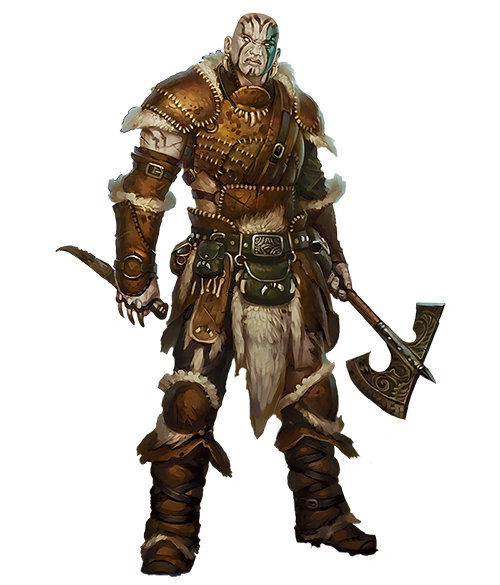
Born from the mountains of the southern continent of Thivola, the apu are a race of tall, earth humanoids said to have descended from the great mountain god, Etapu. Apu are very tall, averaging heights at 7', and have earthy colored skin tones. Grays, browns, dark greens, and blacks are very common among them. Their skin is rough, almost like touching shark skin, and their features are very angular and solid. They have straight hair that they wear at various lengths. Most apu keep their hair long and some tribes see this as a point of pride and prestige. Braiding is very common among the men and women. Basically, for looks, imagine goliaths from D&D with some Incan influences.
Source: D&D 5e Elemental Evil
Apu shamans tell of the birth of their race, as the progeny of their creator god, Etapu. In an era before time and people, the powerful mountain god slept beneath the waves. Aokah, the Celestial Caracara, saw the slumbering god under water and dove into the aether to pull him out and feast upon the god. Etapu was angered by this and went on a rampage, pulling out islands and rocks and even other sleeping gods. Each island and rock became a piece of the universe. When Etapu tired from his rage, he curled up and slept. His body became the world that we live on. As he slept, his dreams became reality. The birds, fish, plants... all creatures from his dream. The apu are the mightiest of his dreams, with the cunning and guile of the other mortal races as well as the brawn of their patron god Etapu.

Apu have a close relationship with the earth we walk upon. By simply touching the ground, an apu can gather rudimentary information about the area. What they see are simple echoes of who has gone by, and many times, the untrained apu doesn't have the focus to get more than a single piece of knowledge or two. Despite this, apus are often sought out to hunt down criminals and help with mysteries, as even the tiniest piece of knowledge can help with an investigation.

Apu are seen by other races as a bit emotionally reserved, but this is far from the truth, Apu experience emotions much like humans and elves and such, but extreme bouts of excitement, passion, or other emotional state causes the earth around them to erupt in a small earthquake. Given the destructive nature of this, many apu eschew the world and become aesthetics, trying desperately to seek discipline and calm to control their ability. For a strong race, a surprising amount of apu choose to become mages, clerics, or monks simply for the disciplined mind it creates. Despite any mental training, these earth shakes can still happen if the apu is hit with a powerful blow, though such a thing can backfire on the attacker if not careful.

Apu

Might of the Earth: Apu start with a +2 Strength.
Born Geomancer: The apu can make contact with the ground and roll a DC 15 Wisdom check to psychically see what has gone on in an area. These visions are muddled, but on a success can provide a single important piece of information about the area. A natural 20 adds another piece of information, painting the scene a bit more clear. This ability works on areas that touch the ground. Areas in the sky, on the sea, or a higher story of a building cannot be divined.
Earth Shaker: Whenever the apu suffers a significant emotional breakdown (failed moral roll, failed fear roll, GM discretion.) or is hit by a critical hit, the earth around them erupts. The apu and everyone adjacent to them roll a Paralysis roll. Failure means that you fail prone. For tactical maps, the apu's square and all adjacent squares are now difficult terrain.

On My Race Design Theory

I find that I prefer races as a beginning option, rather than as a class. I feel it allows more, cool options to play as, rather than restricting certain archetypes to a race (like a spellblade for elves) or restricting a race from a class (dwarven wizards are cool). Furthermore, I want to try and give races cool abilities that do more than just simple bonuses to rolls. This may not be completely balanced, which is fine by me, but I do try and have them at least somewhat comparable. I also don't want to put in something that will completely circumvent an obstacle. Darkvision is a good example of this. Level 1 adventures in the dark are completely negated by the ability to just see in the dark. Above, the apu's Born Geomancer doesn't circumvent investigation scenarios, but simply adds a new option for players to continue on with it. It's a nice little ability for what looks at first glance to be a more martial race. And Earth Shaker is a weird ability. I like weird abilities.

Finally, I want to stay away from what I feel are abilities tied to a culture. An example of this is in Pathfinder, you have the dwarf's goblin hatred ability, where they gain a bonus against goblinoids. It feels weird to me that no matter what, all dwarves in the world are just really good at killing goblins. I'd rather have something more biological or magic for them.

I think once I flesh out my setting more on the blogs here, I will give out some more cultural information about this race and the others in my setting. And hopefully, I've provided an interesting creature for DMs to use in their game. I made this with ACKS in mind, but I could see it working in 5e (maybe with some more bells and whistles, like a bonus to Athletics or something?).

Wednesday, May 25, 2016

Onbu

In my setting of Anacaona, I try to keep things familiar yet different. You won't find elves or dwarves naturally (except in the colonial cities as immigrants) but I have similar creatures that are analogous to them. With this, I'll be talking about my goblin analogue, the onbu. I had made these guys up on the fly in the ACKS solo game I'm running for my girlfriend. Luckily, it was towards the end of the game, so I've had some time to make up some cool blurbs about them. Enjoy!


Onbu are grey, short creatures that live in the steamy jungles of Anacaona. These creatures are lithe and wiry, and are generally the size of halflings. Onbu have wider noses and black hair, usually worn long. Their bangs are kept short and trimmed. Tattoos and piercings are prominent among the onbu. The piercings denote authority. The higher the piercing, the more important the onbu is. The native tribes of humans, called Sulano, have long held that onbu are primitive and bad omens, and many don't take kindly to onbu making homes on their lands. Onbu are tribal and do conduct raiding parties, but it's not unusual or even unheard of to have good relations with a tribe of them. 

What makes onbu interesting is their natural connection to the Spirit World. Onbu can see and talk to spirits, demons, and ghosts like they were living people. This makes onbu guides very popular among the natives and colonists, as they can help grant safe passage or news from the spirits of the rain forests. Onbu shamans are fairly powerful spirit talkers, using their natural abilities of spirit speech to parley more magic from the spirits. Onbu shamans have a particular special ability to eat fever dreams and divine truths from them. This requires a special ritual where the subject takes powerful hallucinogenics to get them to dream vividly. The onbu shaman then devours the dream and for a period of time, is addled with madness. Once their period of madness is done, they can then deliver a proper augury to the subject. It's an intense ritual that is draining on the onbu shaman and can't be done often.

Onbu live in tribes in the rain forests of Anacaona. Many times you'll see them in borderlands and marches of a kingdom, acting as parasites on the area. Occasionally, tribes of onbu will gather together to create their own large commune. These onbu are enamoured by the trade and culture they see with the other base races and will eschew their tribal tendancies to create villages. It's not unusual for people to trade with these onbu hamlets. The native Sulano are less likely to, but many of the other native tribes and colonists are more willing. And several of the colonists will make alliances with onbu fiefdoms that they feel can be a thorn in the sides of the native kingdoms.

Onbu Stats
HD: 1
AC: 11 (Cotton Armor)
Attacks: 1d6 (macana), 1d6+poison (shortbow; save poison or take 1 ongoing until death or antidote)
Morale: -1
Spiritspeech: Can see and talk with spirits as if they were visible and normal people.

Onbu Shaman
As above. Give cleric or druid spells that are appropriate. If running ACKs, make them a shaman.
Dream Eater: The onbu shaman can eat fever dreams brought on by hallucinogens. After doing an hour long ritual, the onbu can cast divination once for the subject of the dream. The onbu shaman must rest for a night after doing this.

Tuesday, May 24, 2016

Stat Rolling Idea

I recently purchased the Black Hack after seeing a lot about it. While I'm not as enamored by it as everyone else seems to be, there are some points I like. I thought the way it does usage dice is cool and reminds me of my weapon degradation rules. The way they do rolling stats is interesting, as it takes into account if someone rolls a very high stat (15+). Reading it, I was inspired to do something similar, but for rolling low rolls. 

Sorry about your damn luck!

Rolling Stats

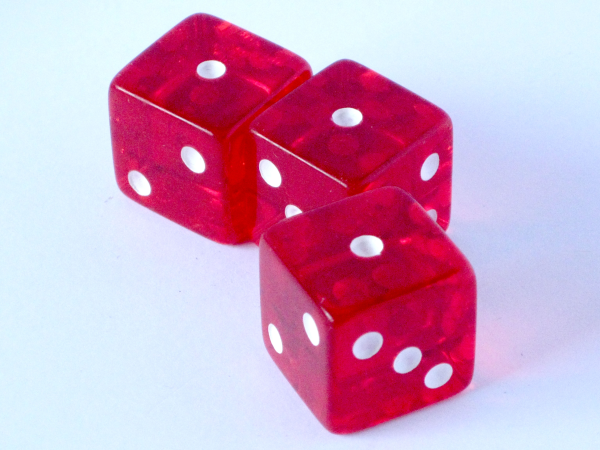
Roll 3d6 down the line as normal. Like in the Black Hack, if you get a 15 or higher, your next roll is made on a 2d6+2. If you roll a 6 or below, your next roll is made on a 2d6+5, then as normal afterwards.

This method helps to make it less likely that a player will have multiple stats below 6 and really helps to give them a chance to get a greater stat to make up for the low stat. So if you roll a bad STR, you at least have the chance of getting maybe a higher DEX.

Why 2d6+5?

Looking at the probability curves of 3d6 and 2d6+2, you'll see that the average of 2d6+2 is 1.5 lower than the average of 3d6. It allows for the average to come out lower to make up for the fact that you rolled really high before. Furthermore, 2d6+2 completely cuts out any result of 15+, since you already rolled that before. I decided to apply these same principles for rolling a higher amount. 2d6+5 has an average roll of 12, which is 1.5 over the average of 3d6. It also completely removes the results of 6 and below, making it easier to land something higher than a 10. Overall, I think this does what the original rule does. It helps to make an interesting character with some clear strengths and weaknesses and normalizes the rolls a little bit. Both of these help to make a character that's not a superhuman powerhouse nor a chump.