Showing posts with label advice. Show all posts

Sunday, August 13, 2017

Blow the Bridge

I've been chatting with a friend of mine about table-top gaming and how to avoid railroads but still have a semi-structured and cohesive plot for a campaign. It can be cool to want to run an epic adventure module with friends, especially some of the adventure paths like Age of Worms or Rise of the Runelords. As much as I like sandbox gaming with a bold group of players, sometimes I do long for a more structured adventure path that still takes into account the actions of the players. So to answer my friend, I remember something told to me by my lead cook.

One of the things his old boss talked about was called "blowing the bridge". Basically, the bridge is some goal or task that needs to get done. It doesn't matter how the bridge is blown, as long as it's blown up by the time he gets back. In this case, the bridge could be cleaning the kitchen, or getting through some prep quickly, or pushing through a rough service. He doesn't care if someone takes a lot of smoke breaks, eats on the job, or imbibes in their chefly vice (nose candy is fairly popular in the food industry), as long as ultimately the job gets done correctly and by the deadline. 

Now, say what you will about the philosophy in terms of physical and mental health of a chef (and believe me, we are not mentally healthy in the slightest), the idea is something that has stuck with me when I design my campaigns. For me, when I have some scenario in mind for the players to run through, I segment the goal of the players as the proverbial 'bridge'. I try not to throw too many limitations on their methods, though I am a believe that limitations breed innovation. But in general, I don't care how the players blow the bridge, as long as they go and accomplish their goal. Now, depending on the method of blowing the bridge, it can lead to some serious fallout and consequences. Which for me is great, since the players are literally doing my adventure hook creation job for me. So with that, even in a more structured adventure path/module/fox hunt style of game, you can still have the freedom of player ingenuity and cleverness take the forefront to tacking a problem.

Sunday, July 30, 2017

Styles of Aliens

So in the last post I talked about aliens and how many I wanted and such. I think the important part about aliens is how strange should we make them. There are all kinds of alien types out in science fiction, some made to be more familiar to us humans and some meant to be mind boggling strange. In M-Space, they have a Strangeness meter about them that shows how different an alien is from the baseline of an Earthling. It goes from 1 to 100, where 1 is practically a human, 50 is some where in the middle, and 100 is really really strange. I've actually used that in many of my games since, including Stars Without Number and Cepheus Engine. It's a really handy tool to gauge your aliens. So I made up a little silly scale for people to use when making their aliens, based mostly on Hollywood special effects


Stage One: Big Ears/Ridged Foreheads (BERF)
Strangeness: 1-25
SFX: Makeup and a mask

This is a common one to see in a lot of media. It's familiar to the players since the aliens look so much like humans, and easy on the budget both for Hollywood and the GM. Sometimes it's something really low key, like different markings on the skin, or something more like pointed ears or antennae on the forehead. I've always liked blue aliens, so the Andorrans were always pretty cool to me. Star Trek is big on this obviously, as are many of the aliens from Stargate, Eldar from WH40K, and some of the aliens from Defiance.


Stage Two: Actor in a Rubber Suit (ARS)
Strangeness: 26-50
SFX: Rubber Suit, Some Prosthetics and Make Up, A little CGI

This is the sweet spot for me in terms of xeno sophonts. The ARS still have a mostly humanoid body, but are different looking enough to make them feel alien. Most of the Mass Effect aliens are like this, as are some of the Star Wars aliens.


Stage Three: Complex Alien Puppetry (CAP)
Strangeness: 51-75
SFX: Complex Puppets, Some CGI, Stop Animation, two or more people operating it

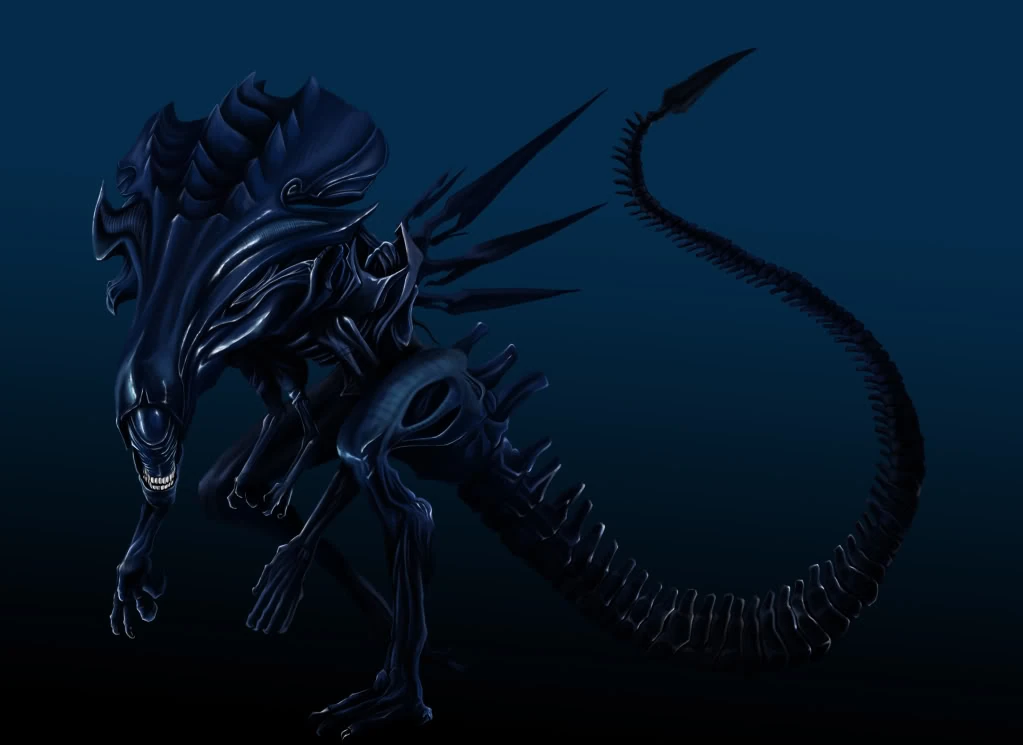
The CAP is where things get pretty strange for the aliens. This is where you get quadrupeds (or hexapeds or more [or less]), strange alien limbs and heads, and other unusual, but recognizable shapes. A lot of the original trilogy Star Wars aliens are like this, as are some of the Xenomorph from Aliens, and Farscape. God I loved Farscape. While not strictly alien, many of the monsters in Ray Harryhausen's Dynamation films could also be under this.


Stage Four: Undeterminable Sapient Lifeform (USL)
Strangeness: 76-100
SFX: CGI, Film Tricks, Animation

This is the weird stuff. USLs are aliens that don't look like anything we as humans would identify as life. Clouds of intelligent plasma, sapient suns, living techno-organic metals, creatures of living energy, or shadow monsters can definitely fit the bill. What's important is that the alien is truly alien, Some good examples are The Blob from the original 50's movie, the shapeshifter alien from John Carpenter's The Thing, the Shadow Aliens and Sun Alien from Doctor Who, the C'Tan from WH40K, and the ELS from Gundam 00 Awakening of Trailblazer.


This post marks the 30th and last post in my 30 Days of Blogging Till I'm 30. It's was an interesting and fun thing to do, though I'm kinda glad it's over now. So now I'm going to take a break and enjoy my 30th birthday tomorrow.

Wednesday, July 19, 2017

My First Microscope


Last week I went out to my local gaming store and I picked up a copy of Microscope. I had heard of it before, but I never really gave it too much thought. The book looked sleek and I had heard good things about it, so I decided to pick it up and give it a try. 

Giving it a read, the game seems interesting though a bit hard for me to grok. Never really played a story game like this before, the closest really being Apocalypse World and FATE if those count. I have some players that might be interested, but the setting building seems interesting enough to me that I wondered something. Could you do a solo RPG of this?

It feels like it would be really difficult, since the idea is to gather together a myriad of different ideas for a setting. But I'd like to know if anyone has ever done a solo game of this before and how it turned out.

Wednesday, July 12, 2017

Solo Supers Aftermath: My Thoughts

So while this wasn't my first foray into solo gaming, it was the first one where I didn't use a pre-made adventure. That would be my Mythras game, which I will eventually finish writing up. However, doing the super hero community college was a fun romp with some good stuff and some concerns for my next session. For those who want to read them, they are here and here.


NPCs
So one thing I did a lot of in the first session was the creation of NPCs. Obviously, with NPCs comes the need to stat them. However, when I just create one on the fly and I need stats for them, I tend to take a while to get them up. And with something like a superhero school, there are a lot of NPC students and teachers that I'll need. So it's slowed down my solo game a bit when I'm trying to get some quick stats for my NPC heroes and villains. For random NPCs, I don't mind just rolling a simple Yes/No; And/But roll when they need to do something, but if it's a main villain or hero, I'd like some tangible stats for them. I wonder if there is some middle ground to do with this? Luckily ICONS's random attribute level table does a quick job of this. Still, I may need some sort of compromise with this to get something fast enough but still crunchy enough for a main villain. Perhaps combining the oracle I have (Game Master's Apprentice Deck) with the random power tables of ICONS. 

Speed
That brings me another thing. Sadly, I don't have a lot of time, with work, house stuff, and GMing an M-Space game on Wednesdays. So I generally only have an hour or two to really game on my own. I've done a lot to streamline my game since the Mythras one, and the simplicity of ICONS makes it run by quickly. However, I have come up to some obstacles that do slow down the flow of the game. Creating NPCs on the fly for a scene can take awhile, especially for action packed comic book fights with multiple people duking it out. Other stuff includes looking up how powers work in ICONS. While the conflict resolution system in the game is very simple, looking up what all the different powers do takes awhile. Gravity Control and Probability Control are two that came up in a recent session that took me a bit to understand. Also, the powers are very vague on their ranges and duration. Is gravity control concentration? I don't know, it's very unclear and frustrating and I wish the powers were written better. Also, despite my familiarity with FATE, it can still be hard for me to grok things like tapping Advantages and Troubles. That requires me simply reading a bit more and playing more I think.

Lack of Focus
This one is more on me rather than solo rpgs in general. Because there isn't a group of people to engage with, I find that sitting down for more than ten minutes causes me to lose focus. This is especially true if I'm gaming at my computer. I do use Evernote for my notes and most of my rules are in PDF form. However I may have to bite the bullet and simply disconnect my ethernet cable so I won't be distracted. Sitting down for a long period of time without a lot of stimuli has always been difficult for me, and starting to do it is even harder. I tend to procrastinate it a lot more than playing with people. It's why I find that I can make it a bit easier by just writing what happened in the last session. It puts me in a more engaged mode, but man, it can be hard to keep that focus. 

Advice?
So for those of you that have a lot of experience with Solo RPGs and/or ICONS, I'd love to hear from you on how you solve a lot of these issues. Especially the 'lack of focus' for me. I enjoy these solo sessions, but I definitely want to make them better experiences.

Wednesday, July 5, 2017

Stocking a Solar System's Sum of Stunts and Stories

My current game is a science fiction exploration game, where the players are scouts surveying their new home and getting it ready for colonization. One of the things I've done is that right from the get go, the players have a spaceship that can take them anywhere in the new solar system. Here, there are seven celestial bodies that the players can blast off to. Many of those are either jovian or ice giants with tons of moons to look at. Add in all kinds of asteroids, comets, and other stuff floating out there, and you have a great deal of sites for adventures and discovery.

Of course the difficult part for this is how do we stock all of these for adventure? Much like a standard hexcrawl, you have all kinds of adventure, ruins, and obstacles that are keyed up and ready for the players to stumble upon. However, things get a bit more difficult because now we are dealing with the planetary scale. Planets, moons, hell, even asteroids are much bigger than your standard hexcrawl map. Stocking an entire planet of adventure like that simply isn't viable, let alone an entire solar system. Luckily, I have my way of taking care of that.

First thing I like to do is end a session asking what the players want to do next. It doesn't always happen, as sometimes I like to through stuff at them to react to next session as a cliffhanger, but it's nice to know where your players are going to next. That way you can simply prep for where they are going. So if my space scouts want to travel to Chicken Island next session, then I know that I can prep stuff specific to that area and I won't be wasting any time when I do it. Pretty basic stuff. Still, it's nice to have some stuff ready to roll when things happen in the middle of a session, so we turn to my rule of threes.

For each celestial body, I have three landmarks and three possible adventures, made from three words (a verb, adjective, and noun). We can usually describe planets with 2-3 landmarks or interesting things easily, especially if they aren't Earth like worlds. For example, Mars has red sand, Olympus Mons, and several canals across it. Jupiter has the Great Red Spot, intense radiation, and a great deal of gravity to contend with. I generally write these as tags like you'd see in FATE or DW. All of these can be the source of adventure, or simply add complications to another adventure on the same planet. Imagine trying to rescue a hydrogen freighter in Jupiter, but you have to save them without getting caught in the gravity well yourself. And the good thing about being in a sci fi genre is that thanks to future tech, players can scan for a lot of the potential sites of adventure from their CIC in orbit. So these landmarks can be made readily apparent and easy to spot. It does tend to simplify each planet a bit, but luckily, that's where the 'three words' come in.

So for me, three words are just me generating a verb, adjective, and noun. So for example, I simply will have 'Destroy Large Generator' as an adventure seed. From there, I flesh it out as I see fit. Get creative with how you interpret the seed. For example, your generator could be the fusion power plant on a space ship, a solar generator on an asteroid base, or even the wide leaves of an alien plant that feeds and powers a hive of plant-bugs. It's sci fi so go crazy with it! What I like to use are these verb, adjective, and noun generators for free. But sometimes that gets you some weird combinations that are hard to work with (Quoit Micrococcal Tracheitis?). One thing I use a lot of for developing adventures on the fly are Ennead Games's Adventure Generator Sci Fi and the GM's Apprentice Sci Fi deck. But, as great as those are, you can still keep it free. And you don't even have to use three words. Images are a great way to get some vague icons and interpret them how you wish. I know I've seen a lot of good stuff about Rory's Story Cubes, but if you don't have the scratch, I like using Tangent Zero's Dice for that. I like to roll three or four and have that as my main adventure. Hell, I'll even use a set of tarot cards I have to give me a good set of twists. The important part is, you have a good improv generator that will give you just enough structure and inspiration to craft a good adventure, but vague enough to allow for your creativity to kick in.

Putting this all into use, in my game, I have an extremely hot planet close to the sun. For its three landmark tags, I have "Large basins and mares", "Huge chains of volcanoes", and "One massive crater at the equator". The first landmark is almost like a safe zone for players to land at, but can also house future adventures (things hidden under the basalt flats? a colony appears there and stuff happens?). The second adds the danger, but can have a high reward. There's lava and high temperature everywhere, but there's also a hidden ancient alien facility in the volcano with secrets and mysteries inside. The third is a definite adventure site. What caused the crater? Was it an impact or an explosion? A landmark that makes the players ask questions about it will hook them line and sinker.

From there, I have three 3-word sentences that I generated. "Survey Massive Graveyard", "Destroy Alien Facility", and "Aid Strange Rival". For the first one, I decided to have an orbital graveyard filled with the corpses of large, spaceborn aliens. The second one has that alien facility in the volcanoes. The third one was a bit vague, so I added more using Tangent Zero's dice and created an adventure where the players and a rival scout group go through an old space hulk looking for stuff before the others do. But, things go wrong and it becomes a fight for survival as something vicious lurks in the hulk. Or, thanks to a little Kessler Syndrome, the players and rivals are separated from their shuttle and now have to try and escape the space hulk as it careens into the planet. I like to keep it flexible for this one, as either can be fun. 

There we go. That planet has a decent amount of adventure for a good while, and if they ever want to go back, I can always add more to it. As for the rest of the solar system, it can still be a bit daunting. I generally prep a cache of landmarks and sentences for each body, and then detail it at a later date. Luckily, limits in space travel in my game make it to where the players will generally eyeball the closer planets rather than the far off ones. But with PCs, you never know what they'll do! I also really add specific tags to important bodies. So planets, some moons, and asteroids that are big enough to be interesting (like your Juno and Vesta). But it's good to have some generic sentences and landmarks in case they land on some random Trojan asteroid in Jupiter's orbit.

There's a bit more I do inspired by ACKS, but I think I'll save that for another time. For those that run any sci-fi space-faring sandboxes, how do you set up your adventures for your players? 

Friday, February 24, 2017

Science Fiction and Monocultures

Despite my constant fantasy gaming, I've always had a special place in my heart for science fiction. A lot of it stems from watching and reading about Star Trek as a kid, and from there, I've read different science fiction books. However, there has always been something I was never a fan of in sci fi. Monocultures. Mostly found in space operas, it tends to take an alien race and oversimplify them to a couple of traits. Klingons are the honorable warrior race. Vulcans are the logical scientist race. Romulans are super imperialistic and machiavellian. Ferengi are space merchants. And so on.

The diverse cast of Deep Space 9
In a way, it simplifies the races for the viewer to be able to understand and makes it easier to differentiate between them. And when you have 5+ alien species in your universe, it can be tiring to consistently add different factions and nations for every single alien race. However, I've always felt a disconnect in monolithic world governments with a single culture. I feels like it pigeonholes an alien group into a certain niche and can make it difficult or even jarring to add differing characteristics to someone of the same race. Try imagining a pacifist Klingon. It's a bit weird. It also doesn't feel very realistic. If you look at humanity, there are so many different governments and idiosyncrasies between different nations that it can be weird just to have everyone on one planet the same.

In the game I'm going to run with Stars Without Number, I am endeavoring to have at least 3 factions for each alien race to give the races more depth and complexity. This will make first contact and continued diplomacy more nuanced with the players. Here is how I want to do the different cultures. Much of it is inspired by rudimentary knowledge of politics as well as the video game Stellaris, a grand strategy sci fi game which I have really enjoyed. Since this blog is talking about politics, I'd like to stress that nothing down below is meant to push any agenda or offend anyone of a particular political bloc. This is just for entertainment purposes only.

Nature and Nurture

Since I'm working with aliens, the first thing I start with is their biology. Making aliens mean you can really go crazy with how their biology works. Looking at Earth creatures is a great way to make some truly alien-feeling sophonts. How do your aliens eat? Are they carnivores, herbivores or omnivores? How do they reproduce? Are they like humans, with XY chromosomes? Is it something more akin to asexual reproduction, or something like parthenogenesis? Can their genders shift, like some amphibians? Do they have more than four limbs, or multiple eyes? Maybe they have alternate ways of certain biological functions, like using antennae for smell and hearing, or spiracles down their sides for breathing, or organs that can sense bioelectricity. How are their family units set up? Or communities? These are all good questions to ask yourself when developing an alien race for your setting. What I generally do is pick an animal and do some light research on their biology. Then, I use that to extrapolate how a society of sapient creatures of that biology would function.

I was always a huge fan of the 2005 War of the World aliens (Credit to Adam O'Donnell)
Of course, biology is only part of the equation here. A creature's surroundings play a huge part in their cultural ethics. Terrain and climate are two of the largest factors in this. If their surroundings are harsh with terrible weather, you can bet that their communities would be smaller and more insular. They may be nomadic, moving to better areas. They could also be raiders, attacking other civilizations that have more resources to supply their own tribes. Aliens living in arable land would be able to support larger cities and boast walls and armies to protect them from raids. Religion and culture can be affected by one's surroundings. A nation of peoples that live in pastures and steppes may revere a god of the great sky, while those living in mountainous areas would venerate the peaks themselves as gods. People living along the oceans would have festivals celebrating fish caught, or those living on pastures would have harvest festivals come autumn. Just look at Earth cultures to see different cultures and try and work them with the biology of the creature.

Surroundings don't just include the terrain and climate. Look at the people and animals that your race has around it. Are their neighbors fairly friendly, or is there a sort of rivalry going on? Is warfare endemic or more structured? What about the animals? Are there any animals that the race hate and fear? Or hunt and revere? Or keep as pets or livestock? The relationships with other creatures can go a long way to making your aliens feel real.

Ethics

Ethics are the core principles and beliefs of the alien race. Whenever I describe a government, settlement, or faction, I like to use a set of ethic tags to describe the organization. I find that doing so can organize and show what the different ethics are for a group of people or aliens. I have a set of seven categories, each with two opposite tags to describe a group of sapient creatures. They are purposefully vague to incorporate a variety of sub-ethics under one tag. Just remember that there is a wide spectrum of beliefs that could fit under one tag. They are inspired by the ethics of Stellaris, with some more added or renamed for more clarity and depth.
  • Insular/Cosmopolitan: This category is how well a group of aliens deals with outsiders and foreign ideas. An insular group tends to not trust outsiders and will shun beliefs that are different from their own. Some are friendly but want outsiders to assimilate into their beliefs to maintain a tightly-knit community. Others can be cruel and petty and will drive deviants out by force if necessary. A cosmopolitan group has a wide variety of cultures and differing beliefs are simply a way of life. Most places tend to be large cities or trade hubs that see different aliens. While there is a general integration and acceptance of different peoples, sometimes cultural friction can happen between two or more groups. This can make it hard to let go of old grudges.
  • Authoritarian/Libertarian: This is the category on how a species may prefer to be ruled. Some may want a more decisive rule by a singular autocracy or a group of elite oligarchs. Others may prefer a bottom-up democratic or anarchist rule where everyone has a say. Some may want the government to intervene and regulate things, while others want the bureaucracy to stay out of their way of life.
  • Spiritual/Secular: This is how much religion and spiritualism affects the every day lives of an alien. Spiritual aliens may place an importance on religion and worship in their personal lives, or perhaps they make it more of a part of the government and culture (like a theocracy). Secular aliens may simply have some spiritual beliefs but leave it in private, keeping it away from their public lives and society. Others may believe spirituality to be harmful to the individual and to society and will outright shun religion.
  • Militaristic/Pacifist: This is how aliens approach warfare and peace. Militaristic aliens may be imperialistic hawks that wish to spread their control over other countries for their resources. Or, they may instead be more casual with warfare as a good option against enemies, but remain relatively peaceful with allies. Pacifists tend more towards diplomatic solutions, but may still have a good military for defensive wars only, or may only engage in wars of liberation. On the extreme end, they may simply eschew a military, both formal or paramilitary, and instead focus on peaceful and diplomatic solutions.
  • Collectivist/Individualist: This is how sophonts view themselves as a part of a whole. Collectivists see themselves as a cog in the machine, or their society as a sum of its parts. Many can focus on the greater good and can vary in limited individual freedoms (or outright ban them). Individualists place an importance on individual rights and abilities. They see it as something to be celebrated and use individual talents to better the community. They can vary on altruism to their peers, or simply focus on their own goals and happiness (sometimes at the expense of others).
  • Isolationist/Expansionist: This is how aliens view themselves in the Great Game of interstate diplomacy. Isolationist species want to be left alone. They generally do a policy of unilateralism, keeping a safe distance even from their allies. Some may simply close their borders to some or all trade and immigration. Expansionists keep up with the political scene and remain big players in it. Some may expand via more diplomatic and economic means, saving military action for proxy wars. Others may go full military imperialist, ruling over entire planets.
  • Ascetic/Materialist: This is how much importance a race places on material things and wealth. An ascetic race of aliens believe that life is fleeting and 'stuff' isn't as important as people. Many eschew material goods for a lifestyle of self-improvement, or for community bonding. Materialists love their wealth and living the good life. Many see wealth as a way of improving living standards and technology for the betterment of their society. Some may also have a love of seemingly trite things, like lifestyles of celebrities.
From these ethics, you can start building a culture based on them. How would a race of spiritual materialists work out? Or militaristic isolationists? Mix and match two or more of them and try and build how a culture would form around those tenets.

Government

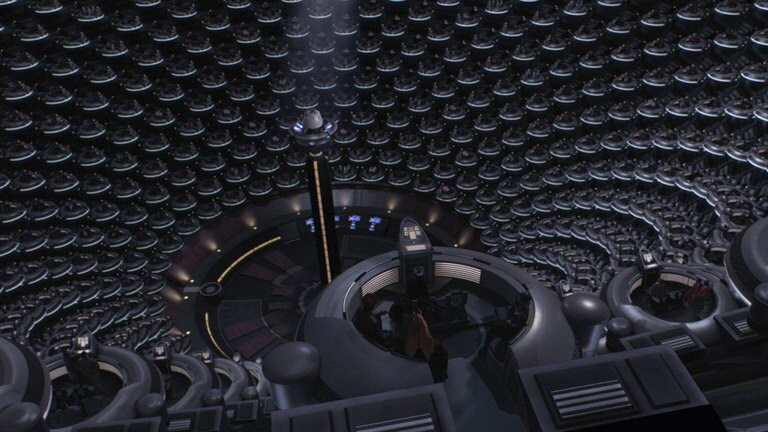
Star Wars Galactic Senate
Once you get ethics, you can look at the styles of government. I use the Wikipedia listing here to look at what could fit for a race. Governments vary a great deal, so it's hard to really categorize them. Below is a super simplified list for the sake of RPGs, not for actual political discourse. Generally I look at the following categories (again, credit to Stellaris for this)

  • Who rules the state: This is probably the first question I ask. Is it a rule by an elite class of people (aristocracy), or ruled by a singular group or person (despotism)?
  • Who empowers the leader: This is the second question. Who empowers the mantle of leadership for a state? Is is a democracy, where the leader is elected? Is it authoritarian, where the leader claims the title through might? Is it oligarchic, where a select group of people choose to run things?
  • The power structure: How is power distributed? Is it a highly centralized unitary state, a more open federation, a decentralized confederation, or a casual alliance of like-minded states? Maybe they are fragmented nation-states in a never-ending cold war. Is it a republic, where political matters are public, or are legislative and executive matters private? 
  • How the state handle certain processes: There are categories that a civilization has under control. Things like economics, social issues, class stratification, foreign and domestic policies, citizenship, immigration and emigration, military and security, law enforcement, jobs, resources, and means of production are all good examples of what a state needs to handle. Using the ethics from above, you can figure much of this out. 
  • Control of the state: How much authority does the state have over the above processes? Is it anarchy, where the authority is light and comes directly from the people? A minarchy with minimal control? A lighter, more libertarian touch? Is is more centralized like a unitary state, or more decentralized like a federation or confederation? Is it authoritarian, where the people have few individual freedoms, or totalitarian, where the government have full control of every aspect of their peoples' lives? Does the government only handle matters of security and defense, or do they also control economics and social policies?
  • Relations with other: No state exists in a vacuum. What do other governments think about your alien race? Are they seen as true friends, allies of convenience, or enemies? What do your alien government's own people think of their masters? Do they see them as a benevolent force, or a coercive and malevolent entity?
Those are the questions I ask myself when building an alien society. When making governments, it's always good to have conflict that can add story ideas for your adventure. One thing I stress for making a believable government that is foreign to one's beliefs is to try and look up both the positive and negative aspects of it, then apply it. It's really easy to insert your own political bias when coming up with a group. Remember that these are aliens with their own way of think. Of course, if you want your aliens to be the bad guys, or you are just tired of politics in general, then you can certainly simplify their government. Sometimes you just want to topple an evil military dictatorship and free their people. That's fine for an adventure I feel.


Deviants

Of course, even with everything above, there are always bound to be those that do not conform to ethics based on anything from above. Just by looking at humans, there is a huge variety of cultures, sub-cultures, governments, ethics, philosophies, and communities. This is where making an alien species can get really hard. Generally, after I've done the above, I then treat sub-cultures as a sort of spectrum of the above beliefs. For example, if I've made a race of aliens that lived in colonies not unlike ants, I would have them tend to more autocratic or oligarchic societies. This represents their collective community ruled by a queen or a group of breeding drones. However, I could have sub cultures and factions that want to enact change. Maybe they desire less authoritative rule and want a more republic government with individual freedoms. Or alternatively, maybe they want to centralize their government more to an autocratic rule with a focus on the greater good and stratification. Some may want a less insular society while others demand to remain isolationists. Really, I'll take the above ethics and see how I can fit the opposite with a society. So if a culture is more secular, I try and see what would make some more spiritual while sticking to several of the factors that made their culture who they are.

That's my thought process when I'm fleshing out alien races. While it seems like a lot to do, once you get used to it, it's a fairly intuitive process. Everything leads to the next, and the more that you detail your creatures, the more life you truly breath into them. Next post, I want to show and example or two that puts this method into practice.


Monday, September 19, 2016

Stealth


Stealth is weird. Sneaking around has always been an odd point of contention at the tables I've played at. Perhaps it's my experience, but many of the GMs I've played with seem to not enjoy the idea of players sneaking through their entire enemy base and stealth killing the prepared final boss. Now, I do love me the epic final boss fight as much as the next guy. But, it is pretty lame when you and your fellow players go through all the planning, actually execute the stealth procedure, and as you get to the final boss, the GM simply squashes the stealth in a metagamey way. It removes the idea of choice and consequences if all of options have the same outcome.

Once thing about stealth that I don't like is the binary nature of success and failure people seem to have with it. If you (or chances are, your heavy armored fighter) fail your stealth, then that's it. Suddenly, everyone in the area is alerted to your presence and it's time to draw swords. When failure is that binary, there is a tendency to simply skip it and just go in swords blazing. Especially when the players probably have the damage and spells to just bust in and slaughter everyone.


Finally, even if players properly execute the stealth mission, if it's not run the right way, stealth can be super boring with an unsatisfying end to it. Stealth kills are great and all, but admittedly, it can be a bit anticlimactic to slit the level 10 Warlord's throat in one go without the fanfare and hooplah of a final fight. And stealth kills are also a bit hard to wrap one's head around, especially with the game concept of hit points. Should a level 1 fighter be able to one hit kill a level 10 fighter if the latter is completely unaware? Is that a problem, or is that fine?


How I Approach This

So, before I get into the rules, I want to get into the mindset of stealth and espionage. I feel that with sneaking, the journey is more important than the destination. So if you have a precious boss fight you want to throw at your players, just get rid of any attachment to it, because they will die. Really, it's a good idea not to be so attached to your NPCs in the first place, stealth or not. So let them slit the wizard's throat if they succeed and never get caught. And if they fuck up hard, then you have a great climactic battle ahead of you. 

Instead, focus a bit more on the stealth aspect. Have a lot of close calls and snags that the players run into. That makes the sneaking action much more interesting than just dodging guards effortlessly. Have them balance over some bandits eating their meal, or their disguise being put to the test by a crowd of soldiers. The tension and near misses are the most interesting parts. You wouldn't have a dungeon with nothing in the rooms. That'd be boring. Get creative.

Also, we should take a page out of different movies and video games and not have stealth be so binary. If a person fails their sneaking roll by a slim margin, I say have the guard hear something suspicious and walk towards the source of the nose. It opens up some more options that the player can try and attempt to use to diffuse the situation. Does the player kill the guard, or move to a different spot, or stand perfectly still? Makes things a bit more interesting and it helps to extend out the stealth sequence and make it a worthwhile method to the players. I also find that in more lethal and visceral games like LotFP and ACKS, players are more incentived to go quiet for fear of dying.


Speaking of lethal, how do we handle stealth kills in a game with ever increasing HP? For me, I think I'm okay with the players being able to do take downs, but there are things to consider when killing a guard. First is the sound a dead person makes, whether it's the scream or the body hitting the floor. Someone may hear that if the killer doesn't act quietly while he murders someone. Second is what to do with the dead body? If you don't dispose of it, then you run the risk of someone discovering the dead body and alerting their friends. So as a player, you have to decide if killing the guard is worth the trouble.

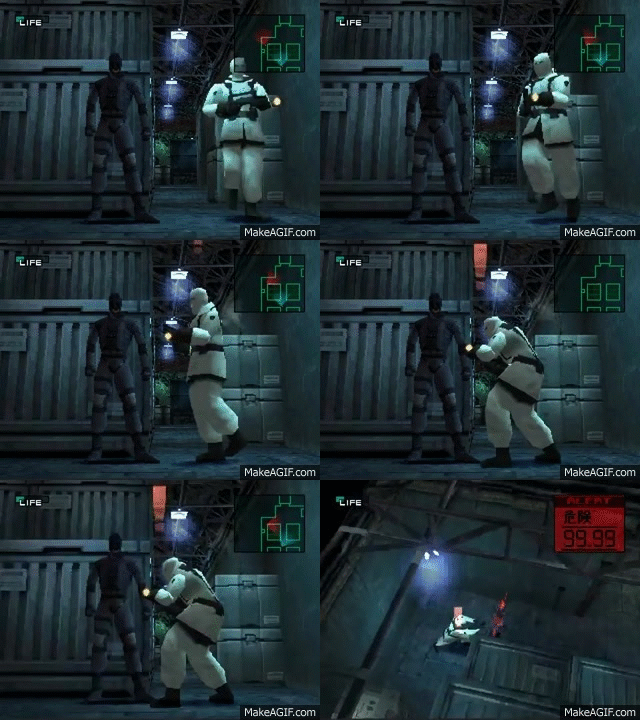
Of course, if the players get discovered, then the stealth plan may go out the window. Realistically, it doesn't have to. Consider the Metal Gear Solid games. It starts with Infiltration Mode, where you are sneaking around and not getting caught. When you are caught by a guard, you get into Alert Mode. As long as they can see you, they will attack you. Once you stay out of line of sight for a time, they get into Evasive Mode. They still know you are around and are actively search for you in the more obvious spots. After some time, the game will go into Caution Mode. They have lost sight of you and everything is like Infiltration Mode, except now they are much more active and aware. They will act smarter, keep a keen eye out, and travel in pairs or groups. So, when I was making these rules, I decided to use that for my game. I believe that it can be used to great effect to give stealth different layers of failure and success, and it helps the players find an alternate way of sneaking to continue or escape.

I do have a set of rules I've used a couple of times to good effect for sneaking around. It seemed to make things better while still remaining simple. Once I'm able to post them up, I'll get them in. I can probably do it tomorrow, or even tonight. How have you all run stealth situations and what has helped you in running them?

Monday, September 12, 2016

Sandboxes and Quagmires

I generally don't like doing advice blogs since there's a million opinions, but I can't quite get this topic outta my head. So here we go.


Since 2010, when I cracked open Paizo's Adventure Path Kingmaker, I have been enamored with the sandbox game (and hexcrawls in general). The idea of running a more player-driven game where the PCs choose where to go and what to do is really appealing. There is something nice about seeing your players getting invested in the game and in many ways, doing the GM work for you. And as a player, having that total freedom is pretty awesome. It's something you can't get from video games, even open world ones like The Witcher 3 or Skyrim.

Sandbox gaming is very common in the OSR community and for good reason. That freedom is awesome, but also it's great for the open table style of gaming, which is great for us adults that simply may not have the schedule to do a consistent campaign. Among the community, sandbox gaming is seen as the way best way to game and believe me, there are many grognards that would certainly defend that.

Unfortunately, sandboxes have their pitfalls, especially to those new to them. And in the last six years, I've experienced them all.

Pitfalls of Sandbox Gaming

In a sandbox, especially the more West Marches style, there is very little in the way of structure or concrete goals for players coming in. Aside from generally "rob the tomb, fight monsters, get rich". Nothing wrong with that, but for players not used to this style of gaming, the freedom of choice can get overwhelming and cause option paralysis. The game suddenly becomes one of "what do we do today guys?" and can grind to a halt. I have run sandboxes with new players that have bogged down because players really didn't know what to do.

There are more ways that a sandbox can slow down. A common factor I see with both new and experienced sandboxers is that with player choice, you have players that want to do their own thing. Generally, my experience is that you'll have two players that want to do different things, with other players neutral on what adventure they want to do. This happens because while there is the freedom of choosing your adventures in a sandbox, the team still has to agree on what they want to do. A gaming group follows general social dynamics, so you'll have one dominant player that will try and steer the group in a direction while another dominant player will want to do a different direction. And the other players generally don't care as long as they have fun, so no one really takes sides and it becomes an argument over what we should do that night. When running a sandbox, it is important for the players to have some sort of way to decide where they go next so that everyone gets a turn. Voting, choosing, picking straws... whatever works. But even with this, you will still have a person that is left choosing last, and depending on the adventure, they could have to wait weeks or even months. As a GM, you'll really have to step in and adjudicate things when this happens, or else game night could be ruined.

A common fix to both of these problems of inaction and arguing is to "have a guy with a gun kick down the door and attack". That is, throw some interjecting problem at them that they have to deal with right now. That does have its issues in a sandbox game.

With sandbox gaming, the style really emphasizes player agency and is seen as the opposite to adventure paths and railroading. However, most players confuse what player agency really means. Player agency is the player's ability to have a meaningful choice in what to do. If a player wants to do something, they have the freedom to attempt to do it. However, many players misunderstand this term and believe it means they have control over the fate and narrative direction of their character. In addition, players get rather attached to their characters the longer they play them. So, when they have to deal with a negative consequence to an action their PC did, or an interjecting problem out of nowhere, things once again grind to a halt as the player(s) get upset about it. This gets more exacerbated with games like Dungeon World, where narrative control is shared by the DM and the players. You'll have people breaking out the accusations of railroading and things bog down.

I think the most common issues I've seen is that with player option, you will have players that will do things that the team doesn't like. Maybe the character antagonizes an NPC that the other PCs are interested in bartering with, or does something that genuinely offends a player in the room. Eventually, a player or more will get disruptive and start becoming an obstacle to the team as a whole. Sometimes, all of the players get in the way of each other. This is because players are coming in and wanting to portray, experience, roleplay, and do things for their characters in a vacuum and eventually, this will conflict with the other players doing the same thing. And again that "player agency" term will rear its ugly head and players will get mad that the other is trying to stymie their game. And boy will things muck up


The Quagmire

Muck up is a good description for what I'm describing. If a railroad campaign is the eventual extreme of the adventure path style of gaming, then I would say that the extreme to a sandbox is the quagmire. A quicksand like pit that bogs everyone and everything down until you cannot escape.

I may have an unhealthy obsession with Pokemon
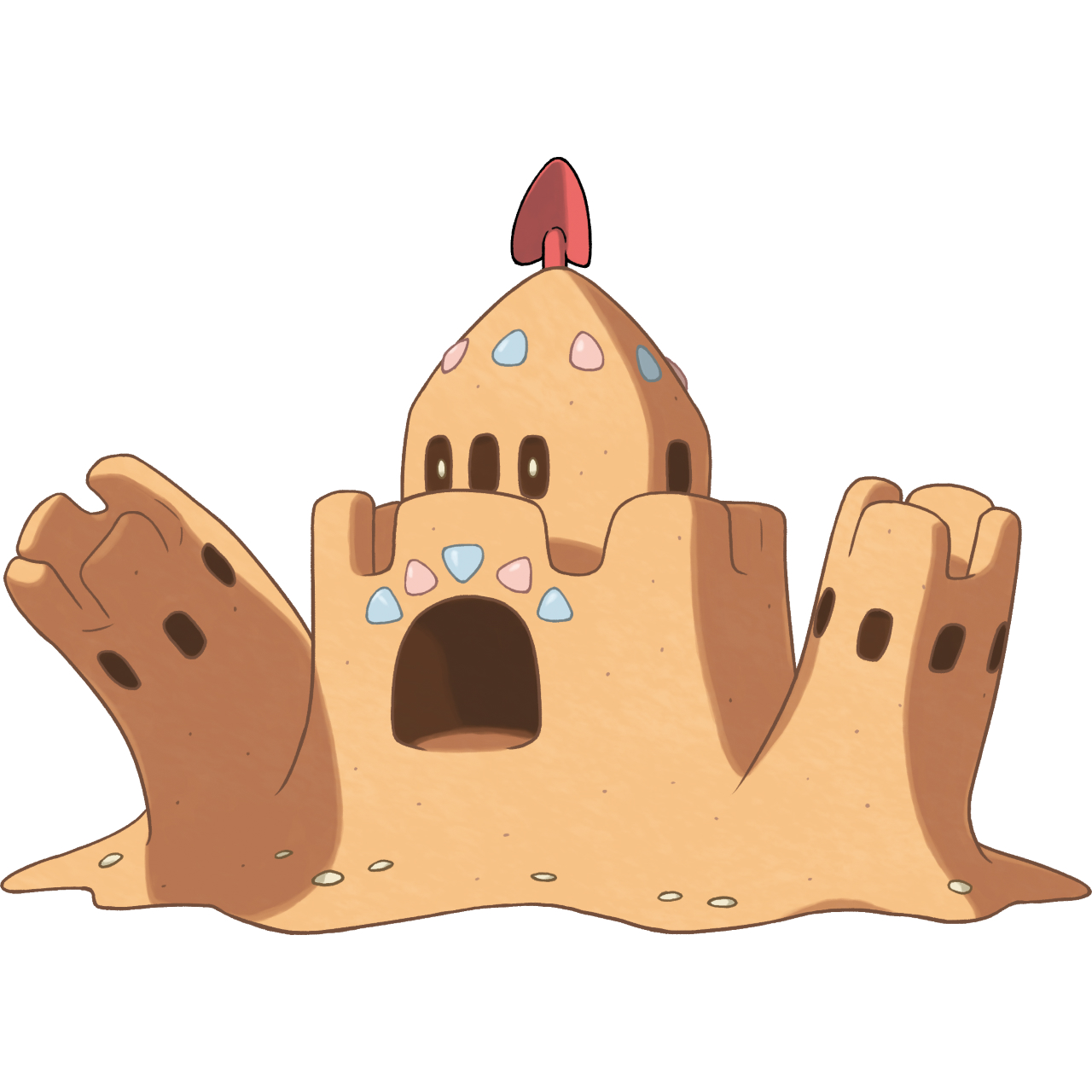
The issue I see is that the sandbox is player driven, but people take that to the extreme. In the case of the players, they see it as them taking some form of metagame control over the fate and story of their characters. Being given too much freedom can be detrimental to the game, especially when that choice isn't tempered by the feelings and thoughts of your fellow players. It's very easy to do things that sabotage other players and claim it was in the name of roleplaying and staying in character. That freedom will also bite you in the ass when everyone wants to do something different. Basically, everyone is out to make their own awesome sand castle, but there isn't enough sand for everyone's castle. So now people are kicking over sand castles to make theirs bigger and bigger.
For the GM, I notice that sometimes, you get lax in adjudicating and instead remain a neutral force. I find that this happens because of the player driven part of sandboxes. Mentally, I feel that because the players drive the action, the GM sits back and lets them deal with the big issues while you just throw NPCs and monsters at them. It's really for this to happen since being a GM can be a lot of work, so having players doing the heavy lifting for you is really nice. I know I have done this on many an occasion. Also, especially for new GMs in the sandbox, you sometimes don't want to come down with the GM hammer for fear of being a railroading judge. 

After dealing with these, sometimes you just want to give up and run simpler modules. I'll admit, after seeing some hexcrawls implode, I kind of crave the simplicity of running an adventure path or module. But we don't have to give up and throw out the baby with the bathwater. So what can we do for this?

These are my non-negotiables for running a sandbox. This goes for players and GMs.

1. Gaming isn't a story, or a game, or a competition. Gaming and game nights are social activities done between friends and peers to have fun. Ultimately, we as players and GMs need to remember that. This is a social group and the things we do as player characters are not done in a vacuum. So we have to remember to keep our peer's feelings in our minds when we make decisions, because that is more important than emulating a genre trope or simulating reality. We can't just do whatever we want, get mad when someone gets offended, and hold our breath until we get our way. And at the same time, we can't get offended with everything and deal with everyone issue with some kind of righteous indignation. When an issue arises in game, we have to chill out and talk it over. Cooler heads prevail and it's easy for things to get heated and leave bad feelings. If you can't talk things out reasonably and compromise like a fucking adult, then you don't have any business gaming. Period.

2. Talk with the players before the campaign even starts and let them know that this is a player driven game where you can make whatever choice you want. But, and this is important, impress the idea that this is a living, breathing world and that with this freedom of choice comes the burden of responsibility for them. All actions and inactions have consequences, positive or negative. And sometimes, things bigger than them will happen and they will have to react accordingly. Impress this to them over and over again if you have to. 

3. Sandboxes need to have some sort of structure and goal. By doing this, it helps to keep your players focused on something while they go after their own goals on the side. It also gives something for players to fall back on when they don't really know what to do. 

4. Having bonds between PCs is great. Many times in sandbox games, I see the same ragtag group of scoundrels and rogues out for number 1. While OSR games do focus on what the players do rather what they have done, there is something to be said about having preexisting backgrounds with each other. I find that more often than not, it helps the group mesh better and many of the issues of sandcastle kicking I mentioned above don't happen as much. Also, with backgrounds, you have some delicious hooks you can use.

5. GMs, don't get lazy. I think sandboxes need more GM adjudication more than any other style of gaming. It's really easy to sit back and let the players and the dice do your job. But, you have to be active in squashing anything that can bog down the game or more dangerously, break up the gaming group. You are the leader and probably have the most important job in the social group. Be active, assertive, and fair.

Doing these can help to prevent your game from becoming a quagmire and help make your sandboxes memorable and fun. It has certainly worked for me.

Wednesday, August 3, 2016

A Weird Idea

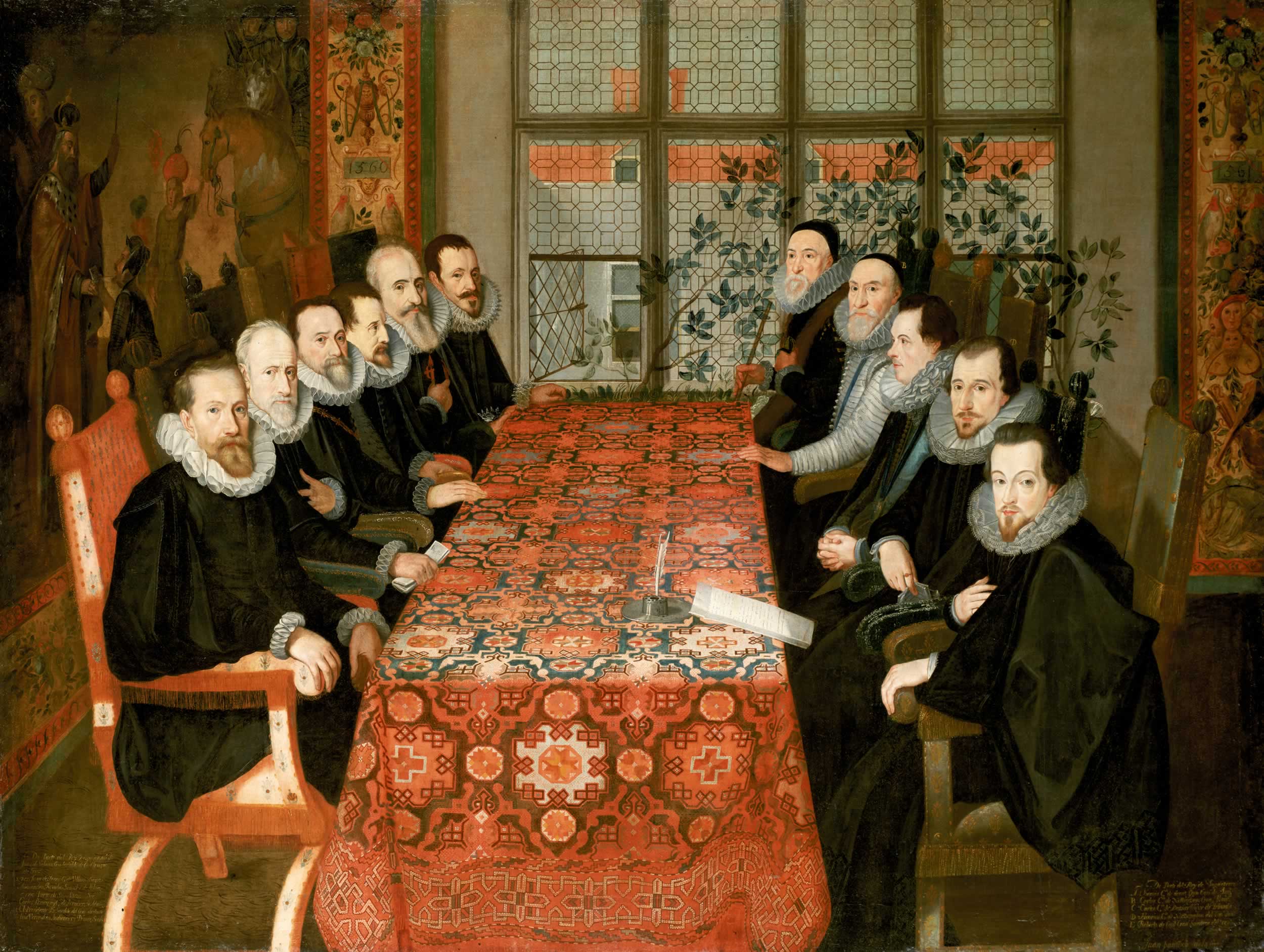
Back in May (on Friday the 13th no less), I was finishing up side work and knocking out trash at my job. Doing tedious tasks makes my mind wander and I began contemplating a what if scenario for the development of Dungeons and Dragons.

Somerset House Conference (Wikipedia)
D&D comes from wargaming origins and that shows in some of the design. You'll find the rules for combat to be more comprehensive than other aspects of the game, XP for killing and getting gold, combat uses for skills and feats. This isn't a negative mind you, nor is it me saying 'you can't roleplay in D&D'. Some of my best roleplaying stories have come from D&D 4e, the edition which has been often derided for being non-conducive for RPing. But in every edition of Dungeons and Dragons, you can see the wargaming aspects in its ruleset, passing down like a gene.

So I was thinking... what if D&D descended from a different hobby? Like say, a debate team, or a story telling game.

What if we flipped some of the assumptions and even mechanics on its head?

In general, you have combat scenarios and roleplaying scenarios. A bit of an oversimplification, but bear with me. While combat rules are more complete and exhaustive, roleplaying is generally left up to the players with minimal conflict resolution mechanics (generally a simple Charisma roll). So what if we switch the assumptions around? Have combat with a simple conflict resolution mechanic adjusted for the difficulty of a battle, and make the social aspect of the game more comprehensive.

Right off the bat, the focus of the game would be very different. I feel you would have a more political game where things like diplomacy, intrigue, and investigation take the forefront. Exploration probably wouldn't change. Combat would still be important, but it would certain be different. Much like social stuff is, combat would be a lot of flavor and description with the occasional die roll to resolve conflict. Perhaps a Strength or Dexterity roll, or a Fighting skill roll, all modified by difficulty penalties and bonuses. It'd probably me more kin to combat in Dungeon World.

Social conflict and discourse being more comprehensive would be an interesting aspect, but one that would have to be handled differently than combat is in D&D. It should be flexible in allowing the players to do clever things when trying to roleplay out social situations while still being robust enough for those of us that don't have the natural charisma or mental energy to play a social engineering con man. In addition, and this is my opinion anyways, it should be applicable to the PCs. Just like the PCs take damage and injuries when treading into combat, they too can make social faux pas or fail in diplomatic scenarios. And most importantly, when making rules for debating, bluffing, and diplomacy, it is important to make sure it isn't mind control. With social combat, it is very easy to cross the line and take control away from the player. While I feel the term "player agency" gets thrown around too much, if the rules ultimately force the player to act against their will, then it's just not fun.

Burning Wheel and the Song of Ice and Fire both have cool discourse rules that look interesting and I would love to try them out in an actual game one day. Burning Wheel in particular has an interesting concept where social conflict only happens if both sides agree to it. So there is still a player opt-in before social combat even happens. But, once you are in it, you are committed and have to accept the results (at least for the interim). It's a cool concept and on paper at least, it seems to have the flexibility I'm looking for in a diplomatic ruleset.

I'm also interested in seeing how classes would fit in something like this. In general, the base 4 classes have assumptions that you'll be adventuring in the wilderness, fighting orcs and taking their stuff. It shows in things like extra attacks, extra damage, backstab/sneak attack, weapon and armor proficiencies, AC/THAC0, etc. I wonder how we would format classes that focused on diplomacy, intrigue, and investigation? For class names, I'd like to change them, at least to something more evocative of the courtly nature. Taking the Fighter, Mage, Cleric, and Thief/Expert, I'd probably call them the Warrior, the Magician, the Priest, and the Spy (although Expert is still very fitting). I'd also fit them out with diplomatic abilities that would fit with their archetype. The Warrior, being the knight or samurai equivalent, could have a bonus to seeing through lies, or being stubborn against people that try to extract information. The Priest could trade Turn Undead for bonuses to appealing to emotion, or using their position of holy reverence to extract favors and demands much easier. And so on. It's an interesting idea.

I think the most important thing to do for these types of rules is to calibrate the expectations and desires of your players. Players come into role playing games with certain expectations and non-negotiables out of their D&D game. It's critical to be upfront and let them know about the change to this style of campaign to prevent miscommunication and PC-GM dissonance.

So what would this type of game look like? Would it even work, or more importantly, would it even be fun? I would like to try and build a game like this with OSR materials and see how it'd work.

Friday, July 29, 2016

Dirtsheets and Rumors

The wrestling game that I'm running is still in full swing and tomorrow, it will be out third PPV event, the American Open. About a week ago, I started writing up a series called the Dirtsheets. For those not into wrestling, the dirtsheets represent insider information and rumors about the wrestling industry. Sometimes they are true, while other times they are red herrings and misdirection. After writing this one up (located here), I was inspired to talk about rumors in all kinds of games and take a break from my sci fi chatting for a bit.

Look At All These Rumors Surrounding Me Every Day

Rumors are a fantastic resource that I feel doesn't get used enough in modern day gaming, Rumors are a great way to really get your players invested in the world that you are running. It helps your world feel less like a novel and more like a living, breathing world that the players can explore. Rumors make great adventure hooks for players in a sandbox style game, or clues and hints for a more narrative node based game. And even red herrings can and should lead to something cool and interesting. Rumors about a ghost on a mansion may in fact just be Old Man Jenkins chasing people away so he can find a secret stash of doubloons!

Doubloons!
Rumors fit in all styles of adventuring. Use it for exploration so the party can go out and hunt for a new landmark, new people, and new adventures. For treasure hunting, rumors are clues to get to the next part of the search. The same is said with investigation styled adventures. Rumors also make great foreshadowing for future event. For my Dirtsheets, that's what I tend to use them for. 

One of the best part about rumors is that it can help to gauge your party's interest. It's like a small, crowdsourced way to see what the party loves and goes for, and you can throw more of those types of adventures at them. Even a red herring that the players end up taking a liking to can be changed into something amazing and memorable.

Ultimately, my favorite reason to use rumors is that it shows your excitement and dedication to the game you are running. And that is infectious. Players see their GM putting in the work and they get excited to play in your game more and more. And seeing players excited to game with you is pretty awesome (and a great ego booster ;) ).

So use rumors today to take your game to the next level. Whether it's town people, a criminal contact, or dirtsheets about your favorite wrestling company, get on it and have some fun. At the very least, you'll have a cool list of adventure hooks for another game.